Pain and Goodness

On the second night of February, I’d been working late and was walking home in the dark at 8:30. I was excited about having wrapped up a writing class, and was oblivious to how the temperature had dropped drastically after the day’s rain. That meant there was smooth ice on our gravel path and before I knew what was happening, my feet shot out from under me.

On my back on the ice, I thought to myself that usually when one falls, it hurts their knee or shoulder or head. But nothing hurt except my wrist, with a blinding pain I’d never felt before. I howled and rolled around in pain on the snow beside the path and found a way to get back on my feet. My housemate was gone for the weekend. The house was dark and when I walked in, my wrist had an egg-bump. I cried and googled what to do for a sprain and found frozen cranberries to put on it. Surely it was just badly sprained.

I wanted to call my neighbor friend to come help me but she was gone for the weekend too, so I cried more, not sure if the tears were from pain or from being alone. I knew I needed to sleep more than I needed to spend the night in the ER. So I managed the shower, pain pills, a pillow to elevate my arm while I sleep. (Managed became the operative word for the next months.) I slept decently, which seems like a miracle.

The next morning, I managed to walk to work in a winter wonderland. My coworkers said I need to get the wrist checked out. My doctor said she’d call the x-ray order in to the medical center because she doesn’t want to ask me to drive to see her first. It was one of the blowiest, snowiest mornings of the year and my friend took me in her car and we crept into town on bad, hilly, snow-covered roads. It was a nightmare. But we were kept safe.

In the waiting room, I bumped into sweet Omani friends, which was a lovely distraction. Waiting for the results, I asked the receptionist where I could get a drink of water, and she brought me this tall glass of cold water–well beyond her line of duty, I’m sure. And my coworker friend went beyond her duty to stay with me the whole morning, plus hand me a package of salted dark chocolate on the way home.

In the waiting room. I deeply feel the irony of the book title in this context!When the x-rays and CT scans were read, I learned there were two diagonal breaks at the tip of the radius. Maybe that explained the terrible pain. Maybe it was double the pain of one break. It was too late to go to ortho for a cast, and because it was Friday, I had to come back Monday for that. I spent Saturday chasing the sun in my house, studying to lead prison Bible study, and playing big, sweeping Christopher Tin music from the next room so I wouldn’t feel so alone. I cried because I had to cancel the next months of piano lessons and was excited to pack an overnight bag to celebrate a cousin’s 30th birthday party. The harrowing weekend was the beginning of months of paradox: managing so much pain AND being given so much goodness on every side.


At ortho, the specialist didn’t seem super confident or competent. I need my wrist and I was terrified he’d miss something and I’d have to live with a damaged wrist. He said I’m not out of the woods for possibly needing surgery, which terrified me more. The first day with my cast, I wrote Bible study notes on my fingers to take into jail. The notes didn’t work great but the motherly Jehovah Witness lady who always goes in with us helped drape my coat around my shoulder because my arm didn’t fit into my sleeve.

The rest of February blurs into memories of pain pills, a cold arm, voice-dictated emails and Word documents or typing with one hand, working extra hard all day to get less done than normal. I couldn’t even do Ctl+C or any other shortcuts with my left hand so I got used to doing them with my right.  I didn’t do anything for Lent because my cast was enough suffering. I’d collapse on the couch in the evening and manage to get back to work every morning. And I drank lots and lots of tea. And I was very thankful that I’m right-handed, even though that hand got so, so tired doing all the things. Sweet cards from friends came in the mail, wishing me quick healing. One friend sent a box with all kinds of treasures squished into it. My housemate tied my shoes for me until I learned how, and did all the house chores that required two strong hands.

Also.

After two weeks, the specialist I was dubious about said I didn’t need surgery, which seems like an enormous miracle, the way the breaks slanted.

Also.

There were sweet moments of beautiful reprieve sprinkled throughout the month. Two nights a week, I joined a writing class on Zoom with a teacher in Thailand. We crossed 12 time zones and bonded over beautiful words and still stay in touch. The classes helped to keep putting words on paper instead of spiraling down into pain and boredom. At the end, our teacher wrote verses about each of us, and mine seems to say more than she knew.


Also.

I  got to go to Lancaster to a writers and artists’ conference and met one of my favorite poets. I don’t have words for how special it was to love Malcolm Guite’s poetry, and then to hear him recite his own poems and give some of their backstory. He was uncommonly gracious and accommodating. “And you hurt your arm,” he commented after we posed. I’m proud of this picture, except for the plastic bag. Hearing him speak about the way he respects words and lets them do their work was a concept I want to keep. The warm experiences of my old and new friends sharing that rich weekend still gives me deep joy.

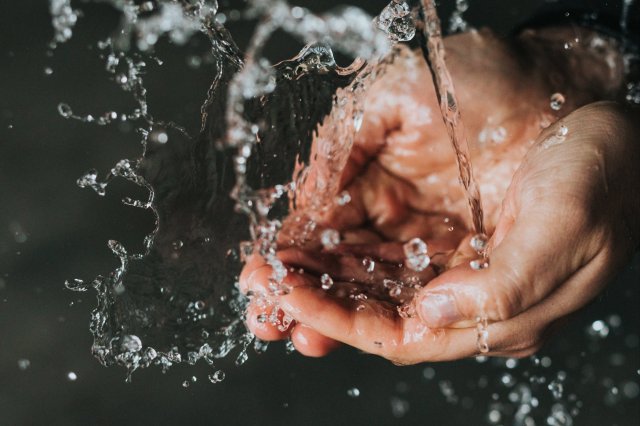
After three weeks in a cast, my wrist swelled and my fingers got tingly, and I was terrified about nerve damage. Orthopedics assessed it and after a technician sawed off the cast, she motioned to a sink and told me I could wash my hand, and then she left the room. I washed and washed, and wiped and wiped the weak, wrinkled hand and arm for a long, long time. It felt like something rubbery that could maybe come alive again. They sent me to an occupational therapist who fitted me carefully with a removable brace. The therapist was the most delightful, positive, helpful person I’d met in that department. She made my whole month better.
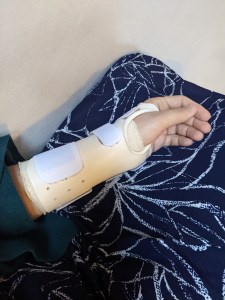
I had the brace for five weeks with instructions for no weight-bearing. The tingling went away, and the daily exercises went better every day. I’d sit on Zoom or in classes practicing my stretches and fists. And I could type with two hands! I could get so much work done with so little effort! I kept the arm elevated as much as possible every day and every night. It made for many praise sessions in the car as I drove. If your hand is raised anyhow, it’s a good time to pray and praise.

But the body remembers, and many times as I walked home on the gravel path and across the little dip where the ice had been, my gut felt shivery and shaky, remembering the spot where the trauma happened.

The day the specialist signed off on me and said I’m good to go, I got a large Coke to celebrate. I wanted to cheer for my brave little wrist that was able to hold a whole full glass all by itself. The golden arches in the mirror was a happy accident.

Gradually, I wore the brace less and less. My wrist still catches me by surprise: my left hand can open a whole heavy door all by itself! I can carry a laundry basket in one hand and a laundry rack in the other. This is a remarkably efficient way to do laundry. I can wash dishes and sweep the floor again, and my hand does what I ask it to even though it’s stiff and aches every day.

One of the first weeks free from the brace, I was washing dishes at a friend’s house and broke THREE cups with my uncoordinated left hand that crashed things. I still feel awful about it. I kept thinking about stroke victims and others who have to build a life around a dysfunctional limb. I had learned ways to manage my handicap, but it took enormous energy, focus, and creativity to compensate. Plus, after that first terrible weekend alone, I had willing people around me to help with anything I couldn’t manage.

I hesitated putting this story out there because it could seem too much like a great-aunt’s organ recital. But the nice thing about a blog is that no one has to read it and no one is watching you delete it from your inbox. But for those still reading: I haven’t come to profound conclusions and life lessons about this story. For now, I’m acknowledging the crazy mix of hard and good, loss and gifts poured out, privilege and disappointment.

Apparently, life is never all one or the other.
Comfort and Forgive

Recently I’ve been lingering in Psalm 25, particularly verse 18: “Look upon my affliction and my distress [I need comfort.] and take away all my sins [I need forgiveness.]” This pairs with the gospel song with line “He took my sins and my sorrows.”

At the cross, we find both comfort for what’s been done to us and forgiveness for the wrong we’ve done. Beyond that, there’s more at the empty tomb, which I’m still exploring.

Last week one morning, this acrostic poem seeped out of my pen. And yes, I’m reading The Hobbit right now, so that found its way onto some lines as well.

Come closer, friend and savior Jesus
Or I will
Move off the path to where
Foul goblins lurk to
Overwhelm my heart. I want to walk with You to
Rivendell where
Time slows and music lingers in the leaves

And cake and wine heap up but
Not too much to long for more.
Desire and dust

Fill my mouth and still holy water
Offerings will never ever wash or
Rinse the dust and
Grime and wrinkled skin of
Inconvenient, stubborn
Vices
Except you hold my hand and clean and caress each crevice.

After Saturday Night

Photo by Łukasz Łada on Unsplash

He saw me first.

I saw a garden hand

With grass-pressed tunic,

Soil on toes,

Eyes at ease with a job well done.

He saw my tears yet didn’t flinch—

No garden hand had ever asked me

About that water swelling

In stormy cataracts on cheeks.

They’d taken my Love—He’s

Broken, stabbed, now stolen.

My love is gone, is gone, and

I would wail and run

Five thousand furlongs if only this garden man

Confides to me the hiding place that

Holds my love, my broken love.

He said my name, my truest word:

Mary, once bitter, now sweet.

He was a garden man, but

More—the one I’d lost. I knew

Him by that voice and by

Those eyes, new, knowing.

They caught the morning light and

Calmed my own frantic, swollen ones.

Where had He been? What ablutions

Rinsed crusted blood and water from olive skin and linen?

What had He seen and how did this morning’s Father

Turn toward yesterday’s forsaken Son?

What words had made my sad untrue?

Quiet mystery surrounded, hovered, haloed Him—this

Garden-loving, light-bearing frame of holed and holy clay.

He didn’t tell me where He’d been. (He never tells me everything.)

The rose-gold sky back-lit His frame.

My Love

Had found me first

Again.

An Easter Benediction

May Friday’s agony and Saturday’s despair whisper the comfort that only an incarnated God can give—because He gets what it’s like to be dust and desire and wailing questions.

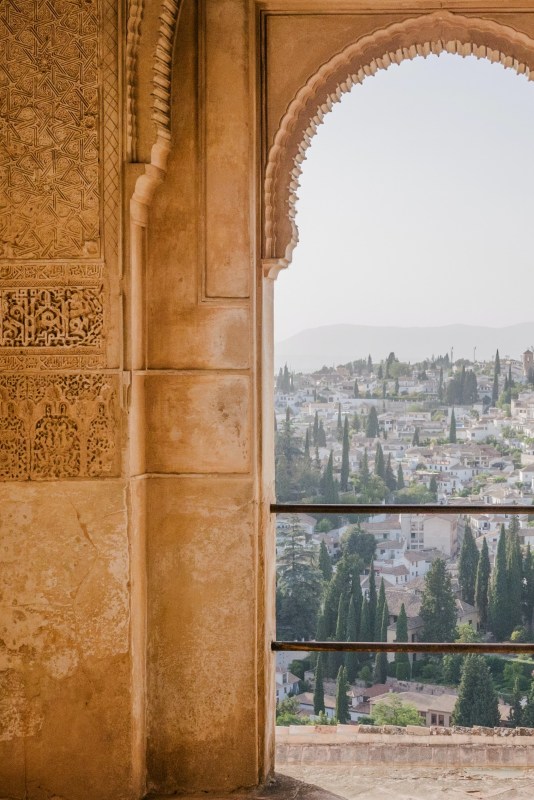
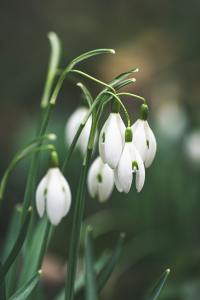
May the golden moon anchor you to colossal, ancient faithfulness and steadiness. May fresh greens in landscapes remind you that winter is not forever. May wide smiles of strangers and children warm you.

And I don’t know words big enough to bless your Easter, but may light and love shine on your face and dab away your tears. May your heart be strong to run toward the hole that held so much sorrow, and your eyes see folded linen, peace, and power stronger than death. May that power enliven you today.

An Epiphany About Running

children-479692_1280

This is a rerun from the archives of 8 yrs ago. These days, I’m still thinking about impossibilities and miracles and Resurrection. And I love reliving my charmed tourist memories: grainy, zingy zatar–the stinky camel ride and my breathless laughter, glorious Dead Sea swim, Capernaum’s synagogue, and the Sea of Galilee, eating a lunch of humus beside it–the ache of the Wailing Wall on Good Friday–the shine of one man’s eyes telling another “He is risen!”–the walk to Emmaus with sunshine, friends, songs, and a turtle. I will never be the same.

Last week I flew from Warsaw to Tel Aviv in order to spend Easter with my friends in Jerusalem. Sound exotic? Yes, it was. I’m still floating. But this is not a travel blog, though I dream of that. This is about an epiphany I’m still living with.

The plane was filled with Polish Jews and I reveled in the beautiful, exquisite atmosphere with the families mingling and smiling and comparing notes. “We’re going for Passover in Jerusalem then rent a car and travel further. What? You too?” Polish Jews have suffered so much in this country, and I could feel the pulsating home-coming atmosphere and was so happy for them.

Wedged between two pleasant gentlemen, one wearing a kippah and editing his movie of a rabbinical school, I opened my Bible to Luke’s account of the resurrection. I wanted to enter into the story as much as possible in the next several days. I wanted to hear and see and smell what Jesus and His loved ones did. (As it turned out, it seemed that I could only see the same sky they did, because not much else is the same, but that’s ok. The journeys of the heart are what really change us, I think, not a physical pilgrimage.)

Luke says the women found the tomb empty and heard the angels say that Jesus was no longer dead, and then went back to tell “all the others” about it. You know how women are when they get to be the first to tell someone their exciting news.

This was the best news that could ever happen, but Luke says that to the disciples, the women spoke idle tales.

Empty words.

Jibberish.

Jesus had repeatedly confided in these men. He’d told them He would die and rise again. He’d done what He could to prepare them for the devastation they would feel, but it did not compute for them. Now this morning they were so crushed that they couldn’t let themselves believe what the women were saying.

Do you know how blankety-blank hard it is to sustain hope? It’s easier to write it off as nonsense and foolishness and tell yourself not to care anymore.

Mark says the disciples didn’t believe the women nor Cleopas and his friend from Emmaus who had walked and talked with Jesus that day. It’s impossible to believe news about a miracle when you watch your naked hopes dangle on a bloody cross in an earthquake.

When everything you counted on is gone.

When you don’t even have the remains of what you loved.

But Peter ran, Luke says. John’s version includes himself in the running. Peter had loved Jesus the most boisterously, the most rashly, and he couldn’t believe what he’d just heard but he had to check, just in case, and neither of the men could wait or walk calmly.

They ran, and I weep over their eagerness and their stunning courage. They ran head-long into the place that held the potential to break their hearts even more–if it’s possible to break a heart that’s already shattered. There was no precedence for what Jesus did, and they had no proof of the women’s words being true.

Except they had Jesus’ words earlier, which is life and power but they didn’t know that yet.

Wedged in a tight airplane seat, I tried surreptitiously to wipe my tears on my scarf because I didn’t want the men to get worried about me crying.(“No, no, I’m ok–I’m not scared of flying—everything’s ok!” I would have said.) But I can’t stop crying about it even now. There is maybe no other scene that speaks so powerfully to passion and longing and life than this one–of the men running toward what they couldn’t believe.

There are a thousand things I hope for myself and those I love. Sometimes I get a tiny glimpse of how things could be. How a miracle would change things for them or me, how we could enter more fully into what we were created for.

But it feels so impossible, so far away, that I write it off as pish-posh. Or I believe the lie that I don’t deserve these miracles. Or we’re not one of the lucky ones and God is handing out miracles to others but forgot about me and my people for awhile .

And lies and fanciful tales don’t sustain and don’t give life. In fact, they starve me. Poison my system. Shut me down. Keep me from running.

With the power that woke Jesus from the dead, I want to run toward His miracles. Not wait around and see what happens. Not discount it as excitable women’s words.

The best thing that could happen had just happened, and it was impossible and Peter couldn’t believe it, but he still ran, and by the Lion’s mane, I will too.

The Awl

Photo by Victoriano Izquierdo on Unsplash

Some months ago, I was in a battle of wills with the Almighty. One Sunday in share time, a brother reflected on the ceremony of the awl and the pierced ear. He said, “That slave must have really trusted his master to be willing to stay with him the rest of his life.” I knew then it was mine to trust, not fight for my will to be done, and I went home and wrote this poem.

Then his master shall bring him to God, then he shall bring him to the door or the doorpost. And his master shall pierce his ear with an awl; and he shall serve him permanently. Exodus 21:6

He stands at my shoulder,

Awl in hand.

His eyes speak what His words

Have always said and what

I know is truer than true.


I voice my yes, so I can hear tomorrow

When my heart wanders:

“My Master, yes.

Yes to never owning but always having enough.

Yes to living under Your roof over Your furniture.

Yes.

Yes to safety You’ve proven these seven tenuous years.

Yes to plenty and to peace, to eating like a child at home.

Yes to Your care and not another’s, to a home not my own.

Yes.”


My eyes sweep over His turbaned head and out past tiled rooftops,

Mountain Hermon, the Jordan, and towns beyond.

But it’s here He invites me to stay and I say

Yes.

In His weathered doorway I lean

After the awl,

Hole held in His fingers that

Drip blood.

A Blessing For This Weekend

Photo by Achim Ruhnau on Unsplash

May you see spring birds puffed up on branches to stay warm as they forage seeds, and may it remind you that God provides and cares even more for you. May you see diamonds in rain drops on buds and leaves. May your baby plants flourish with the promise that summer is coming.

May the weekend give you golden moments to be less efficient and more human, and may your inefficiency include walks in blowing snow and naps in warm blankets and conversations in real time. May someone hear your heart under your words, and may you listen to someone else in a way that helps them feel less alone.

May the strong arms of God, the compassion of Jesus, and the comfort of the Holy Spirit hold you.

A Benediction for Your Weekend

Because I believe that Christians should be people of benediction (bene: good + diction: speaking) here’s one for your weekend. I hope to be dropping benedictions here and there (blog, social media, cards) the next while.

May sweet, glad birdsong surprise you on your walks. May golden light highlight greens and whites, and if golden light isn’t happening today, may it fall on you sometime this week. May you eat enough fluffy carbs to make your soul happy, and enough protein to make your brain strong.

May your bones not break, and if they do, may you receive so much support and care that it makes you cry. May your grey hair stay well camouflaged, and if they spiral out in odd angles, may you remember all the goodness that brought you to this good age. May you take time for at least two naps.

May your heroes be people who love God supremely, love you like Jesus, and make you a better person. May the skin tones you see and the languages you hear give you a sneak peak of our eternal home and the wedding feast that will never end.


A List of Lists

Photo by Aaron Burden on Unsplash

I am not one of those organized people who makes lists in order to feel good about their day. I hear them talking about writing a task on a list so they feel happy crossing it off, but I can’t identify with that.

However, I’ve discovered a way making lists that is enormously satisfying. I’m taking a 10-week writing course with the inimitable Rachel Devenish Ford. Twice a week, we meet over zoom, a dozen ladies across as many time zones, and Rachel, in Thailand’s sunshine, coaches us in writing from the heart. One way to write is to make lists, and then craft paragraphs from those lists.

The exercise reminded me of several years ago when I had an overwhelming decision to make, and I was paralyzed with fears. My pastor said I should list those fears. When I did, the fears suddenly didn’t feel so big or so many. Since then, I’ve often handed the same advice to someone who was overwhelmed. When they have too much on their mind and their nervous system is overloaded, writing a list is something they can manage.

It also reminds me of how I’ve kept a Thanks Journal for years, which is a daily list of something to be thankful for, some points of light to remember. It’s not eloquent or poetic. It’s quick and minimal but enough.

The beauty about lists is that they can be spare, ragged, choppy, and incomplete, but they carry the essence of what we want to express. In our writing course with Rachel, we’ve made lists about these subjects:

  • Who I am
  • What I notice in a favorite photo
  • The kinds of writing I feel the most drawn to
  • What I notice where I’m sitting (I had never noticed that I have green dolphins at my desk until I made a list of what I noticed.)
  • Impactful moments
  • What we want
  • What we have (I noticed that my want list included only one thing that costs money. Right afterward, Rachel coached us to list what we have, and I choked up because I have. So. Much.)
  • What we’ve learned

Some days, I amuse myself by thinking about all the fun lists I could make. Here is a list I could list:

  • Beautiful things
  • What I noticed in church today (includes many colors because that’s what I notice)
  • Things to do with one arm in a cast
  • Distractions
  • Cool things about living in America (could include interstate highways and pancakes the size of dinnerplates)
  • Uncool things about America (could include synthetically fragranced fabric softeners)
  • What I love about my people
  • Reasons to cry
  • Topics I could write about
  • Why I can’t write
  • Favorite parts of favorite books
  • Memorable meals
  • Heavenly fragrances (would not include fabric softener)
  • What I like about my age
  • Ways people have helped me
  • Lovely sounds (would include rain on a metal roof)

You might try this yourself. If writing a blog post or a poem or a letter feels like too much investment, or too weighty, try making a list and see where it takes you.

At the very least, you might surprise yourself at what you notice and what you have.

Promise and Paradox

Last Sunday afternoon, in a quiet moment between events, I read a message from a friend whose family has, in the last month, moved to a Greek island to help with the refugee crisis.

Two nights ago, as a little inflatable raft was crossing the sea, a young mother and her baby somehow fell overboard. Another passenger, who couldn’t swim, risked his life to rescue the mother but her precious baby was lost at sea. Today, this young mother sits in camp in shock and grief with no baby to suckle at her breast. [My daughter] sat with the passenger who rescued her and listened to his story, feeling so helpless as he shared his pain.

I wanted to crumple into a heap and wail at this awfulness but I had other obligations. I went early to a choral Christmas program where my friends were singing. I chatted and laughed in the front row with my cousins, taking in the ambience of candles, greenery, and lots of friends gathering around us. I was in my happy place.

But between the beautiful songs and poetry, my mind’s eye saw the black, choppy Aegean Sea and a baby falling from his mother’s arms and a rescue team unable to make everything ok.

I don’t have energy or space here to unpack the concept of paradox, but for now in this Advent, all I can say is: I’m riding a wild, rocky wave of both/and AND either/or. These days are deep and dark but I’ve discovered a level of peace and stability in storms when I identify my current situation and decide whether to name it paradox or promise. When I know which one is washing over me, I’m ok, and I know I won’t drown.

On Sunday, I was living in paradox. Basically, I always live in paradox.

  1. Mothers and babies all over the world are crying from things that should never ever happen AND right now joy and beauty surrounds me.
  2. I carry heavy griefs that I name only to those closest to me AND I’m living my best life now.
  3. People are broken and damaged and hurtful AND people are beautiful and breathtakingly exquisite and splendid.

I also always live in promise. This is a binary, either/or frame of reference where I can rest my whole soul. Because one option is untenable and unbelievable, I have only one option to hold, and this grounds me.

  1. Either God is with me here or He’s not. 
  2. Either God will keep me every moment (like Psalm 121 repeats three times) or He won’t.
  3. God either loves me or He doesn’t.

This is not  a spin of positive thinking or a mantra, even though sometimes breathing short lines in and out helps, like little breath prayers. Inhale: I’m weak. Exhale: He’s strong. Sometimes I find beautiful breath prayers in @blackliturgies on Instagram, like this one: Inhale: God, I do not know the way. Exhale: Go before me in the dark.

Every Advent season, I’m always chagrined at how Advent series seep out of every author’s pen, and my inbox and social media feed overflows with offers for this or that Advent reading series, and I have no time to read them all. The little quotes and nuggets that writers highlight to make their words sound empathetic and thoughtful only weary me. It’s like everyone is trying to wring out something original and winsome and it all overwhelms me.

This year, Advent for me is darkness that knows light will come–a crashing chaos of paradox and promise, and I can recognize/name both, which keeps me from sinking. When I don’t know what is true, or I have trouble naming what IS, it’s time to talk with someone who can help me define the promises and the paradoxes. Some of those conversations this month sounded noisy and shouty and ugly, but it’s part of the process of naming what is.

For now, I’m reading Malcom Guite’s beautiful reflections in Waiting on the Word, which is like breathing in rich fresh air every morning. Beyond that, I’m not following all the Advent series out there. I’m listening to a lot of music, walking, reading multiple books, and making art. I’m limiting sugar, and prioritizing sleep. I feel like a racoon going into a hibernation, knowing spring will come.

It’ll be a long time coming, but it’s a promise.