What You Really Want

wedding-342678_1280

The next 5 blog posts are going to be installments of an article I wrote for Daughters of Promise, a beautiful magazine for young women. The theme of the current issue is “intentionality, direction, and cheer”, so that was the over-arching theme I aimed for while writing about singleness.

If you and I would meet over coffee today and we’d introduce ourselves, I wonder how you’d describe yourself and your days. Maybe you’d tell me you were planning a bridal shower last night for your best friend. And tomorrow you plan to babysit your nephews after work. And that you love your job and your nephews and can’t wait for your friend’s wedding.

I’d notice your smile and the way you nod in anticipation. Would you also have the courage to talk about the pang that lies just under your happy activity?

Talking honestly about the ache of singleness might be taboo for you, but I’d like to erase some of that hesitance. Here is where we call it what it is, because honesty is the first step in walking toward freedom and light.

So on the night of that bridal shower, if something stabs you with wishing you could have some of those pretty things and lovely dreams, this is permission to admit the stab. Or your hunger when you hold your nephew to read a story and put him to sleep and you want your own little one to hold.

This is also a call for decisively stepping out of the pool of pain you could drown in. It’s not Operation Bootstrap. It’s the posture of open hands that will save you. Intentionally choosing another way of looking at things will also save you, as well as adopting purpose and joy here and now. These are some of the habits of abundance that God created us for.

I know there are times when aloneness hits you and the idea of joy feels like a joke. I don’t know if anyone really gets used to being alone. But do you want to live without joy? Please don’t write it off as an impossible quality. Even if your dreams aren’t coming true and even if you fight back tears while the sparkly-eyed bride unwraps her gifts.

Beyond Money

We completely wore out the fun Grinch story. I’m happy not to hear it for another year. So I chose to read Tolstoy’s “Papa Panov’s Christmas” to one student on Saturday. The story about the shoemaker expecting to see Jesus has many versions and translations, and this one was abbreviated, but even so there were some phrases and words that challenged my high intermediate level student.

To help her be able to take it in more easily, I read slowly, deliberately. When the cobbler kept watching the window for Jesus, I suddenly felt my throat constricting and slowed my words even more so I could control my shaking voice. Maybe he had missed his visitor? I felt his ache of disappointment. When the cold girl came with her hungry baby, my student’s eyes brightened and she interrupted: “I think she is Jesus!”

When we finished the story, she said she’s going to find it in Polish so she can read it to her children. No one ever said that about the Grinch story, even though we got lots of class mileage out of it.  In his simple story, Tolstoy encapsulates the deepest longings and satisfaction of the human experience, and I felt honored to share it with my student and see her understanding.

Outside our apartment block is an outdoor market. At any time, I love shopping there, but these days leading up to the holiday season, it’s an Experience. I stood in line at the little old lady’s stand with the big blue barrels of sour kraut and pickles (the best in the town, everyone agrees). Beside us was another stand with three enormous square tubs that held maybe a foot of water crowded with dozens of fat, gasping carp. I tried to watch discreetly and not be too slack-jawed but all I wanted to do was stare and shake my head.

Older people stood in line at the tubs (my observation is that no one younger than 40 is willing to buy live carp and kill them) and carefully pointed to the fish they’d chosen. The beefy men selling them would scoop out the carp, weigh them, and pop them into trash bags. It was serious business. I couldn’t decide if the men were so serious because they were opportunists taking advantage of the tradition and the old people, or if this is simply the way things are done. I’ve been told that carp is the high point of the Christmas eve meal, so clearly buying, killing, or selling it is not a joking matter.

In other parts of the market, people were laughing and talking and exchanging wishes. I bought half a meter of beautiful lace for some presents sometime, and the ladies were so relaxed and positive and pleasant and wished me a merry Christmas as I left. Celebrating this season in a Polish town is so rich that I think everyone should be jealous of me.

This morning I had my last session of the year. My student is 71 or so, a retired Russian language teacher, and she had asked that this lesson would be Christmas carols. So I prepared music and lyrics for my favorites, “Lo How a Rose” and “O Holy Night.” She came with an elegant centerpiece she’d made with greenery from her garden, plus a box of butter cookies she’d made, plus 2 CD’s so we could listen to her favorite Polish carols. I made green tea for us, and we listened to the songs and sang along as we wanted, and drank tea and I munched her cookies and chatted in Polish because, well, it’s easier for her than English.

At the end of the hour, she was preparing to pay for the lesson, and I put my hand on hers to refuse it, saying today wasn’t a lesson, only pleasure, and I can’t take money for it. It wasn’t an English lesson, any way you look at it. “No, Anita, I beg you” she said, “You’re young and you need things. Please take this to buy what you need–maybe carp, or some meat?” She was dead serious.

The weather outside is frightful –driving rain coming horizontally in strong wind. No snow in sight. I hang onto my hood, walking home, and I’m sooooooooo glad vacation has started, and there are a million things I’m happy about, but something more than rain is making my cheeks wet.

The things I need are beyond money. What I have is more than I can hold.

Potpourri

I’ve been preoccupied with many things besides the blog, so this post is going to be only bits of this and that.

First: the double give-away for Footprints on the Ceiling. I chose the elegant method of asking two housemates for a random number, and the number they chose was the comment number. The lucky names were Lolita Hershberger and Mary Ann Mast. That was a lot of fun!

****

An ESL teacher milks every holiday and special occasion for lesson material. This week for me (several times) it was The Grinch that Stole Christmas. I thanked God again for Dr. Suess and I hope my students enjoyed the story as much I do.

Twice yesterday I introduced students to the silly song I Want a Hippopotamus for Christmas. It’s simple vocab, and funny, and it went over great. But oh, it makes a dreadful earworm.

****

I’m reading Steinbeck’s  East of Eden. I find it both repulsive and wonderful. The vixen in it (no spoilers here, plus I’m only half-through) is what makes me want to throw the book across the room, but Samuel Hamilton keeps me from it because he is so beautiful and wise. I can hear the Irish lilt in him. That, and Steinbeck’s uncanny one-line observations about human tendencies keeps me engaged in the story. I hope I won’t be sorry.

****

Have you seen sunshine today? Did you thank God for it?

Battery Recharging

Yesterday our American group of 14 adults and children had a glorious time of celebrating Thanksgiving. Never mind that Thursday was a normal work day in Poland and none of our friends and neighbors know what the holiday is like. We still wanted to hang onto it, so we set aside Saturday afternoon and evening for that purpose.

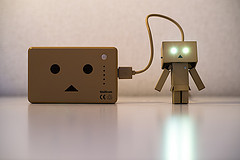
As a mid-dinner activity, our hosts passed around a big brown bag. We were all to reach in without looking and pick out the first thing our fingers touched. Among the items was a candle, screwdriver, spool of twine, and mine was a battery. Then we all took turns saying something we’re thankful for, connected to the object in our hand.

I said that I’ve been thinking a lot of a year ago, and how sick I was, and after the surgery, my battery was completely out of power, but now it’s pretty much like new, and I’m so grateful.

I don’t do well with improv so of course afterward I thought of lots more I could have said.

Like how grateful I am for the previous day that recharged my batteries. Can I tell you about it?

First, I tidied up the house and laundry, and started preparing the stuffing I was making for the next day’s Thanksgiving dinner. Then Jewel and I went to a friend’s place in the country to find greenery. There were so many beautiful colors and textures of pine that we could hardly stop, and loaded arm loads of it into the car. Then we went to another friend’s place to pick up pine cones from the forest floor. The husband and wife came out to the car to welcome us, and I showed my bag I’d brought to put the pine cones in. The mom said something to the young boy who ran down the hill and came back up with a feed sack full of pine cones. So all I had to do was put them by handfuls into my bag.

“Come in and have tea with us, please? You haven’t been here for two months!”

We couldn’t say no. The youngest girl put out cups and saucers on the coffee table and the mom brewed her winter tea: Lipton with cinnamon, cloves, and lemon slices. As we drank, we chatted (all in Polish) and found out they were doing homework for their foster care classes.

“I wrote a story for my assignment. Can I read it to you?”

We said yes please, but please explain it to us in simpler Polish. “Oh, it will be simple, because it was written for three year olds.”

And it was, and it was a magical moment huge battery recharge, sipping sweet, spicy tea, listening to a new darling story about a little rabbit. Its burrow was broken and its mom was sick so the mice took it to their house, and wrapped it in cozy blankets and fed it hot soup. They gave the rabbit a mirror so that he could see someone who looked like himself.  awwww!

Back home again, we finalized supper plans for 4 guests, and I put together Greek marinated chicken which I’d never done before and finished the stuffing preps and brought in the armloads of greenery.

With Messiah coming from the speakers, I arranged greenery and candles and stars on the coffee table and window sill. I couldn’t believe how the time flew as I deliberated colors and arrangements.

Our friends came at 6:30, the meal was a success, and we played games and talked and laughed til late. The dancing candlelight in the background gave me so much joy on top of everything else.

At the end, I was tired, but my battery was completely recharged. It had been a hard week. I’d had a stomach bug all week and couldn’t eat much and lost considerable sleep because I was fretting about things I couldn’t control. I’d cleared this day’s plans so I could stay home and do as little as possible. But despite those changed plans, in one day, so much energy came surging back.

Recharged batteries takes a certain level of self-awareness because it takes place when we don’t consciously make it happen. What are you doing when time is immaterial to you? When do you feel yourself relaxing and breathing deeper and slower? What happens to make you start laughing or humming to yourself?

For me, it happens when I

  • try new things, experiment, explore (it was Greek marinated chicken that day)
  • step out of routine
  • work with my hands
  • socialize
  • eat chocolate
  • handle color and texture
  • work with words

God made us so intricately, with so many layers, and I don’t know how it works that one layer affects so many others. I only know that He is very, very good to me in giving me so many ways that help recharge my battery and power up for the new week.
9754012931_b19806b32c_m

Photo Credit:

<a href=”https://www.flickr.com/photos/46151146@N04/9754012931/”>Takashi(aes256)</a&gt; via <a href=”http://compfight.com”>Compfight</a&gt; <a href=”https://creativecommons.org/licenses/by-sa/2.0/”>cc</a&gt;

Footprints on the Ceiling, Dorcas Smucker–A Double Giveaway!

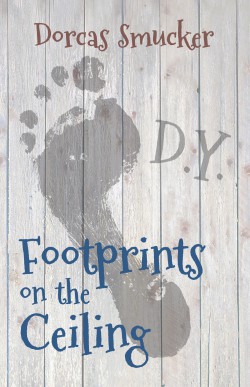
The initials on the front cover could be my dad’s initials, but they’re not. You’ll have to read the first chapter to find out the story behind the book title and the initials.ds.fotc.cover

Because I’ve been following Dorcas’ blog for years, I’ve already read all the pieces she has in the book. So I’d read the delightful story of the footprint and initials, but had forgotten about it.

That’s one of the reasons I like this book: I get to revisit the lovely stories I’ve already read, but their details are hazy in my brain.

Footprints on the Ceiling, as all her other four books, are compilations of Dorcas’ monthly newsletter pieces. As I read this book, I repeatedly was amazed at Dorcas’ skill in organizing the stories to make them fit perfectly into this  new setting.  And the sections correspond with the title: kinds of footwear that connect with parts of life: children, change, forebears, travel, reflecting.

What I love about these stories is that they are filled with quirkiness and color. The lines that emerge when you turn the page are  not what you expect, and even if you’ve read the blog posts before, you’re still surprised and amused. For example, the waddling Canada goose in the opening paragraph in “A Knack for the Absurd” had me in giggles until the end of the chapter.

 Though there’s a lovely light-heartedness all through-out, the book isn’t all jokes and silliness. Dorcas thinks deeply and processes well, but she keeps her own advice and (usually) doesn’t take herself too seriously. This is a trait that I find endearing and inspiring.

There are tears in the stories too. I cried at the beauty of a family wedding that celebrated deep joy and healing after shattering loss and grief. Dorcas’ world-view doesn’t get stuck in pain and she lives in the reality that stories do go on, and it won’t always be dark and gloomy, so her words birthed hope in me.

Dorcas loves her family well, with fierce loyalty and service to her husband and children and extended family. She always blogs with great respect and love for her father who lived with them last summer, and in the book writes warmly of her mom’s character and legacy since her death. The stories are honest, but not voyeuristic. They are candid, but not at the expense of someone’s dignity. So we know that these Smuckers are normal people who fight and make up, and make messes and lose things but at the end of the day they don’t stay mad and they keep talking things out. Which is what every healthy relationship is made of, especially the family, God’s ideal social structure.

This is probably the quality that brings readers back to Dorcas’ stories: it’s real life. No fluff, no fancy-schmancy lingo. Forget the idea of blankety-blank Amish novels. Last winter when I was teaching at CBS, the chapter about Bible schools came out, and it was so on-the-money that it made the rounds to all the teachers. We completely identified with the rules, unspoken rules, and laughed knowingly about the signs God sends. Her novel, when it comes, will be made of the same colorful, earthy, human stuff, and I can’t wait!

For now, Dorcas is giving away a signed copy of Footprints on the Ceiling. To enter the giveaway, leave a comment below. I’ll close it next Wednesday, Dec.3,  and you should get it in time for Christmas–a treat for yourself or a friend! This is going to be a double give-away, in that Dorcas will send a copy to the winner in the US. But if you live in Europe, you’ll be eligible for my copy. Isn’t that fun?!

Footprints on the Ceiling is available for $15 per book, postage included.  You can mail a check to Dorcas Smucker, 31148 Substation Drive, Harrisburg, OR 97446.  US addresses only.  To send a copy to Canada or overseas, email Dorcas at dorcassmucker@gmail.comOr find it on Amazon here

We Have Only to Look

the winds of skagit.

Recently I read the book The Glass Castle by Jeannette Walls. It’s the riveting story of her childhood, raised by her artist/hippy/rebel/paranoid parents who were always on the run. She writes with great candor and grace, never bitter about how she got dangerously burned while boiling hotdogs at age 3, or how she was forced to root in the garbage cans for food in high school because she was starving.

(It’s a really rough story in spots, and I don’t recommend it for young readers or to anyone who takes offense at honesty.)

I listened to several interviews with Jeannette, and something she said keeps coming back to me: the worst thing that happens to us is actually the best thing that happens to us.

So she was starving during much of her childhood, but it means that now she appreciates how she can go to a grocery story and buy ANYthing she wants. Their poverty limited them terribly, but it didn’t keep her dad from taking her out on the porch and giving her the planet of her choice for Christmas. He’d said she could have any star she wanted, but when she asked for Venus, he said “It’s Christmas. You can have a planet if you want.” What other child ever got Venus for Christmas?!

It keeps coming back to me–the idea that the things that are ‘bad’ can become something good. I say it carefully here, because I’ve not walked through the deep, devastating losses that many people have. But I want it to be true, that pain doesn’t have the last word, and that the yucky can be changed into good.

In my days and hours and minutes, it looks something like this:

  • When I repeatedly bruise myself in our poorly-designed kitchen, it means we have food to cook and dishes to wash.
  • I don’t like living on the first floor of our apartment building, but just outside my bedroom window yesterday I got to watch an older man carry a wooden cabbage slicer the size of Texas. It was wide enough to take a whole head of cabbage. Only in Poland!
  • A student who drains me is the reminder that I have energy to work and I have a job where I can be creative and be challenged every day, keeping boredom far away.
  • Housemates who have different priorities than I, resulting in potential frustrations, means I don’t live alone. Thus, I’m rarely lonely, and hopefully I won’t become stiff and unbending. (For an excellent read on this phenomenon, please treat yourself here.)
  • Being single when most women my age are mothers of teenagers means I am free to plan trips with my friends at a moment’s notice. Or pile books on the empty half of the bed.
  • Having undergone a harrowing surgery and long recovery gives me sensitivity to others’ physical pain and limitations.

Part of me doesn’t like listing these things, in fear that it feels chirpy. No one who is walking through a dark time wants to hear glib, pat words like “Look–you have dishes to wash which is more than some people have!” Or “Hey, be thankful for your freedom to travel!”

I think the transformation of good coming out of bad is a process of perspective that is hardly possible in the middle of the mess. There is value in being honest and saying “This really stinks, and I hate this.” But to walk out of that and look back on it from a safe distance is redemptive and healing.

Which is what God is all about. The change of perspective is way more than positive thinking and pulling yourself up by your own shoe strings. The picture of peace and joy and glory shining out of negative situations has God’s fingerprints all over it. Because His character is light, and the darkness will never, ever, ever over-power it.

This is what I hang my heart on.

Read The Glass Castle if you want to read a story told by a masterful writer. But more importantly, maybe today you can try to step back from your story and find the streaks of light piercing your clouds.

The beauty might surprise you.

There is glory and beauty in the darkness, could we but see!

And to see, we have only to look. –Fra Giovanni, in 1513

Caramels and Apple

goggles

They should make weather protection for eyes–something apart from aviation goggles.

Every morning, the wind is colder than the day before, and it makes my eyes water.  Scarf. Gloves. Boots. Heavy coat. I’m well-supplied, but on my walk to school, I always think about Lewis Carroll’s “The Walrus and the Carpenter” as I wipe my streaming eyes.

I’m always afraid people think I’m crying on my way to work. I could cry about many things, but my job isn’t one of them.

I like the challenge of finding the balance of pushing a student and helping them relax and talk. I have a student who just about won’t talk, and I haven’t figured out if it’s a speech issue or learning problem. It makes me revisit Torrey Hayden’s accounts of her electively mute children, and how she got them to talk. I love the challenge even though it exhausts me. Her smile tells me she enjoys the class even though she doesn’t tell me so.

In different classes, I like doing things with our hands while we learn. Push pieces of papers around to form phrases or sentences. Make a hedgehog out of fruit. It’s not as tidy as a neat stack of books or papers, but it makes me happy.

I love the kiddo whose family has lived in different countries, so he’s used to hearing other languages, and he never tries to talk Polish to me. He’s only 8, and he wrinkles up his face to try to think of how he can tell me something, and when he laughs he closes his eyes. Our lessons always have plenty of merriment.

A student, new to the class of women, brought a bag of caramels to share. She asked if it’s ok to give them out at the beginning of class. She wanted to be careful not to interrupt a formal class time. I said of course it’s ok because I LIKE candy. The lady beside me explained to her, “Anita isn’t professor. She is friend.” That was high praise, in a culture that is super careful with their definition of ‘friend.’ So we all chomped caramels during the whole lesson.

The best part was when the new-comer didn’t want to say her sentences when it was her turn. “Nie dam rady.” (“I can’t do it.”) But the four women around her urged and coaxed and pushed her to try, as only women can do, and she did it superbly. I cheered for all of them.

It’s important to me that my students feel comfortable and equipped to do what I ask of them. Sometimes I miscalculate and a worksheet is too easy or too hard. This week one of them had fun constructing this sentence: “You don’t know what I know” when I’d given her work that was too easy. Her pleasure at using the right pronouns made her eyes sparkle.  This is the student who is so energetic that she fairly buzzes, and after an hour with her, I feel energized instead of tired.

This week there was the teen who is crazy about Apple, and talks endlessly about Steve Jobs trivia. And the other teen who talked to me for 45 min about her taekwondo competition in Budapest.

Yup, I’ve got the best job in town. Cold walk notwithstanding.


Photo Credit: <a href=”https://www.flickr.com/photos/48262246@N06/4998700820/”>Tangentical</a&gt; via <a href=”http://compfight.com”>Compfight</a&gt; <a href=”https://creativecommons.org/licenses/by-nc-nd/2.0/”>cc</a&gt;


The Answer is WHO

the winds of skagit.

All the thunder clouds of the world seemed to break over my head this week. Bad news came from all sides and there was no umbrella, no pavilion to deflect it.

One friend is having a difficult recovery from a traumatic miscarriage.

A student’s 14 yr old daughter won’t eat.

Another student’s elderly mother is hospitalized. “Can I be honest with you? I never felt love from her and I wish she would die because being in bed is not a life.”

A friend’s heart is broken because the man she has prayed for years for, has chosen another lady to love.

A close family member is still choosing to be estranged from his family.

Next week a friend is going to the doctor because she found a lump on her breast.

A friend gave birth to a beautiful baby boy, but his heart had stopped. A few days later they buried him. They’ve been married about 20 years, and this was their first full-term baby.

I weep and groan and shake my head. There are no words, no quick fix, no simple steps to follow to make it all better again.

This I know:

–the sun always comes again.

–the present moment is not all there is.

–hope borrows joy from future reality.

–negativity and complaining are toxic.

–God never scolds honesty. He can take my beating fists on His chest. He absorbs the heart-broken questions. He is deeply, everlastingly acquainted with sorrow. What He cannot accept is when I worship mini-gods, when I demand of another person or thing what only He can give.

Yesterday I listened to a short talk by the wife of Saeed Abedini, the American-Iranian pastor who is in prison for his faith. (Find it here.) I’m not looking for platitudes or simplistic answers to the grief that swirls around me, but what she said, quoting her husband, answers my grief-soaked questions, the broken-hearted tears, and it is enough for me: The answer to why is who.


Photo Credit: <a href=”https://www.flickr.com/photos/24582142@N00/4487519028/”>heanster</a&gt; via <a href=”http://compfight.com”>Compfight</a&gt; <a href=”https://creativecommons.org/licenses/by-nc-sa/2.0/”>cc</a&gt;

Why You Need My Book

In case you didn’t get the memo, my book has a brand new look!

This is the new and improved edition:

ta daa!


book cover

Because I’m more artist than business person, it is super hard for me to promote or manage or try to sell my book. But here I am, trying to do that.

Why would you want to buy this book? (This is the first tool of the salesperson, you know: create a need for the product.)

You need this book because you feel left behind while your friends are all doing amazing things like dating, or planning weddings, or having babies. You’re watching it happen all around you but it’s not happening to you. You nearly swallow the tantalizing lie that God is organizing others’ lives, but expects you to manage your own by yourself.

Or some of those exciting things have happened to you but you feel empty and your days blur into each other and you wonder if life is just about surviving every day until the supper dishes are washed.

If none of this applies to you, you know you have a friend who feels this way, almost dipping into desperation sometimes, and she needs a message that she can identify with. She needs to know that she’s not the only one to feel this way, that other women say “You? Me too.”

After you buy this book that you need, you find that you like it too. You like it because of the perky little fish on the cover that decided not to keep swimming in circles. You like it because there are sweet swirly graphics between the chapters. And an engaging study guide in the back.

And best of all? In my opinion?

There are lots of sidebars throughout the whole book–and none of them repeat any words in the text. This is my pet complaint in other books: they have little distracting sidebars here and there, and when I finally read them, it only repeats what I already read on the page, and it makes me impatient. Not in this book. The (pretty) sidebars are bonuses to the text, not repetitive distraction.

This new and improved edition has the same general message as the first edition. This one has been edited for tighter writing, fewer exclamation points, less italics (though you wouldn’t think it, seeing this post) and more clarity.

This book won’t answer all your questions or give you pat answers or neat formulas. But it does walk with honesty into basic questions such as Who is God, and who am I, and what shall I do with my unwieldy dreams?

This is not about taking charge of your own life, nor about proving that your life is better than another’s. It’s about living in the reality of knowing that the greatest thing that could happen has already happened–the creator of the universe chose you for eternity–and nothing can ever, ever change that. It’s about making choices decisively so as to guard against selfishness and stiffness. It peers into others’ stories to give you perspective and a sense of not feeling so alone.

Because one of the deepest fears of a woman is that she is alone. This book confronts that fear and reassures you that you are never, ever, ever alone.

If you don’t need this assurance, you know someone who does.

Order your copy from your local book store or the helpful staff at Christian Learning Resource:

Toll Free: 877-222-4769        Fax: 814-789-3396              Email: clr@fbep.org            Online: www.Christianlearning.org


Vignettes of the Week

This week’s days were filled with lesson plans and laughter and music. Conversation and music ricochets around the hard walls and stair well of the school and makes me think that the place is a kind of an alive, breathing organism where we do life and English lessons and love.  There were curved, earnest, little fingers flipping memory cards.  A high five for me from a student who also is  proud of being 40. Endless chatter–and birthday cake– in a class of women who are all buddies.

And best of all, the little crescent moons on a little boy’s face when he closed his eyes to laugh when I asked if he has a snake for a pet. I completely lost my heart to him and his twinkly eyes and can’t wait for a whole year of classes with him and the two other 8 year olds. While teaching children is not my strength, my inner child is really happy with glitter and glue and paint on my fingers. Doing little craft projects while listening to English children’s songs is what I call low-stress language learning, which suits me down to the ground.

Oh yes, and the honesty of the lady who said “I’m not good at anything–this is my complex.” But then she told me how she makes her own almond milk and nutella and she inspired me to try it. And another student, in a lesson about friendship, couldn’t believe how I have a friend I’ve never met, and have Skyped with her only one time. She was so incredulous she dropped her head onto the table. “It’s your personality. You have 1,000 close friends because you’re such an open person.”

I tramped home thinking, I’m so rich, I’m so, so, rich. I have so, so, so many friends that color my world and help make me who I am.

And the week isn’t even finished yet.