Feasting with Friends

The Daughters of Promise team asked me to contribute an article for each of their magazine issues this year. The themes they assigned were too beautiful and exciting for me to refuse to write about even though I didn’t actually need three new projects with deadlines. This blog post is the article I wrote for their Celebration issue.

When you reflect on the top five high points of your life, those memories may include at least two people with you, special food, and beauty in the form of music, color, or friendship. You savored the food and laughed with your friends and didn’t rush away. Maybe you sang together afterward.

Were you celebrating a birthday? The end of a school year? A summer night in the mountains?

My top memories include birthday meals, receptions, picnics, pre-concert meals, and Sunday dinners. I see a food theme emerging here along with the celebration theme. Is it even possible to celebrate properly without food, I wonder? 

Our Sunday dinners at home included scrumptious food, beautiful tablescapes, and usually, many, many guests. It was loads of work nearly every week to feed a small crowd—Mom worked the hardest—but the meal also gave us deep joy. We didn’t say it in these words, but we were celebrating a new week, relationships, and Sabbath rest. The celebration set us up for whatever the new week would bring.

These days, not all our lifestyles lend themselves to elaborate, festive Sunday dinners. Still, all of us should regularly find ways to celebrate in the company of friends. Celebrations in community make us better people because they help us do three things we would otherwise neglect: 

  • Remember
  • Delight
  • Connect

Humans are forgetful, and God knew it. The bodies He created remember better than the intellect does, and celebrations help to solidify those memories. In the Old Testament, He repeatedly asked His people to keep festivals and build altars to help them remember what He had done for them. He honored their bodies by giving them tactile, sensory ways to remember important parts of their story. Communion is another way we do this. Notice the food theme again. God must like food at celebrations!

However, celebrations of remembrance shouldn’t only be kept at church. We should remember and celebrate multiple gifts in multiple places! Birthdays provide a time to reflect on the past year, and birthday parties are a wonderful way to start the coming year. You could consider celebrating a birthday for at least a month, if not longer, because one day passes far too quickly to celebrate adequately. When I turned 50, I celebrated all year. I started a year ahead of time because why wait until an exact day to celebrate a milestone? I highly recommend this lengthy kind of celebration! 

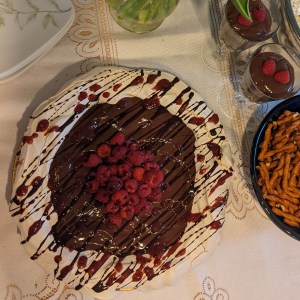
What experiences do you want to remember? When I broke my wrist several years ago, I was in pain and distress for weeks. At the end of that hard season, my wrist was functioning well and pain-free, and I wanted to celebrate. I made pavlova with chocolate filling and invited my friends to eat it with me. The memory still helps me remember God’s generosity in healing me. 

The day you got your college acceptance letter? The completion of an extra hard project? The first day of spring? Inviting others to celebrate and enjoy all the senses of taste, touch, smell, sight, and hearing with you helps keep your memories close and your gratitude alive.

We are often too distracted to see what surrounds us. In addition to remembering important events, celebrating in community also slows us down and provides space for delight—to notice and celebrate. Delight, Ronald Rolheiser says, is “being spontaneously surprised by the goodness and beauty of living.” Spending time with children helps nurture delight, giving us reasons to laugh and not take our adult selves so seriously. How often do you stop with surprise at the goodness and beauty surrounding you? I recommend you find time for delight at least once every day. It will make you a better person, for sure. 

Delight starts inside one person but its benefit increases when shared. I have the privilege of walking to work every morning. When I leave my house, I turn off whatever music or podcast I might have been listening to as I got ready for the day. I walk to work in silence, observing the colors, sounds, and textures around me. One day, a co-worker said to me, “I see you walking up the hill every morning and then you turn around to see the sky, and you worship.” I don’t know how he knew I was worshiping, because I wasn’t raising my hands or singing, but he was right! The delight of a grand sky and new colors every morning is a repeated surprise that starts my day right. Often, I take a picture of it and post it to share the joy. 

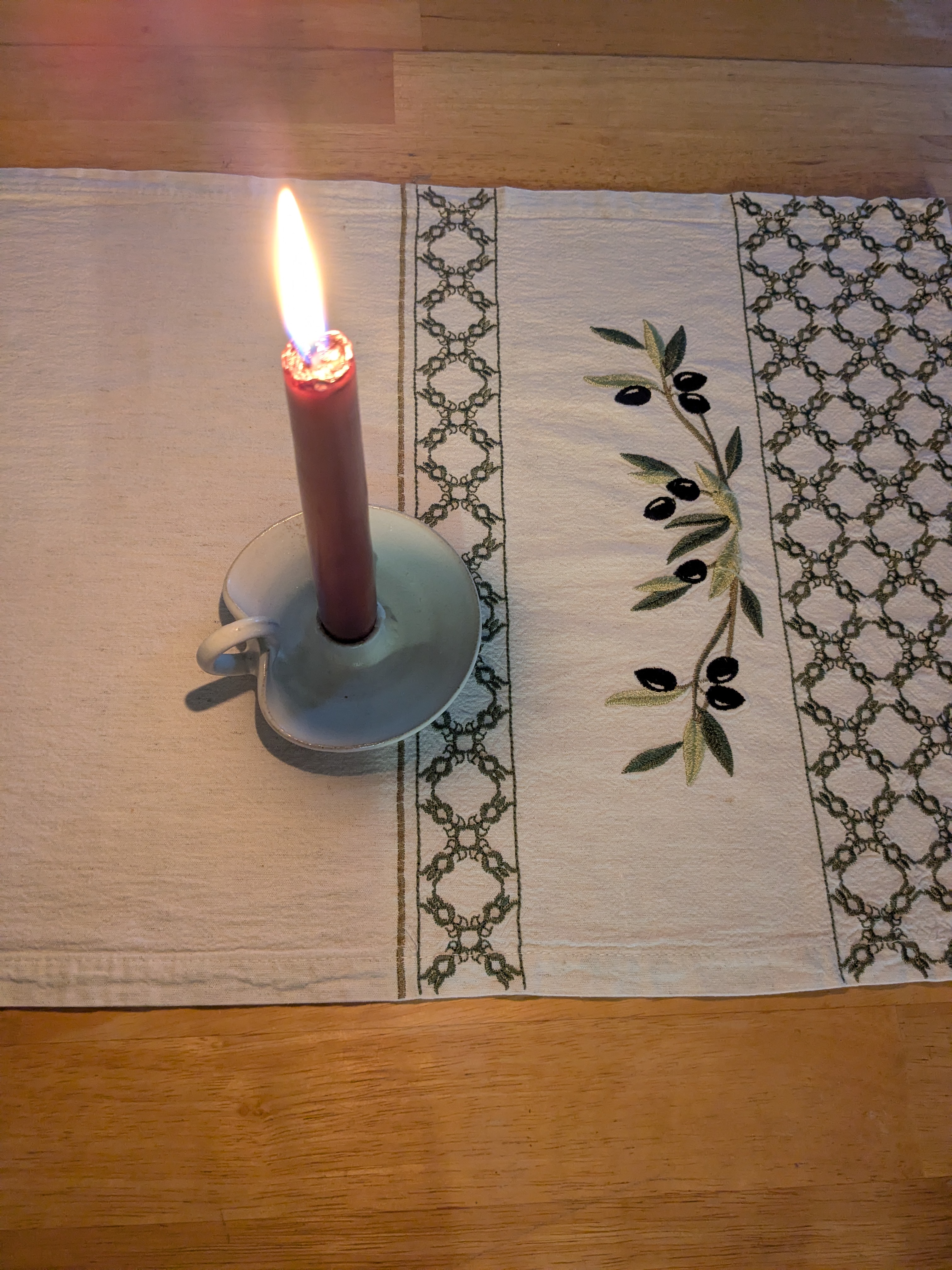
Here’s the good news: practicing delight can be a remarkably simple act. It doesn’t have to include sumptuous, creamy calories or Pinterest-perfect décor, or hand-made accessories from Etsy. Delight could mean lighting a candle at the family breakfast table. It can include sitting in silence and reveling in it. Would you see rabbits play with each other if you didn’t sit on your porch for five minutes? What if you’d invite a group of friends on a hike to watch the sunrise in silence? 

So, keep it simple and unfussy but do find people and spaces to make delight tangible! When I first moved into my trailer, I didn’t have many things, but I had goblets from thrift stores, string lights, and mugs. I could serve all the tea and coffee I wanted. I could serve chocolate mousse in the goblets—or yogurt parfaits or kombucha. With string lights swooping up to the ceiling, it wasn’t the latest designer’s vibe, but it was easy and fun. I had simple food in simple objects with my people, which was all we needed for delightful gatherings.

Lastly, celebration in community connects us with each other. Isolation makes us smaller versions of ourselves. But gathering with people makes us more human and more in touch with God, ourselves, and the world. It’s how God designed us—even the introverts. There are times for fasting. There are times for solitude. Each of these disciplines is necessary and enriches our lives significantly—and so does celebrating with people. 

A friend who is an only child taught me that everything is better when it’s shared, and she’s right. I love food. I could eat scrumptious food every day. But I live alone, and I eat very simply at home. Because of that intentional choice, I can look for reasons to make special food for people, or sometimes I ask a friend to join me in going out for ice cream or a soft pretzel. After all, everything is sweeter when it’s shared. This connects back to the idea of communion. Jesus didn’t tell His disciples they should remember His death with bread and wine when they were at home on their own. 

All of us are more whole when we incorporate celebration into the fabric of our days. The best celebrations involve at least one of the five senses so that our bodies can retain the memories. And finally, celebration in community shows us surprising, enriching dimensions of God, His created world, and people. Without celebrating together, we would miss seeing these aspects of His heart.

Remember. Delight. Connect. These are gifts we treasure now, but they also have the ring of eternity about them. One long, beautiful day, we will celebrate a wedding feast. Knowing His creativity now, we know the food will taste beyond delectable. We will be utterly surprised and delighted with the beauty and wonder around us, and we will be thrilled to enter the companionship we were made for. Best of all, Jesus will be our host. Clearly, He also loves celebrations with food. 


Other authors on celebration and feasting

The Supper of the Lamb, Robert Farror Capon. This theologian is also a chef and writes with wonder at God’s  provision in food. 

The Body Teaches the Soul, Justin Whitmel Earley. Chapter 3: “Eating and Drinking.” Earley explains fasting, feasting, and ordinary time, and offers life-giving ways to enter each—with community.

Every Moment Holy, Douglas McKelvey. Volume I: Liturgy for Feasting with Friends, page 112. Reading these lines together helps us push back the darkness and declare with a feast that “the resurrection of all things has already begun.”

The Lion, The Witch, and the Wardrobe, C. S. Lewis. Chapter 11: “Aslan is Nearer.” Lewis portrays the joy of Christmas breakfast after an interminable winter, but the witch perceives the feast as a threat to her reign.

Ideas for simple celebrations

  1. Make your celebration food together so that the food becomes the event.
  2. Invite a few friends and take a walk, hike, or ride bikes in a park or scenic area.
  3. Gather grasses, greens, and pinecones for a centerpiece at your picnic.
  4. Brainstorm non-calorie, no-money celebration ideas with friends.
  5. Play your favorite playlist or crowd-source your own live music.
  6. Instead of buying disposables, collect plenty of thrifted items to use generously and impractically, such as goblets at a picnic.

Find a Way to Bear Up

Several years ago, I took six poetry workshops on Zoom with Danusha Laméris, a beautiful, gifted poet who lives in California.

Danusha was making a point that I’ve forgotten, but her story remains with me and I think of it almost every day. She told us that she had a young son who was hospitalized multiple times with a chromosome deficiency that no one could diagnose. He died before he became a teen. (I can’t remember all the details and I wish Danusha would find this blog post to correct it.)

The stress of having her son deathly ill for years with no answers was agony, and the medical staff tried to be helpful by promising her that some day there would be resolution.

But there was one tall, wise doctor who carefully and lovingly explained to her that there might never be an explanation. “You will have to find a way to bear up while not knowing what is wrong with your son.”

Danusha said he said it gently and kindly and full of love, and his words helped her shift into a way of living that, though still hard, made it possible to go on.

I often think of that wise doctor and how his words apply to all of us in some way.

Life is beastly hard in many ways and places, and there are often no good ways out of the hard pieces.

Singleness is hard and marriage is hard.

Raising children is hard and being childless is hard.

Forgiving and budgeting and exercising and being sick and hosting and grieving and waiting and deciding and repairing is hard, hard, hard.

Difficulty doesn’t necessarily mean that we’re doing something wrong and need to correct it. Difficulty means that there might be no quick resolution to this, so our next goal has to be to learn how to carry this weight well. We need to find a way to bear up under the hard.

Sometimes I think that’s a key part of being an adult: finding what strengthens me and then doing that regularly.

Finding a way to do hard things doesn’t mean that we should grit our teeth and muscle through the next big task. I think living well in difficult seasons requires nurturing a heart that is both soft and strong.

That’s what Danusha did. Over the years marked by griefs, she has kept her eyes open to the light and the beauty around her and puts it into poetry. The sting of multiple losses pierces her lines, and grief is a pervasive theme for her, but it doesn’t have the last word in her story.

You don’t have to write poems to deal with hard things, although I bet you can write a better poem than you think you can.

To stay soft and strong, some people pray breath prayers.

Or take daily silent walks.

Or cry when they need to.

Or set the timer for ten minutes and read or nap.

Or laugh with children.

Notice how these physical responses can help to build the muscles that help carry emotional or spiritual weight.

Those tears when you see the morning star before dawn? That’s your soft heart, sensitive to beauty and wonder.

That grin and deep sigh before you walk into the next big assignment? That’s your strong heart keeping you vertical and resilient.

The world doesn’t need more harsh, strident, strong women. We need sensitive, impressionable women with strong, resolved, steady, thoughtful hearts that keep doing the next right thing without crumpling. And when they crumple, they cry awhile then get back up.

Soft, not flabby.

Strong, not strident.

Being soft and strong is a way to bear up in the hard places that might never be resolved until the new creation.

The way Jesus lived and loved models a way for us to be soft and strong, able to bear up under heaviness as He did. And the Spirit that raised Jesus from the dead is in you and ahead of you and over you. He is very strong on your behalf. And His heart is soft toward all that is beautiful and all that is broken.


My book is about living well when you find yourself in a story you hadn’t planned. You can buy it here!

The Value of Your Story

The Daughters of Promise team asked me to contribute an article for each of their magazine issues this year. The themes they assigned were too beautiful and exciting for me to refuse to write about even though I didn’t actually need three new projects with deadlines. This blog post is the article I wrote for their Storyseekers and Storytellers issue.
The stories in this photo are some of my favorites. I’ve read all of them at least twice.

I was returning from a missionary conference where Elisabeth Elliot had spoken. Riding a big, lumbering bus through green Irish scenery, I read as miles disappeared behind us. I was reading Mrs. Elliot’s latest book, Quest for Love, which she had autographed for me. It had been a hard year for me, adjusting to a new life in a new country. But even more difficult, I was holding heartbreak, a romantic hope deferred.

In the book, Elisabeth Elliot wrote of her own broken heart when she said goodbye to Jim, the man she loved, and didn’t know when she’d ever see him again. She had been so distressed that she threw herself on her bed, crying so loudly that her landlady rushed in to ask what was wrong.

In that bus, surrounded by silent strangers, I read her story for the first time and wept. Tears dripped off my nose because I felt so relieved and comforted. I saw that my hero, the extraordinary Elisabeth Elliot, had also cried. She, too, had felt deep distress about her romantic hopes and big questions with no answers, and she had sobbed, too. I suddenly didn’t feel so alone, and a significant increment of healing happened deep inside me on that long bus ride.

Women—like Elisabeth Elliot—are good at telling stories.      Our stories hold immense value when we share them. Women are the life-bearers and      nurturers, and telling stories is a way we offer life to each other.  Elisabeth’s story did for me what all good stories do:

  1. Stories show us what is good, beautiful, and true.
  2. Stories give us hope because they show we’re not alone.

Remember that time you heard about someone’s experience, and it helped you feel new energy to keep walking? It was only a little snapshot, a short testimony, a tiny snippet from their life that they shared with you, but it gave you enough light that you still remember it and make decisions accordingly.

Each life has many, many mini-stories in it. Think about your own story—not the long arc of your life, but that little scenario from yesterday or a prevailing memory from last year. Any time you want something and go through conflict to find it, you have the beginning of a story. In your best stories, a hero arrives on the scene and helps you receive the object you wanted at the beginning of the story.[1] This is the illustration or snapshot from your life that you can offer to your world at the appropriate time to demonstrate what is good, beautiful, and true. This is your story.

Let’s unpack this definition of story so that you can identify yours.

You want something.

Our hearts are always moving in a specific direction. We lie if we say we don’t want anything. But desire is risky and potentially overwhelming. Hence, it can feel easier to shelve desire rather than to hold it, or     cover it up with a thick blanket of love for interior design or books—safer, more kosher desires to live with.

But for just a minute here, sit still and ask yourself what Jesus asked many people: What do you want? Probe the longings under those longings. Don’t be afraid to explore and sit in those caverns for five minutes. What emerges from that silence reveals an extremely important part of your story.

Cinderella wanted to go to the ball. Winnie the Pooh wanted a jar of honey. Anne wanted puffed sleeves. But under those dreams were deeper longings. Cinderella wanted to belong. Winnie the Pooh wanted the taste of honey on his tongue. Anne wanted to be beautiful. Your desires are the signs of an alive, beating, beautiful heart, not something to be ashamed of.

The minute you stop desiring, your story stops. If the blind men hadn’t wanted to see, Jesus wouldn’t have healed them. If the bleeding woman hadn’t been desperate for healing, she would never have touched Jesus’ hem and been healed, and she’d have had no story.

So, what do you want? What will you want today when you go shopping? What did you want on Sunday when you walked into church? What did you want when you picked up your phone just now? It’s important to name your desire because it gives you a clue about what you value most and what kind of story you will live.

You must go through conflict to find what you want.

Conflict, like desire, is wildly uncomfortable. So it makes sense that we hush conflict as much as possible. Conflict in our stories can look like disappointment, illness, questions with no answers, or difficult relationships. Name a disruption in your life or your day. You could make your own list of curve balls and disagreements just from yesterday, because all our stories hold some kind of difficulty where we conflict with ourselves, others, nature, or God.

Conflict is the place where your story turns, and good comes from it (eventually). Without conflict, your story flatlines. Without the conflict with Joseph’s brothers, Joseph’s story would just have been about Joseph in the field. Without conflict between His will and the Father’s will, Jesus would only have been sitting in the dark in the garden of Gethsemane.

Because of the significant disruption of my experience of fibroids, years of pain, and resulting hysterectomy at age 39, I became more sensitive to people’s pain than I would have otherwise, and I’m thankful. Janette Walls’ story in The Glass Castle shows that without her dysfunctional parents and their hurtful choices, she’d never have decided to pursue a better life.

The points of conflict in a story are the precise points where the story improves. In literature, we call these “inciting incidents.” Sometimes, the situation worsens before it turns positive, but the plotline turns on these points and makes the conflict enrich the story, deepening its impact. The impact comes from how clearly it shows us what is good, beautiful, and true.

Your true hero is Jesus.

Out of conflict, heroes emerge. To be clear: you’re an important character in your story, but not the hero. Your pain, your disappointment, or your demanding situation is not your hero or the most important part of your story. I don’t mean to sound like your predictable Sunday school teacher, but Jesus is the hero of your story.

Without conflict, we don’t know that we need Jesus. Jesus the hero does not exist to make all our dreams come true or take away all the conflict we live with, but to bring us to a deep connection with Him. He is who makes our stories ultimately true, good, and beautiful.

You dream and talk and shop and eat differently depending on who your hero is, the person you admire, the one you want to be like. So, who is your hero? How does your story make Jesus look good?

Your story matters!

 Women are good at telling stories, but they’re also good at comparing their story with others’ stories, and this takes them to sad places.

Your story matters, even if it feels ordinary and insignificant. When Anabaptists in Switzerland were hunted like criminals, the boundary line of one canton ran through one Anabaptist family’s house. This meant hunted people were safe on one side of the house but not the other. Can you imagine the drama and actual “cops and robbers” scenarios inside those walls? Meanwhile, we can assume that the lady of the house was baking bread and sweeping crumbs from the floor and mending holes in aprons. Her ordinary, mundane days made it possible for people to find shelter in her house.

Do your days feel dull? Does your ordinary story give hope and safety to your world? Your story—your ordinary, daily, mundane story matters!

Maybe you feel that your story doesn’t fit well with the stories around you. It’s odd, misshaped, and feels out of place.

Queen Esther was an orphan raised by a cousin and placed in a harem, which sounds like a dysfunctional, disastrous story on every level. Esther’s story didn’t develop like other Jewish girls, but hers was an utterly vital story.

If your story feels too normal or too odd to contribute to your world, take another look at what you long for, the conflict you’ve encountered in pursuing it, and the hero you’ve chosen. When you tell your neighbor or sister or best friend your ordinary story of what happened last week, or that wild, nonsensical occurrence from last year, you might give a bigger gift than you see now.

Your ordinary story can demonstrate how to live well without you preaching how to live well. Your strange story can help someone feel hope because they know they’re not alone. Your story is more valuable than you know!

It’s been thirty years since that bus ride home when Elisabeth Elliot’s story comforted me so deeply. What is your story? How could it help someone else feel less alone?

You should usually wait to share your story until someone asks for it. You should offer it humbly, not mapping your story on theirs as if you have all the answers. But your story—your plain, puzzling, aching story—when it demonstrates what is good, true, and beautiful, is a way you offer hope and goodness to your world.


[1] I’m indebted to Donald Miller, his Storyline conference, and his multiple books for this simplistic definition of story. It does not fit all the definitions of literary stories, but it fits the contours of living a good story.


I wrote a book once, and it’s not a story, though it has one piece of fiction in it, written in first person. The fiction is so colorful that a friend thought it had happened to me, which pleased me enormously. The book is about living well when you find yourself in a story you hadn’t planned. You can buy it here!

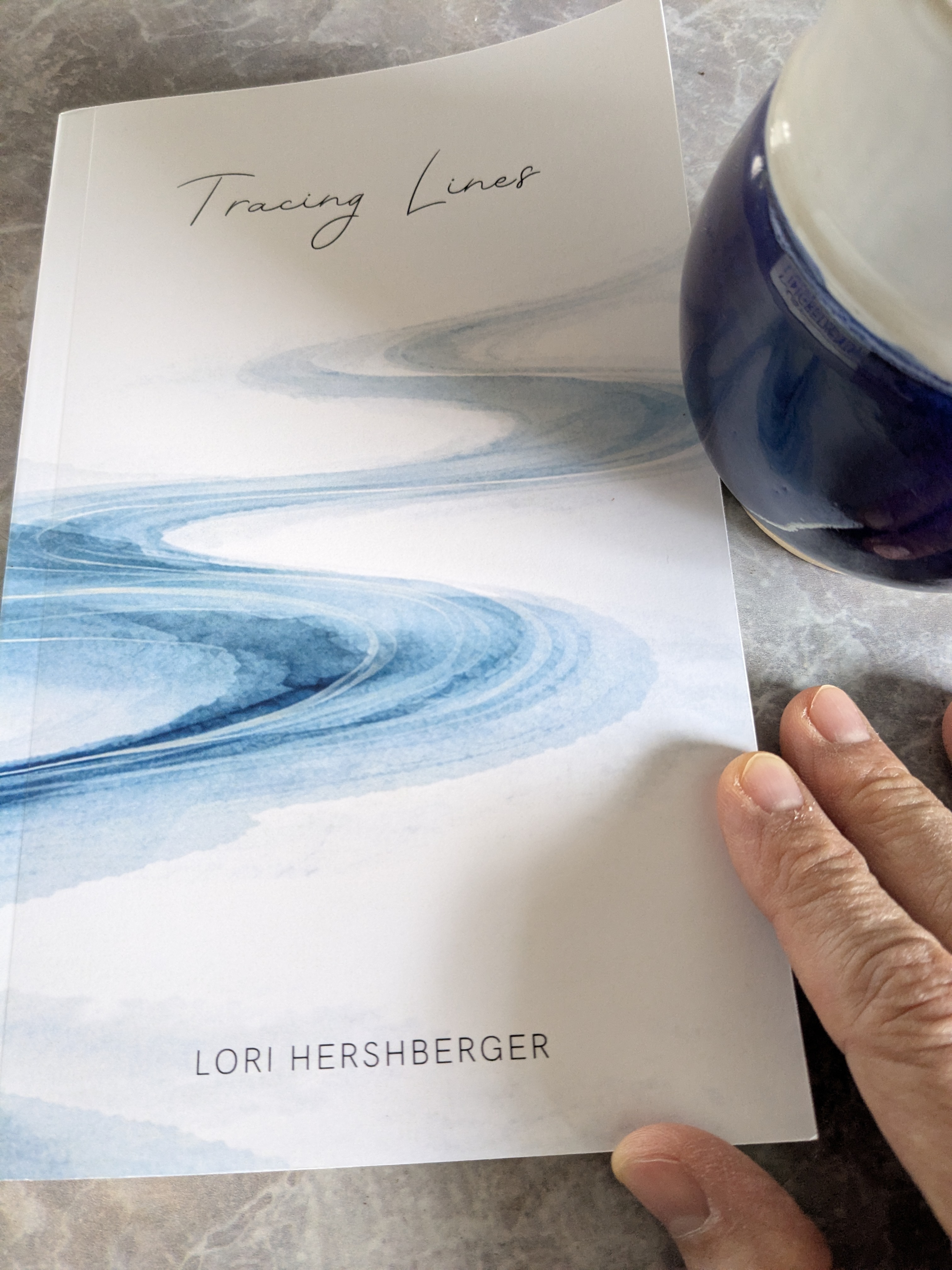
Tracing Lines, by Lori Hershberger

One of my favorite memories of last year is the serendipitous breakfast I had with Lori in Pittsburgh. A group of us were gearing up for our second day at REACH and we needed coffee and the line was too long at the hotel. So we found a coffee shop around the corner from the venue and inside the door was Lori!

I crashed her solitary breakfast, joined by another friend who is unnamed because she’s currently in a closed country. We were three friends who are never ever together: Lori from Thailand, our friend headed to the far east, and me, and we talked as fast as we could around our coffees and shared breakfast sandwiches. Lori was so brave in her cloud of jetlag, and very gracious because she had come to be alone, and we didn’t give her a chance to stay alone. We talked about words and travel and introverts and time zones and I needed to leave way too soon.

Now, a year later, I get to hold and read and announce Lori’s new book of poetry! It has been fun to watch it evolve from a distance. I’ve seen some of the poems before via her blog, but reading them on paper is a far better experience.

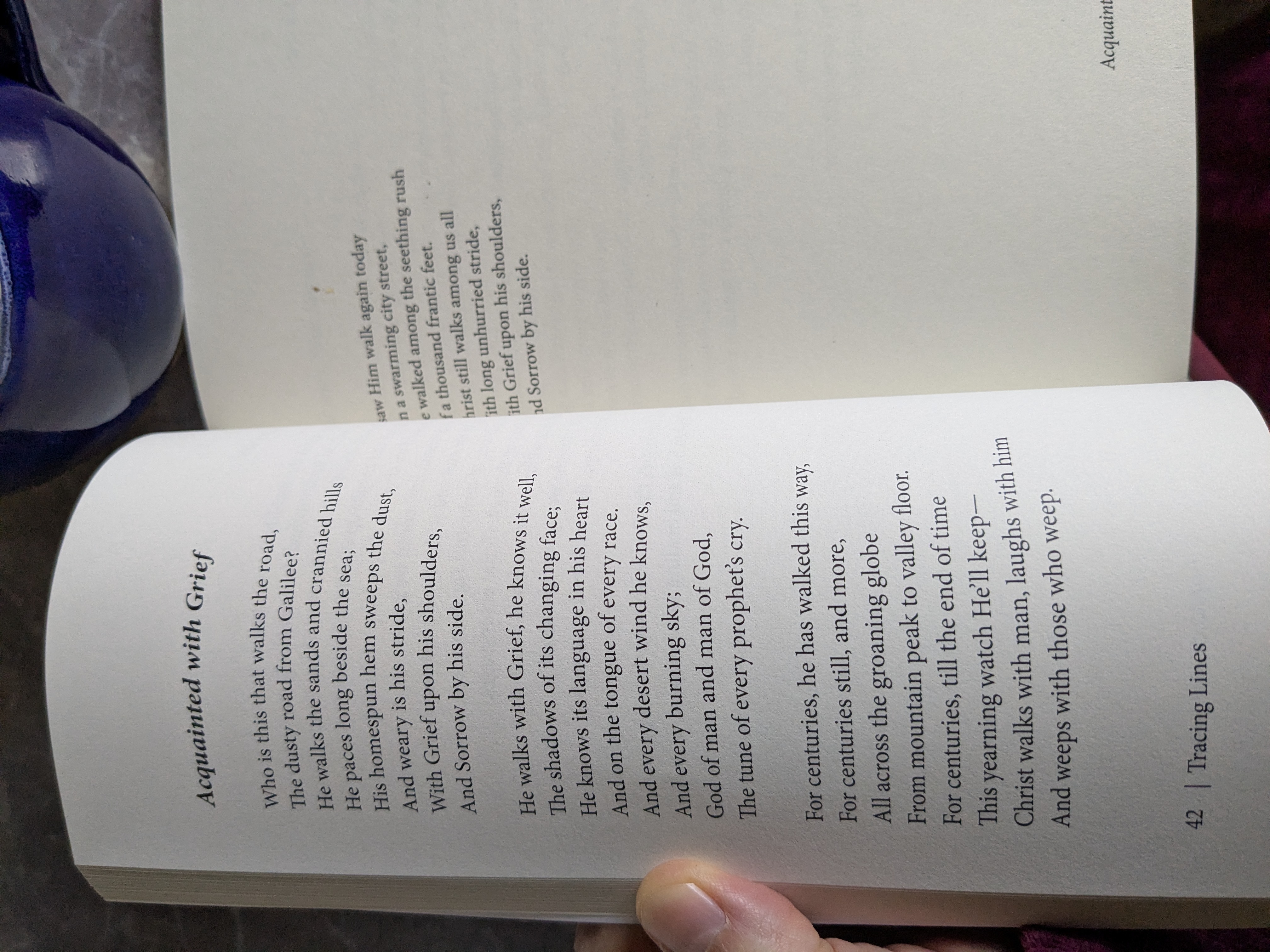
Most poets have recurring themes they visit. My themes often circle around light and darkness. Lori’s themes are often about specific places, geography, and distance between places. But the places are fully embodied, never only about dust or wind or water or airports, but also the deep wells of memories, hopes, loves, and griefs connected to those places.

And I love the way she uses repetition to give weight to her lines. When I finish reading a poem, I feel a little thud of recognition and wistfulness because I understand without knowing fully, and I wish I could write like that.

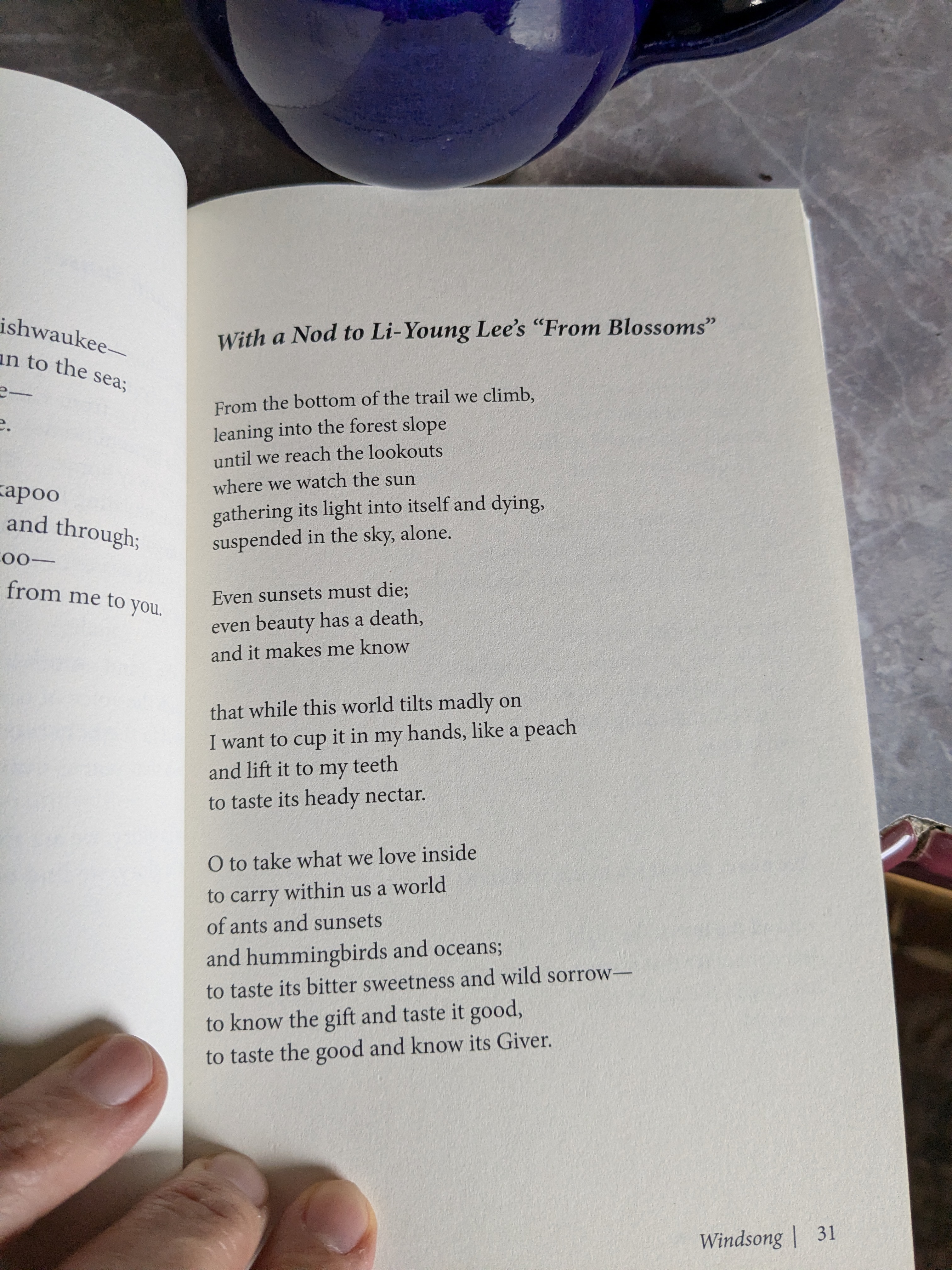
I also love how Lori’s poems give a nod to or enter conversation with other poems and their writers. Like this one:

Lori loves widely and deeply across the time zones and cultures. Her daily life of teaching English and living in a foreign country both enrich her and cost her deeply. I especially love how she pours out her life for her students. She makes it look easy and happy but I know there’s much I can’t see.

One of her talented students illustrated this book and did a fantastic job. I’m paging through the book now, trying to choose the best poem and illustration to share here, but I can’t choose. You will have to get your own copy, and quickly!

Ordering details from Lori’s blog:

If you’re in the US, you can order a copy for $10 on Amazon here: US Amazon link

You can also order it on Kindle for $6.99 if you prefer to read on Kindle: US Kindle

If you’re in Canada, you can find for $13.66 it at this link: Canada Amazon Link

If you prefer to order directly, you can send me an email at georgeinthailand620@gmail.com, or call me at 620-878-0733, or wherever else you already have my contact information. Allow 7-14 days for your order to arrive. For the US, expect shipping to be around 3 dollars with 50 cents added on for each book. For Canada, shipping is $4.25 with 75 cents added on for each extra book. For direct orders from Canada, I can only accept Paypal, no checks.

Are you wondering if you should order on Amazon or order directly? If you’re not in a hurry, and it’s before April 20, feel free to order directly. I’ll be around to send out the orders (I’m home in Kansas until April 26) and I make a little more money through direct orders, and Amazon gets less. This is always a good thing, no?

Knowing & Being Known: a book review

Last week I was walking in the snow with a friend and we were talking about the books we’ll read during Christmas break.

“Remind me of the title of the book you said everyone should read,” she said.

“Well, right now I have two books that I’m saying everyone should read,” I said. “Are you thinking of Relational Spirituality  or The Body Teaches the Soul?”

“No—there was one before those.”

I doubled over laughing.

I can’t help that I’m the enthusiast who is sure that of course everyone will love whatever I love. And that means that I make superlative statements sometimes. But yes. I read a lot and because reading time is limited, I work hard to read the best. Which of course means others will want to read them too.  

Then I remembered that before the last two books I really loved and enthused about, there was one a month earlier: Knowing and Being Known by Erin Moniz.

About once a year, I hear about a freshly-published book, and I know I need to read it right away and shouldn’t wait until I can buy it cheaply used, which is usually how I buy books. Last year, it was How To Know a Person by David Brooks. This spring Tyler Staton’s A Familiar Stranger was another one that I knew I couldn’t wait until I could buy a used copy. 

This makes two new books this year. No—there was also A Teachable Spirit by A. J. Swoboda that also everyone should read, but I digress. Another digression: I sometimes also read old books. On the Incarnation is perfect and lovely for this time of year.

Knowing and Being Known answered the sometimes-whispered, but often-silent questions about loneliness and ache for companionship. Erin speaks from the perspective of working with college students who are navigating relationships and find themselves floundering between their ideals and their gritty, disappointing reality.

She found that behavior modification wasn’t changing students’ lives in the ways they were longing for. She could tell them “Stop dating losers.” But while she could give solid advice, it didn’t address the deeper hunger driving the behavior. So she went on a search to explore the theology of intimacy: what is in the good news of Jesus that meets the universal hunger for intimacy? 

Other researchers have identified three essential building blocks for healthy, sustainable relationships: 

  • Self-giving love: reciprocity
  • Attention/curiosity: orientation toward and seeking the other
  • Commitment: choosing each other repeatedly; mutuality

Erin expands on these, and then broadens the points and finds them modeled perfectly in the Trinity. 

“…the revelation of mutuality and freedom in the Trinity challenges individual, entitled autonomy. The Trinity’s mutual love of Father, Son, and Holy Spirit defines for us the balance of interconnected love and freedom. 

That we are hardwired for intimacy harkens back to an origin story of intimacy that yields the eternal goodness, beauty, and abundance that existed before the dawn of time.”

This is the good news of the Gospel: that the magnet of our desire is pulled inexorably toward  the north star of God’s love, the model and perfection of intimacy.

And don’t just think we’re talking only about sexual intimacy, although that’s a valid hunger. This north star is much, much wider and deeper than that one level of intimacy, and it is accessible to everyone everywhere. That’s good news!

I love how Erin addresses loneliness. She acknowledges the hard realities of extended singleness but goes on to name a deeper reality: loneliness is part of the human experience. Further, she says, “I do not believe it is loneliness we fear. What we actually fear is the things loneliness reveals….There are other things driving the pain we describe as loneliness.” 

I think she’s 200% right. I live alone and I love it most of the time. I’m not usually lonely, but when it does descend at odd times, I subconsciously get very creative at avoiding the discomfort. But even a healthy, life-giving marriage wouldn’t fix that. My married friends tell me this and I believe them.

It takes a ton of courage to sit with the questions that lie beneath loneliness. But when we find that courage and that silence, we discover what is under that angst and what we really believe about ourselves, our future, God, and those we love. If we can learn to steer our magnets toward our true north, many of our questions and longings will order themselves under that star, like iron filings tracing the path between strong magnets. 

I’m not saying it as well as Erin does, so get yourself a copy and read it and underline it and discuss it with your friends. I’m not getting paid to promote this. I just want others to  discover the richness of a message that has the potential to comfort and coach toward deeper peace and understanding of each other and of God. So go ahead and order a copy for yourself and a friend as a gift to both of you. It could be a great way to start a new year!

My book talks about loneliness too, and has suggestions for when you’re feeling left behind. You can buy it here.

Walk With Me For the Journey is Long

When I read Ultra-Processed People, (which every American should read, by the way) I was dismayed to find out that exercise doesn’t automatically burn up the calories I consume. For example, when I eat a Snickers bar then compute how long I need to walk to burn those calories, my walk will benefit me, but not by erasing those yummy junk calories. The math doesn’t math that way, which is deeply disappointing to me and also proves that numbers hate me.

Ultra-Processed People shook me for other reasons too, which I won’t go into here except to say that after you read it, you will often ask yourself as you eat, “Was this food made with love to nourish me or made by a company that wants to make money off me?”

Back to NOT walking off the calories from a Snickers bar: the author says walking has many benefits even if it doesn’t consume the calories I wish it would. Even though I’m mad at numbers, I absolutely agree that walking benefits me in many ways.

When I think back to very dark seasons of distress, I remember that the times I was most calm and at peace were when I walked down the road to the sea or when I went swimming in a cove. Back then, I thought it was the sea that calmed me. But now, connecting the dots in retrospect, I know it was the physical movement of walking or swimming that ultimately regulated me, and my body knew what it needed more than I did. This is the road with the sea at my back:

Years later, when I was new to northwestern Pennsylvania, I was telling a friend how hard it is to survive the long dark winter. (In dramatic moments, I know we have nine months of winter in the year.) She suggested I take 15-20 minutes to walk right after lunch when the sun is at its highest. It was the advice I needed, and it has served me enormously. Most days, I’d invite my co-worker friend across the hall to go with me. Sometimes, when I knew she was having a stressful day, I used stronger language and insisted she walk with me. We’d walk in all weather except rain.

When we were scrambling to begin working from home during COVID, the first thing I put in my schedule was two walks a day: one with my co-worker and one alone. Two daily walks was the best decision I made in that season.

For years, lower back pain bothered me. Sometimes it was better, then worse. One chiropractor said firmly, “You could walk this off.” I was glad to know, and walking regularly is probably why my back doesn’t give me trouble now.

In another difficult, overwhelming season, my doctor (and I) didn’t want to put me on anti-depressants, but she suggested daily walks. I told her I already walk, and she cheered. “And look up as you walk—45 degrees slanted up toward the sky. There’s a reason the good book says to lift your eyes to the hills!” and she swept her arm up from the horizon. I try to remember her advice when I walk. Looking up exposes my eyes to more light and Vitamin D. But I suspect Psalm 121 intended even more than those physical benefits.

I’m the pal who drags her people out for a walk after a meal even in the middle of winter. You don’t feel like going, it’s true, but after approximately five steps, you already feel better. You take longer, deeper breaths, you notice birdsong and the sky even if it’s gray, and when you get back you never wish you’d have stayed inside. Never. For real.

Walking rests my brain. Some of my best ideas come on a walk. It’s probably something about the cross-pattern or rhythmic movement or not needing to concentrate or increased oxygen or change of scenery.

My current walking place is nothing like where I walked in Ireland, and this is sad. But it’s green and has wildflowers in every season and wild apples and white aspens. Sometimes I do a color walk, which gives me new eyes to see the ordinary.

Silence is a practice I stack with walking. In the morning, if I’ve been listening to a podcast or audio book as I fix my bed and pack my bag, I turn off the audio at my door. I step out the door in silence, walk through the morning in silence, walk the scenic route to my office in silence, stop to see the sun and sky and trees in silence. In the evening, I might listen to or send voice messages as I walk, but not more. I need silence to give a chance for some of the open tabs in my brain to close. I need silence for thinking space and for rest. Deep work calls for deep rest, Aundi Colber says, and silence is restful. If it’s not, it’s probably time to sit with it and ask it why.

Because I benefit from the social, emotional, physical, and spiritual results of daily walks, I think everyone else should walk too. If it’s too warm to walk at noon, walk at golden hour when the sun is less direct. Or walk in starlight, which is its own magic and calm and wonder. And if you can’t walk, do stretches. If you can’t stretch, do deep breathing. Or sing. The breathing, rhythm, and focus on something outside yourself will benefit you in surprising ways.

If it doesn’t, come talk to me! You know we’ll go on a walk to figure it out.

What I Wish I Would’ve Said

Photo by Clay Banks on Unsplash

Last month I gave a talk on Strength to Strength Sisters about God’s design for older women to teach the younger. You can call it mentoring or teaching or friendship or influencing. One Biblical term is “discipleship.” It was for women who want to live with eternal purpose, but don’t have 10,000 followers on Instagram like big influencers do. I didn’t talk about following a particular mentoring program, but about ordinary women connecting in ordinary ways.

I gave the talk via Zoom, which I don’t love. Physical presence matters enormously to me, so it was hard to speak alone in my empty office. But this technological platform gives the possibility to cross time zones without anyone needing to leave their couch, plus it preserves the words for people to access afterwards (as a YouTube and podcast recording) but still, I don’t love Zoom.

And as always, after speaking, there were details I wish I could do over, or examples I wish I could’ve added or reworded. That’s what this blog post is, which is another benefit of technology.

But before I say what I’d change about the talk, I want to say what I liked about it. I loved that I could see a few dear faces on the screen–especially friends who never turn on their cameras, but they did so for me, and it was super sweet of them. It’s why I rarely looked up at my computer camera, but always just below it at the faces I wanted to see.

I also loved telling the women “You are a tree!” and the simple interactive assignment that came out of that–a fun, meaningful exercise for all of us. And I loved telling the story at the end of what Pastor John told me when I didn’t know how to make a decision. His words to me that day were so confident and strong and simple that I could believe what he said. In turn, I can hand those words to others. It’s my favorite, beautiful part of giving away what I’ve been given.

The Q&A at the end of the talk was the hardest part for me. I felt self-conscious because I wanted to give good advice but didn’t have time to offer something thoughtful, and wasn’t at all sure that I answered carefully or sensitively.

Finding a mentor you can trust

One of the questions was about how to find a mentor you can trust, “who will keep things confidential.” I hear this question often. I never know if the question comes because some women can’t trust, or because some women aren’t trustworthy.

If you’re looking for a mentor you can trust, you need to risk exposing your soul, and you need to know that no mentor will be perfect.

I wish I would have said: If you want be a mentor, you don’t need to overthink it. It’s not complicated. All you need is to love God supremely and your neighbor as yourself. The shape of your life will influence others whether or not you intend that it does. That’s why friendship and conversation is so powerful. But it’s also why gossip is so devastating. It should never be said of you that you passed on carelessly what someone confided in you (except the threat of harming someone).

Most women, for whatever reason, love to be the first to tell a piece of news. But usually the most loving thing you can do for someone is to hold their confidence as sacred. Not even share it as a sanctified-sounding prayer request.

You don’t actually pop.

The soul is very elastic and can hold quite a lot of words and feelings, and it doesn’t explode.

We should work hard to be safe women for each other. When there are interpersonal problems and questions, we should be careful to talk only with the people who are part of the problem or the solution. I wish I would have said that because it’s what my parents taught me and it works for me.

Recommended reading

Someone asked for recommended reading on mentoring. I love talking about books! But I hesitate to recommend specific titles for specific purposes, because reading is so subjective. What is meaningful and helpful to me might not connect with you, and vice versa.

But I do recommend Getting to Know a Person by David Brooks. He writes for a secular audience but holds strong Judeo-Christian values. He says when we listen to people talking, we should listen so hard that we burn calories as we listen. Sounds like a good weight reduction plan! Seriously, if we would all follow Brook’s advice, we would be better people and able to mentor/influence/friend/disciple better.

I wish I would’ve said that.

But it’s ok. I keep learning. And keep taking in. And giving away. It’s the rhythm of a good life, the shape of a flourishing tree.

Our Trip to Savannah

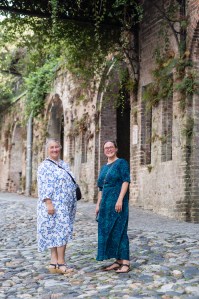
Back in May, I flew to Georgia to visit Lolita for a weekend. In the first hour, I knew she and Michelle and I needed to spend a weekend together. They had both been through traumatic years: caring for Ukranian refugees in Poland, re-entry to the US after 20+ years, a teen son with recurring osteosarcoma. They were still living in the ragged stages of recovery and survival and I knew in my soul we needed time to talk, breathe slow, and be present with each other. “We three should get together in—Savannah,” I said rashly, because I felt it deeply but didn’t have a plan.

They didn’t dismiss the idea, even though it felt impossible. How could it be possible, two homeschooling moms leaving for a weekend? We kept hinting at the dream throughout the summer, waited for  CT scan results, and when they were (miraculously!) clear, we started planning in earnest.

We would stay on Tybee Island. Michelle would drive 9 hours from VA. I would fly in late after teaching that day at Ministry Training Center. Lolita would have the shortest drive and would bring the essential food items: coffee, cream, and scone ingredients for me to bake.

They settled into our un-luxurious but clean condo and had the evening together on the beach and picked me up at the airport after 10:00. Each night was so funny. We had all these things we wanted to do and talk about, (including a blind date they’re thinking about for me) but after about 10:30, we discovered we weren’t teenagers anymore, and we’d struggle on until we hit a wall at midnight and call it a day. I spent the next week trying to catch up on the lost sleep. I wonder if this proves my age more than anything else about me.

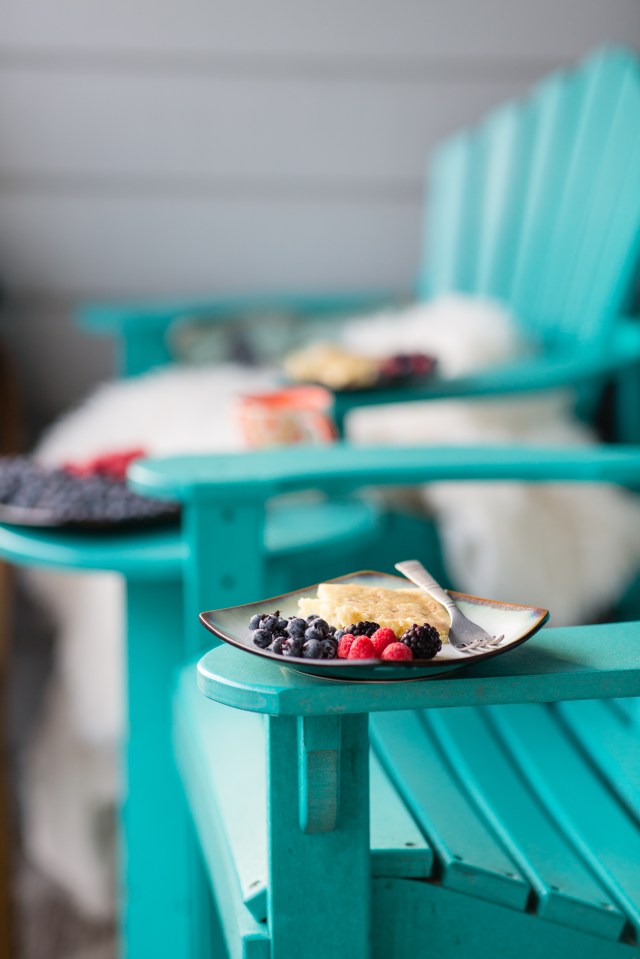
We didn’t sleep late, and sipped our coffee on the balcony in the glorious sunshine. I mixed up the scones and made a mistake and they became a fluffy cakey thing that we nibbled the rest of the day. We wanted to name this new creation but couldn’t settle on a name that suited us.

The beach wasn’t hot, but it was sand and water and scattered sunshine. And it was space to talk and talk and listen and listen and laugh and cry. We found our way to the city and the river front, and got carried away with the elegant, weathered, old-world vibe.


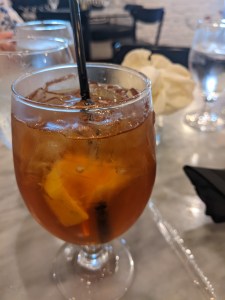
Vic’s on the River was a elegant place that served food flavored to perfection. We moaned and swooned over my shrimp and grits and Lolita’s she-crab soup. I was going to be good and order water, but how could I not enjoy sweet tea while in the south? The sweet tea was perfection. The wait staff were elegant and personable and we felt like princesses.

At the end of our meal, the lady beside us asked if we’d recommend the shrimp and grits. We got into a conversation when she asked where we’re from. We explained that we’ve been close friends for years at a distance, and have never been together with just the three of us. “This is a story,” our new friend said. “You could write a book about how you all got together!”

It’s true. Way back in our Voxer days, I created our chat group so that we could stay connected over all our drama. These were the friends who knew me the longest and we’ve stayed connected by that bond that comes from years of shared history. A book would make a good story about strong, enduring friendship across many miles and years. And the wonder is that it’s not a story, but a beautiful friendship of three.

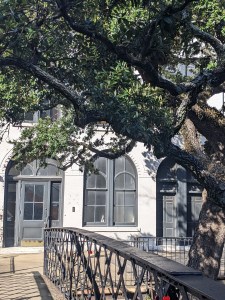
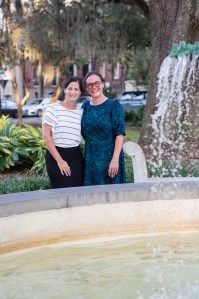
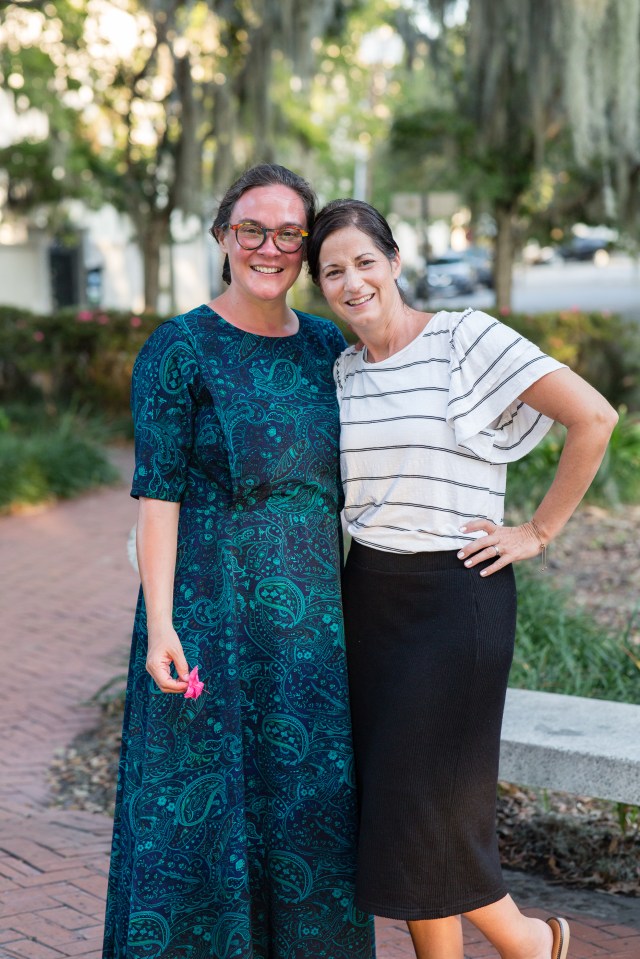
For the rest of the glorious afternoon, we ambled the beautiful old streets marked by restful squares filled with giant live oaks, benches, and paths. We moved slow, took lots of pictures, oohed and ahhhed over anything and everything, and laughed often, because there were always big feelings.


In one deserted square, it was golden hour and Michelle was taking lots of pictures and the fountain was calling my name. I sat on its edge, swung my feet into the water, and asked Michelle to take a picture of me splashing. But on the second kick, my sandal strap broke. This is maybe one reason  moms don’t let their children splash in public fountains, but I say when you’re nearly 50, the rules change. Even so, I knew as I was kicking that the sandals weren’t made for this kind of fun, and I should’ve taken them off first. We laughed and wailed at my thoughtlessness, and I walked for hours with one sandal. Eventually, we passed a CVS where I found cheap flip flops to wear back to the house. I still don’t regret splashing in the fountain. I’ll splash barefoot next time.

.    

We watched art students sketch and sat long at Forsyth Square. We kept thinking we were back in Europe and it felt surreal. We got snacks and headed back to the condo and couldn’t manage to stay awake and coherent past midnight.


The next morning, we savored coffee on the balcony again and packed up. The beach was  cool and windy, so we headed to the city. The drive in, across green swamps, was like moving through a painting. We found Savannah Coffee Roasters, a place that ticks all the boxes for a coffee shop you could stay at for a long time or keep coming back to. One of the owners is Australian, which may account for that flair of menu choice and extraordinary service.


We took our coffee and pastries to a shaded square and sat on a park bench and talked for a long, long time. We had to watch the clock because we had miles to go that day, but we didn’t move fast. We found a Churchill pub with she-crab soup and sweet tea and it was wonderful. Then we had to say goodbye. Michelle hit the road and Lolita dropped me off at the airport.

I had a very long, lonely, late trip home and fell into bed in the wee hours of Monday morning with no regrets.

This tells what we did, in broad strokes. Michelle was the unofficial professional photographer and all the stellar shots here are hers. Photos are wonderful to document the sights. But what we heard, felt, said, saw, stays with us beyond what photos convey. All we can say is we’re much better  for this sweet, beautiful break in an old southern city.

Look For a Lovely Thing

I took a walk this evening. I was sleepy after supper and didn’t feel like walking, but I told myself, “If you don’t take a walk, you’ll die.” It’s not that dire, of course, but I was feeling melodramatic, and when the sky is clear and the next half hour is free, a walk is always the best idea.

When I crossed the road in front of my house, I saw this leaf in the grass and it gave me an idea:

Dr. Elissa Weichbrodt, on Instagram, does what she calls “color walking.” I heard her speak earlier this year, and was so moved with the way she sees the world and the Christian’s place in it that I’ve never been quite the same since. I read her new book, Redeeming Vision, and love how she unpacks art and its back stories. When I saw how she does color walks, I felt cynical because in my neighborhood, there’s never anything as exciting or dramatic as the vibrant colors she finds. So I never tried color walking, even in the summer.

But this evening, this faded leaf pushed me into trying something new. I decided to call it contemplative walking, like Dr. Weichbrodt does sometimes, and took pictures of all the yellow I could see.

It pushed me to walk faster, toward the next yellow thing because I didn’t know what it would be.

I saw shades that tended toward tan and orange, and the sun was setting in glorious clouds, but I was focused.

Look for a (yellow) thing and you will find it.

I kept thinking of Sara Teasdale’s lines,

“Look for a lovely thing and you will find it,
It is not far——
It never will be far.”

Lucky I was looking for yellow. Pink or purple is going to be a harder search.


Summer Pieces

Well. It’s been summer of staying local, not buzzing away to see far-flung people. It’s been good, even though I’m feeling antsy. My summer priorities were to plug in where my feet are, and I have no regrets. But yes, I’m ready to go somewhere. Meanwhile, I’ll recommend bits and pieces that have fed me and kept me from getting bored and stagnant.

In the spring, I was telling a friend that I’m not going anywhere because I don’t have international travel plans this year. “Yeah, you’re not going anywhere. You’re just going to New York,” she joked. She had a point. “Going somewhere” is fairly subjective.

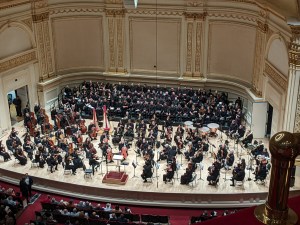
I went to Brooklyn for my summer break in June. Before I went, I was scared I’d be lonely, but in some mysterious alchemy, that didn’t happen until the very last day. The break in the city was everything I needed it to be: books, socializing, solitude, exploring, favorite haunts, new friends, a few ESL lessons. Next year year, I’ll turn 50, and I intend to celebrate all year, starting now, and I felt that a concert would be a good way to start. I dithered for days. Was it too much money? And who goes to a concert alone? But I got a ticket to listen to the Met Orchestra and Choir sing Brahm’s Ein deutsches Requiem at Carnegie Hall, and in the first 30 seconds, I knew this was the right decision. The music was exquisite and glorious, and I’ll always be glad I went. And it turns out lots of people go to concerts alone. Here is the recording that I listen to often, which is wonderful, but nothing like hearing it live.

Earlier in the year, I had the opportunity to be present for a talk that moved me so deeply that I’ve listened to the recording multiple times. Charles Cotherman spoke on Becoming Human. He suggested that efficiency doesn’t help us be more human, but close community does. And he said we can only serve God in the place where our feet are, a truism that hit me hard. He’s researched the story of Christian study centers such as L’Abri, where Christians formed communities centered around education, and he wrote about them in Thinking Christianly. After his talk, I told him how much I admired the Schaeffers’ work at L’Abri, but he reminded me that they had a work at a particular time and place, and our work in this time and place is going to look different.

I listened to an audio book on Hoopla that had me grinning often and I still live in its aura. This is Happiness is set in Ireland in the 1950’s when the villages were “getting the electricity.” I’ve never enjoyed descriptions of rain so much. The narrator was Irish, which added to the nostalgia, and I was sorry when the story ended. However, the title and its meaning stays with me, and I hope it always will.

In a round-about, God-led way, I came across a podcast that was so gripping and beautiful, I gave it as a listening assignment to the women’s Sunday school class I’m teaching. We’re studying John, and this sermon, “I Am The Bread” by Tyler Stanton, fed me profoundly. It’s on Spotify here and on his church’s website here. I usually listen to books and podcasts at 1.3 or 1.4 times the normal speed, which helps keep me focused. But not this speaker! I also loved his sermon on Theology of the Body. And I’m reading his book Praying Like Monks, Living Like Fools, which is solid and convicting.

Another book I just finished is Holy Unhappiness by Amanda Held Opelt. I really agree with her premise: that the prosperity gospel has seeped into our theology and made us feel more entitled than we realize. Her insights about satisfaction in marriage and work seem sound and realistic, which was refreshing, and made me wish I’d read this a long time ago. However, I felt very disturbed at her personal story of medical crisis and how God miraculously healed her after four days. I don’t want to minimize her trauma and suffering, but really? Four days? It felt dismissive of anyone who has wept and suffered and begged God for healing for months and years. I struggled to take her seriously after that, and I need to discuss the book’s message with someone else who’s read it.

This summer, besides good things to listen to and read, there have also been guests hosted and mini celebrations, simple and happy and not overwhelming to plan and carry out.

I hosted a small party to celebrate my healed wrist, and it included pavolova with chocolate and raspberries, which always makes the angels sing.

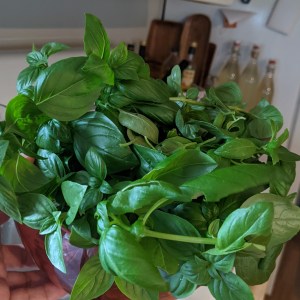
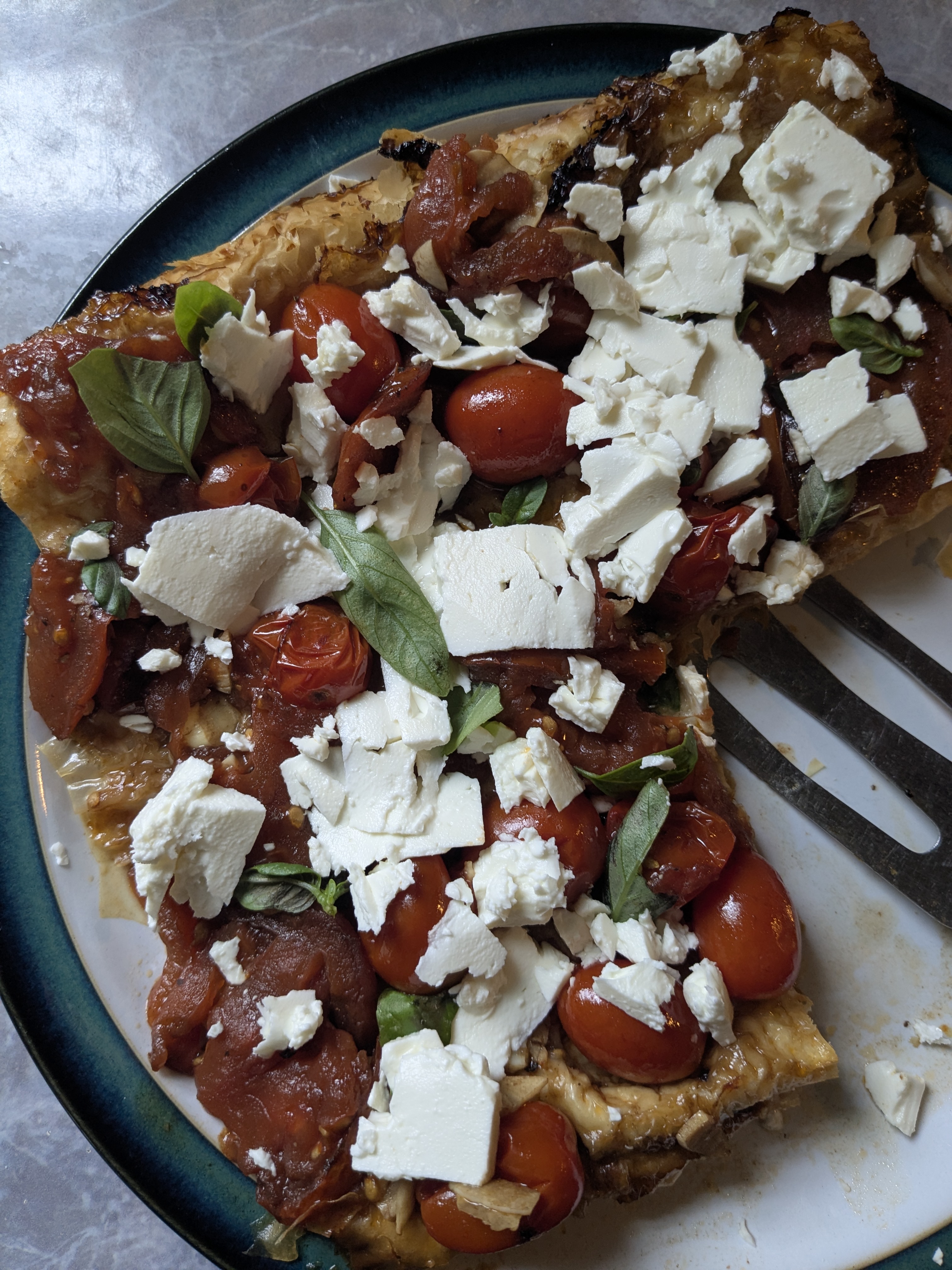
There was fresh basil to make pesto for a tomato salad at our book club’s picnic.

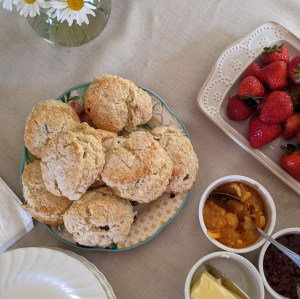
There were scones to celebrate one friend’s birthday,

and Strawberry Brita cake for another friend’s birthday.
There has been Bible study at jail to prep and lead, and exquisite moments with those strong, brave women in hard places. There have been beautiful choirs that made me cry and worship. There have been meaningful lunch conversations and prayers and Literature Camp with more beautiful conversations and friends. There was an evening of solitude by Lake Erie where I made a piece of art with stones and sand as an act of slowing down and talking with God.

I’m still glad that Guys Mills has roads leading out of it. My feet are still itchy and probably always will be, but it’s been a good summer of serving where my feet are.