How does God host us? How does God’s woman host? I think about this often and I don’t have all the answers, but I’m sure that part of hospitality involves our own person and how we bring ourselves to the space we’re in. We can be should be hospitable outside our homes and welcome others into our presence in casual, brief interactions, such as with the shelf stocker in the grocery store or the hostess who seats us at a restaurant. People always deserve our respect and love, and presence and conversation is a gift we bring to our world and that’s why I refuse to use an automatic checkout unless someone’s waiting for me. This story of hospitality on a sidewalk happened to me over a year ago and its beauty will always stay with me.
The pair caught my eye as I sat at the table with my friend Melody outside my favorite coffee shop in Pittsburgh. The lady was largely pregnant, in a soft teal green sweater dress stretched over her stomach. Her husband’s hand reached protectively to support her back as she stepped up on the curb then into the cafe. Minutes later, I noticed them leave, coffee cups in hand, walking as if every step was a gift.
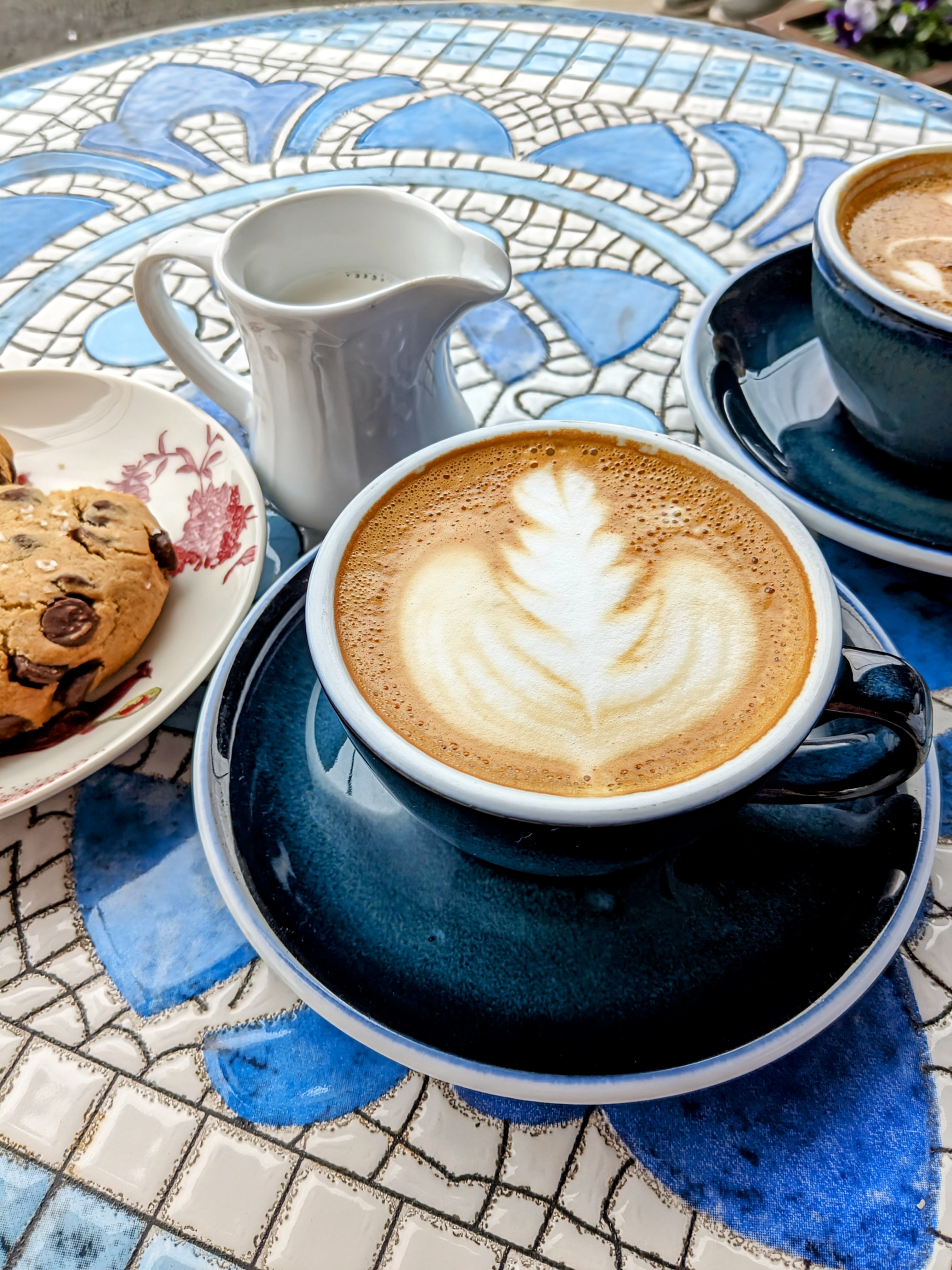
Melody and I finished our gorgeous, rich cortados in gorgeous, bright blue pottery, ambled through a funky, fun doughnut shop (Peace, Love, and Little Donuts!), then around the corner. Ahead of us walked the young couple I’d noticed earlier.
We quickly caught up with them because they were taking their time. I turned my head because I heard Melody say something but she wasn’t talking to me. She’d asked the lady when her baby’s due.
The man and woman stopped as if glad for the break from walking. Their friendly, open faces clearly wanted to exchange more than polite pleasantries. “I’m due on Sunday, Mother’s Day, so we’re just walking to pass the time. Do you ladies have any advice for a first-time mom in labor?”
I’m always surprised when strangers expect me to have a family, but I said nothing and Melody answered as if she was waiting to be asked, her eyes warm: “Well, Jesus endured the cross for the joy that was set before Him. Childbirth is like the cross and its pain, but we endure it for the joy that’s coming.”
The young mother nodded and her husband said, “You’re right. The Gospels talk often about the Christian experience being like childbirth.” He quoted several lines and his wife nodded.
They clearly wanted to talk more, so we introduced ourselves and said where we’re from. They were Catholics from a neighboring town, and they farmed with horses. The four of us stepped to the side so we wouldn’t block the sidewalk. We could’ve talked a long time; they were so engaging and thoughtful, but they needed to keep moving. We wished each other God’s blessings and walked away.
Later, I was curious, so I asked Melody why she referred to Jesus so quickly, before she knew they were believers and would give credence to what she said. “I saw such openness and gentleness in the man’s face, and I felt free in my spirit to quote from Hebrews.”
We wonder where they are now, this couple and their child, and we treasure that conversation on the sidewalk. Poet Danusha Lameris calls these brief moments of exchange “dwelling places of the holy” and “fleeting temples” because for just a few moments on a spring day, we recognized the presence of God on a dirty, common sidewalk. This is what hospitality and welcome can look like as we live with open hands and open faces.
Last week, this post gave the first part of this article on “home.” It introduced the idea that God cares that home creates comfort and safety. One day in chapel this week, we read Psalm 27 and my brain starting pinging when I saw all these words about God’s home: house, temple, dwelling, tabernacle. This concept must be important to God. I wonder how that should inform how we live, how we see the church and individuals?
Rublev’s “Trinity”
Creating welcome for the stranger
In addition to creating comfort and safety, God designed the home to create welcome for the stranger.
The picture of Revelation’s wedding feast shows us a place of welcome, generosity, and abundance. As we reflect God’s character of housekeeping, we can offer His warmth and welcome by embodying hospitality in our physical places. This can reach beyond walls, doors, and a roof.
In Free to be Single, her excellent book now out of print, Elva MacAlister points out that even when I walk across a college campus and fall in step beside a friend, I can welcome them into my space, my personal bubble, and show them hospitality as we walk together. Our personhood, the space we take up on a sidewalk or a car or a park bench, can be a place where we embody welcome, care, and interest in this person at this place and at this time.
God’s spaces reflect His selflessness, His intention toward people, and His deep care for us. We are most like God when we focus on others instead of our default selfishness. This is the biggest part of being hospitable.
Creating our spaces in pressure to compete with the latest influencer or neighbor will drain us instead of help us thrive. On the other hand, creating home as a place to welcome the stranger, which is really anyone, frees us to express our individuality in ways that help our people feel at ease, loved, and refreshed. One homemaker will prioritize plants and toys while another puts her energy into minimalism or coffee, but each can be responding to God’s direction to create order and welcome the stranger.
Home looks different for all of us, depending on our ages, seasons of life, and native abilities. But Christians can always reflect God’s homemaking skills in ways that make order out of chaos and offer life and beauty to people.
Trinity is an old painting by the Russian artist Rublev that moves me deeply. Showing us a peek into God’s character, the medieval painting depicts themes of fellowship, unity, order, and hospitality. Three angels sit around a table at Mamre, while Abram, childless and out of sight, prepares a feast for them. The angels represent the Trinity, a unit of perfect love, fellowship, and safety. They graciously accept Abram’s eager hospitality. Abram, is, after all, reflecting God’s generosity and care, demonstrating what He knows about God’s character.
As homemakers made in God’s beautiful image, we extend, arrange, offer safety, and create homes because we first receive it from God’s heart. Rublev’s Trinity shows how home, fellowship, and hospitality comes full circle: we receive and offer in response, we give out of what God gives us, and we can never out-give God!
Is home a person, feeling, or place?
When I look at the glad fellowship of the Trinity and see how Jesus showed us the Father’s face in a particular time and place in history and geography, my love deepens for the Father, Son, and Holy Spirit, and I discover my true home. In the Trinity’s circle of beauty and truth, home is a person, a feeling, and a place. Because I’m in a body and not only a soul, I learn from God that place, stuff, food, furniture, things I touch, all matters because it matters to Him.
In the trailer we rent, our shared space isn’t trendy or influencer-worthy, but my housemate and I try hard to blend our differing color preferences, use indirect lighting, white walls, original art, and plenty of blankets within reach to make a comfortable space for ourselves and our guests. I like to put tea and scones on the battered coffee table so that people don’t have to move far for it, and they can prop up their feet wherever they’re comfortable. Friends often step from the porch to the living room and sigh “Oh, this looks so warm and cozy” which is exactly what we want them to feel!
Does home matter to God?
God cares deeply about home as a place of safety and welcome.
In a world that’s constantly degenerating into entropy and disorder, God’s people have a high responsibility to bring beauty, order, and welcome wherever we can. Women (and some men!) are especially good at this, regardless of their personalities or Enneagram numbers.
Of all the careers you’ve dreamed of, imagine reflecting God’s character of being a home-maker!
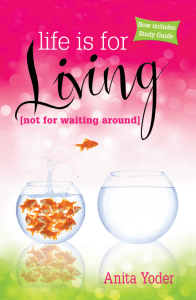
I wrote a book about living well in a place I hadn’t planned to be. Turns out that’s where a lot of us find ourselves. You too? Order your copy here!
Over two years ago, the lovely team at Daughters of Promise asked me to write a thoughtful, theological article on home. It was to explore this question: “Why does home matter in the bigger context of God’s story?” It was a new idea to me, but I quickly got excited as I began to study and ask questions about home. Since then, it has become something I think about often and take notes about and dream of expanding this article to something significantly more substantial. For example, what is special or significant about women in their ability to reflect God’s character as homemaker? And how does mundane, unseen work become meaningful when we think of ourselves as co-creators with God who is in the business of making all things new–pushing back entropy? So many rich questions to untangle! But that will be the work of another several years. For now, here’s the original (slightly polished) article, coming in two parts.
Is home a person, feeling, or place?
As a third-culture kid who feels at home in multiple states and countries, I have wrestled with this conflicted question for years.
If I don’t have a home, does it matter?
Is something important missing from my personhood?
Does God care about home since my homes have been so interchangeable?
I walk in a refugee camp in Greece and saw tents and blankets for houses. Under news headlines, I see photos of tent cities sprout up in Syria after another earthquake. I have suffered nothing like these beautiful people have, but I know the search for home. I’ve wondered if it should matter so much to me, and if home even matters to God because there are a great deal of other big questions that need His attention.
But when I observe people, listen to their stories, read literature, study the Bible, and cringe when people ask me where I’m from, it’s clear: home matters.
The immense disruption, disorientation, and restlessness over the loss of home shows me that home is important, does matter, isn’t a question to hush and try to forget.
Home can be a person or a feeling. But seeing God’s heart in the Biblical stories of Genesis to Revelation, it seems clear that God cares enormously about home as a place.
People and feelings do matter to God, because He says much about how to love Him and our neighbors. But He also holds place as very important, which gives us a way to think about our homes as places that matter to God.
In spiritual matters of the heart, we tend to live in our heads and work hard to think kind and gentle thoughts and nurture loving and patient attitudes. But in physicality, in places, our thoughts become embodied and visible.
For this and many other reasons that I’m still exploring, matter matters.
Bodies matter.
Places matter.
Home matters because God cares about physicality, clay, dust, tangible pieces of His creation. The incarnation of Jesus proves that, in case we doubt whether God values physicality. Jesus’ body, His dusty life as He touched people and got hungry and tired, elevates for us the gritty reality of matter, stuff, tangible pieces of living.
Once when I was reading John 14, I actually gasped when I read verse 23: “We will come to him and make Our home with him.” Jesus is talking about Himself and His Father, and He’s saying they are homemakers!
What kind of home do they make? How do they work together? What does their home look? They’re making their home in me? What does that even mean?
God’s homemaking in me is a spiritual reality with profound significance that ripples into physical reality even when I’m not conscious of it. Further, when I know something about His character and get to know Him as a homemaking person, I can grow in reflecting that part of His character.
Like elegant bookends, the special, prepared places in Genesis and Revelation show us what God thinks about home. And in between those places, we see many ways and times where God valued home as a physical place. He asked Mary to give a home to His Son Jesus, and placed that home first in her womb, then in Nazareth, specific places at specific times. God ends the Biblical timeline with a picture of our eternal home, a place too wondrous to describe, but we know it includes a wedding feast (I think there will be lots of cake!), cultural diversity, a river, and a fruitful tree. All these scenes happen in specific places, not just in our heads.
As I study the Bible and get to know God’s heart, I see His homemaking reveals many things about His character and here are just two:
He creates order and safety
He welcomes the stranger
This concept gives me goosebumps because these characteristics are beautiful and actionable for all of us!
Creating order and safety
God’s design of home holds an atmosphere of safety, rest, and belonging, seen both in Eden and our eternal home. God crafted them as places for fulfillment and fellowship where humans and nature can flourish and expand to their fullest capacity.
Home is a nest that protects fledglings from storms and predators. Home is a fuzzy blanket that wraps children in warmth and keeps out the world’s cold, hard edges. Home is the inviting smell of gingerbread baking. Its physicality engages all our senses and grounds us in this place, right now. Its daily, weekly, annual rhythms shape our neural pathways and linger in our subconscious.
In the absence of safety (wars, famine, abuse, neglect) humans tend to become less-than-ideal versions of who they were intended to be. The loss of home as a place is one reason refugees and natural disaster victims turn to violence and become people they would otherwise not be. In addition to suffering from emotional and spiritual damage, their material losses devastate their lives profoundly because physicality matters. No one just lives in their head.
But in safety and belonging in physical spaces, we flourish because that’s how God designed us. It’s the kind of homemaker He is.
From ages 35 to 41, I lived in five places. In each place, I arranged furniture, organized a kitchen with a housemate, and found a rhythm of keeping order that worked for that season of life. Then I walked away from it, left the stuff behind me (except for a mug or two), and started over in the next place. By the fifth place and the third country in six years, I wanted to think that home and belonging didn’t matter because it was too hard to reckon with all the loss and change I was living in.
But I’ve come to see that those transitions were so shaping and impactful to me precisely because home is so important. I couldn’t brush off the loss of home as if it didn’t matter.
The longing for home and belonging is an ache as deep as time. The loss of home is probably one reason Cain cried when he realized would never belong anywhere and would live in a place that means “wanderer.” We were made for home as a place that provides context for the connections in relationships that make us better people. Even literature knows this. Think about your favorite stories and books and how they center around the search for home and belonging.
The Odessey
Anne of Green Gables
Hannah Coulter
Gilead
News of the World
To be clear: home is not the most defining thing about us, but it IS basic to the need of our flourishing. This need doesn’t require us to live in one place all our lives. But creating home as a safe place to thrive means we can order our present spaces in ways that are restful and calming wherever we are.
When God gave humans dominion over creation, He was letting us be homemakers, designers of places. He was setting us free to innovate, create, and bring order out of the chaos that cascaded out of the fall. He could have regimented every part of keeping the first home, but He didn’t want Adam and Eve to be robots. Every healthy person carries some capacity to create, experiment, and maintain (“dress and keep”) home. As we carry out that work, we become better people ourselves and provide a comfortable, organized environment for others to flourish.
Up next Friday: Home Matters Part II, Creating Welcome for the Stranger
I wrote a book about living well in a place I hadn’t planned to be. Turns out that’s where a lot of us find ourselves. You too? Order your copy here!
Last week, the lovely Daughters of Promise team asked me for a writer’s interview on Zoom. It was in connection with their Brighter Winter program, which gets participants into lots of books during January and February. I agreed to the interview even though I’d never done anything like it. In the moment, it was mostly enjoyable even though I don’t love being the focus in a virtual conversation. My hosts helped me feel comfortable, and seeing a few friends’ faces made the call enjoyable.
We talked about my book, the process of writing and self-publishing, and my goals for the book. My goal was—and is—for it to be a companionable voice on a lonely path. Then a question came that I wasn’t prepared for: what can the church do for singles to support them and recognize their gifts and contributions to the Kingdom and not make them feel left out?
I stumbled around, offering ideas off the top of my head, but I didn’t feel good about it. So I decided this space (ironically another virtual platform) might be a place to think longer about the question and possible answers. I’m thankful beyond words that in this current season I can put down these ideas from a place of abundance, gratitude, and fullness rather than resentment, scarcity, and envy. I wish all single women’s churches and work places would support them as mine do. I hear many single women’s stories, and this is not their reality.
We want to be known and seen as contributing citizens, not oddities, even in our pro-family sub-culture. So please meet our eyes. Notice our appearance. Ask us questions about our latest holiday or visit home or latest book or hopes for the new year.
Give us responsibilities in church that fit our lifestyle. Keep in mind that most of us are working 50-60 hour weeks, and we love our work, but we have very little discretionary time. At the end of a long work day, we still have to maintain the car, see the dentist, buy groceries, do laundry, and cook. Did I mention take care of the house or lawn or garden? And all solo? That doesn’t give much time for babysitting, making church bulletins, or hosting–even if those are all things we are able to do and enjoy doing when we find cracks of time in evenings and weekends.
We love meal invitations and leftovers. We love hosting too, but it takes a lot of planning ahead because if hosting involves food, we don’t always have food in the fridge.
Hug us freely and often. We live in an adult world and often go for days without physical touch.
In family-centered activities like meals and picnics, invite us to join your family. We don’t always know where to stand or who to sit beside, and it’s lonely to stand alone in a circle, and we never get used to that.
If you don’t know us well but you have a potential boyfriend in mind for us, stay quiet and pray. If you know us well and we’ve confided our dreams to you, set us up with good men. Ask us on a double date or a blind date. We know that marriage won’t solve all our problems so you don’t have to tell us that but we need you to celebrate your beautiful, strong marriages and darling children and we need you to love us where we are and hold hope for us.
I can already hear howls of protest from some singles who feel misrepresented in this list. What I put on the table here is true for some but not all single women. That means it’s on every person to get to know the single lady beside her and love her as a one-of-a-kind individual, not as a piece of demographic information.
Singleness is hard and marriage is hard. That’s what Sam Alberry says, and I believe him. That means that all of us need all of us to accompany each other in this beautiful, broken world, to smooth the path a little bit for each other, to be present and available and tender toward whoever is walking beside us.
This is an old, out-dated poem, but it doesn’t go away. This is not a statement about politics but tears for the forgotten women and children suffering because of others’ arguments.
April 2, 2022
Orchestra musicians and choirs
Donated a free concert in aid of
Ukraine.
Guests waved blue and yellow flags,
Wore blue and yellow clothes
Or gorgeous flowy Ukrainian blouses.
No one clapped the whole evening
Until
Every song and every poem and the grand
Ukrainian national anthem
Faded into silence.
And then
The appropriate applause lasted for a long, loud time.
Surrounded with plush red velvet, dim lighting,
Glittering chandeliers,
We called this solidarity.
We called it respect. And it was.
And the music had been beyond beautiful.
But how does velvet sit in
Harmony with missiles and battered bags,
Fractured families, mass graves?
The irony, the audacity
Sits heavy on my chest.
And
Where were the charity concerts
For starving Afghanis hiding from their government?
Here is a list* of things I learned on my summer vacation on Lesvos, Greece in June. I spent three delicious weeks there to celebrate my 50th birthday, be alone, and spend time with two sisters, one brother-in-law, one nephew, and two friends who joined me after the first ten solo days.
I learned:
The island life is perfect for a restful, slow vacation.
The plane ticket is the most expensive part of the trip because accommodation and food is way cheaper than vacationing at home.
Jetlag is the price to pay for crossing seven time zones in a day.
Airline agents are very generous and kind when I treat them like good humans who have feelings.
Traditional Greek food is fantastic, simple, and bursting with flavor, and lemon chunks squeezed on everything make it even better. Ranch would be a serious desecration. Ketchup would be even more scandalous.
I wonder if most Greeks are Ennegram 7s.
Europe’s outdoor café culture is the best. And Greek freddo cappuccinos are valid reasons to go to Greece.
Sky and water in all its mirrored shades of light calms me like good music.
The lemon tree outside my studio apartment was covered with and dropping so many lemons, my landlady wanted me to take all I wanted. I can’t imagine living with such wealth.
Part of the efficacy of restful vacation is not needing stack activities. I can do one thing at a time: Drink coffee in silence. Read my Bible. Listen to music. Take a long walk in silence. Listen to an audio book. Read poetry aloud. Watercolor. No need to multi-task or watch the clock=bliss.
When I witness multiple nationalities and languages worshipping in one place, I always cry. Every time.
Beauty is profoundly healing.
Sunshine and solitude is deeply restful.
Some dreams come true. Others haven’t.
God is immensely generous to me, far beyond my deserving.
When I’m swimming and my friends on the beach decide to move down to a better spot, they can move my stuff and I can swim to the new place. Just like a mermaid.
Swimming alone is boring but still wonderful.
A three-year old nephew is completely irresistible when he cocks his head and says, “I want to chat with you!” I will happily talk or listen as long as he wants to chat.
Playing in the water with the nephew is the best playground in the world for both of us.
Sunscreen is worth the effort.
A day in Turkey gave us a taste of Middle Eastern welcome and warmth that seemed to go beyond mere salesmanship and I want to be like that too.
After three weeks of slow days and wholesome, fresh food and daily exercise and sunshine, I felt about 20 years younger. I felt. So. Good. In every way that’s possible to feel good.
Daily sunshine might have been the biggest, best thing about the three weeks. Locals don’t comment to each other about the nice weather because it’s always nice, and nothing to pay attention to.
I can drag my suitcase from the island, onto agents’ counters and over ramps to my house but I can never get the sand out of it–and I don’t want to.
*Inspired by Harry Baker’s poem, “Things I Learnt While Interrailing.
Last month I gave a talk on Strength to Strength Sisters about God’s design for older women to teach the younger. You can call it mentoring or teaching or friendship or influencing. One Biblical term is “discipleship.” It was for women who want to live with eternal purpose, but don’t have 10,000 followers on Instagram like big influencers do. I didn’t talk about following a particular mentoring program, but about ordinary women connecting in ordinary ways.
I gave the talk via Zoom, which I don’t love. Physical presence matters enormously to me, so it was hard to speak alone in my empty office. But this technological platform gives the possibility to cross time zones without anyone needing to leave their couch, plus it preserves the words for people to access afterwards (as a YouTube and podcast recording) but still, I don’t love Zoom.
And as always, after speaking, there were details I wish I could do over, or examples I wish I could’ve added or reworded. That’s what this blog post is, which is another benefit of technology.
But before I say what I’d change about the talk, I want to say what I liked about it. I loved that I could see a few dear faces on the screen–especially friends who never turn on their cameras, but they did so for me, and it was super sweet of them. It’s why I rarely looked up at my computer camera, but always just below it at the faces I wanted to see.
I also loved telling the women “You are a tree!” and the simple interactive assignment that came out of that–a fun, meaningful exercise for all of us. And I loved telling the story at the end of what Pastor John told me when I didn’t know how to make a decision. His words to me that day were so confident and strong and simple that I could believe what he said. In turn, I can hand those words to others. It’s my favorite, beautiful part of giving away what I’ve been given.
The Q&A at the end of the talk was the hardest part for me. I felt self-conscious because I wanted to give good advice but didn’t have time to offer something thoughtful, and wasn’t at all sure that I answered carefully or sensitively.
Finding a mentor you can trust
One of the questions was about how to find a mentor you can trust, “who will keep things confidential.” I hear this question often. I never know if the question comes because some women can’t trust, or because some women aren’t trustworthy.
If you’re looking for a mentor you can trust, you need to risk exposing your soul, and you need to know that no mentor will be perfect.
I wish I would have said: If you want be a mentor, you don’t need to overthink it. It’s not complicated. All you need is to love God supremely and your neighbor as yourself. The shape of your life will influence others whether or not you intend that it does. That’s why friendship and conversation is so powerful. But it’s also why gossip is so devastating. It should never be said of you that you passed on carelessly what someone confided in you (except the threat of harming someone).
Most women, for whatever reason, love to be the first to tell a piece of news. But usually the most loving thing you can do for someone is to hold their confidence as sacred. Not even share it as a sanctified-sounding prayer request.
You don’t actually pop.
The soul is very elastic and can hold quite a lot of words and feelings, and it doesn’t explode.
We should work hard to be safe women for each other. When there are interpersonal problems and questions, we should be careful to talk only with the people who are part of the problem or the solution. I wish I would have said that because it’s what my parents taught me and it works for me.
Recommended reading
Someone asked for recommended reading on mentoring. I love talking about books! But I hesitate to recommend specific titles for specific purposes, because reading is so subjective. What is meaningful and helpful to me might not connect with you, and vice versa.
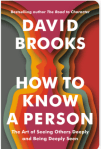
But I do recommend Getting to Know a Person by David Brooks. He writes for a secular audience but holds strong Judeo-Christian values. He says when we listen to people talking, we should listen so hard that we burn calories as we listen. Sounds like a good weight reduction plan! Seriously, if we would all follow Brook’s advice, we would be better people and able to mentor/influence/friend/disciple better.
I wish I would’ve said that.
But it’s ok. I keep learning. And keep taking in. And giving away. It’s the rhythm of a good life, the shape of a flourishing tree.
This is the last of four weekly devotionals from the archives. They first appeared in the lovely Daughters of Promise devotionals way back in February 2018! I felt it’s time to get these words out, dust them off, and think about them again. (The imaginary scene at the beginning comes from a restaurant I walked past many times, experienced, and wrote about here. But I digress.)
You pass by this scene every day on your walk to work:
Candles flicker on the stone step outside the door. String lights swoop toward the center of the ceiling. Waiters place hors d’oeuvres onto tables sparkling with goblets and silver. You catch whiffs of expensive cologne, alfredo, lemon, basil, coffee.
You peer into the banquet room and linger in its fragrance for a couple seconds. But you never step further because you know you could never eat there.
It’s way too expensive.
I’m alone and it’s a place for couples.
I wouldn’t know what to do with all those forks and spoons.
My clothes smell like work.
This banquet and this hesitating is the setting for George Herbert’s poem called “Love.” The poem is a story recounting the exchange between Love and a hungry, aching soul. Each of us can read it in the first person, first placing our feet at the banquet door. (The words in parentheses are my responses.)
Love bade me welcome; yet my soul drew back,
Guilty of dust and sin.(My clothes smell like work.) But quick-eyed Love, observing me grow slack From my first entrance in, (He saw me every time I lingered at the door.) Drew nearer to me, sweetly questioning
If I lacked anything.
‘A guest,’ I answer’d, ‘worthy to be here:’
Love said, ‘You shall be he.’(Me? No, you can’t mean me.) ‘I, the unkind, ungrateful? Ah, my dear, I cannot look on Thee.’ (You are very kind, but I don’t belong here.) Love took my hand and smiling did reply, ‘Who made thine eyes but I?’ (Hmmmm. He made this banquet—He even made me. And my shy eyes.) ‘Truth, Lord, but I have marr’d them; let my shame
Go where it doth deserve.’ ‘And know you not,’ says Love, ‘Who bore the blame?’(He says He made me worthy of this feast. He wants me here. How can it be?) ‘My dear, then I will serve.’(No, no—I won’t eat. You are my master. I’ll be your waiter tonight.) ‘You must sit down,’ says Love, ‘and taste my Meat.’ (‘Says’ is present tense: He is STILL speaking!) So I did sit and eat.
As we read George Herbert’s lines, we see that the man knows how to be proper, dutiful, and fair. He knows about protocol and propriety to maintain at all costs. When Love pronounces him as the worthy guest of the feast, Herbert is incredulous and gives reasons why he can’t possibly accept. Sounds familiar, right?
When Love invites us to His banquet table, we learn, like Herbert did, that love is not a place, or a feeling, or a flavor. Love is a person, and His name is Jesus. Hearing His voice and seeing His eyes is the best thing that could ever, ever happen to us.
And the feast will never, ever end.
I wrote a book one time about living well and living loved—even without romance. You can order your copy here!
I wonder if you’ve seen how you’re surrounded by love this month. I wonder if you’ve been surprised or disappointed. I wonder how you’re responding to that surprise or let-down.
When we open our hearts to ahava, we risk loss, misunderstandings, and even heartbreak. One human response to this is anger and a commitment to avoid ahava in the future.
But the posture of ahava is an open hand. I’m here to serve you. What do you need that I can give?
Alternatively, the posture of anger is a clenched fist. I can’t wash my neighbor’s feet with my fists, and it’s hard to ahava (give to) someone if their hands are closed. There are a lot of clenched fists around these days. And sometimes the fists belong to me.
John, who found his identity in being the disciple Jesus loved, pointed out that love casts out fear, and he added that fear possesses terror. Apparently, he believed that the opposite of love is fear. Let’s contrast more words connected to love and fear.
These lists demonstrate love’s enormous power to transform, heal, and free. Like the sun shining on a cold day inviting you take off your coat, instead of the wind that makes you hang onto the coat even tighter, love melts open a clenched fist and a stiff exterior. It invites dialogue and a smile. It gives a cup of water, the simplest of gifts.
If we would love like Jesus did, generously and winsomely and in hidden ways, we could change the world! We can live in love and not fear when we embrace our deepest reality—that we are deeply, outrageously, undeservedly loved. It seems John knew how much Jesus loved him, and he never got over the wonder of it. It shaped how he saw himself, and influenced how he spoke and taught.
The ahava God pours on us is an endless supply to share with our world. We can approach the difficult person and the stranger with open hands, and mirror the warmth and comfort of Jesus. In doing so, we help to soothe the crippling, damaging fear that keeps people from living with open hands.
If the posture of ahava is open hands, it means that love has nothing to defend and no personae to keep polished. It is genuine and honest, simple and frank. It is not driven by the destructive, irrational fear of criticism or failure. Living with open hands is possible by a power far beyond human limitations, and its results reach further than we can know or dream.
Will you move into this week with open hands, giving and receiving love?
I wrote a book one time about living well and living loved—even without romance. You can order your copy here!
One of the times I felt most alive was when my friends and I swam in the Dead Sea. The buoyant water let us do gymnastics we could never do before! The clear, turquoise water, briny with salt and minerals, made my skin silky smooth, and soothed the sunburn from the day before.
An Israeli company takes the salts and minerals from the Dead Sea and produces a beautiful line of skin care products, choosing the name Ahava for their brand. A friend I was swimming with in the Dead Sea gave me a tub of lovely Ahava body sorbet that I love using.
Ahava means love. It’s the same word God used in Leviticus: You shall ahava the Lord your God, and your neighbor, and the foreigner among you.
Why did God command a condition of the heart instead of action with the hands or feet? Or is ahava only an emotion, an intangible word?
The root word of ahavah means “to give.” To ahava the Lord and our neighbor is an act of intentional giving, serving, focusing on the other. Love is far more than a warm feeling deep inside. It is action and generosity, sacrifice and service.
In this week of masses of pink and white fuzzy animals, red-foil balloons, and heart-shaped chocolates, it is normal to focus on what we might or might not get, and what makes us feel warm and loved. Romantic love is beautiful and life-changing, and carries enormous power to heal and restore. Valentine’s Day is often the most noticeable, accessible (and consumerist) form of romantic love, but ahava is far bigger than a day on the calendar.
God modelled ahava for us when He loved us so much that He spared nothing and gave His only Son. God’s call for us to ahava is a call to the shape of a life, the deeds and habits of a heart that gives and serves the neighbor and the family member and the stranger. Ahava is not expecting to receive nice things or to stay comfortable.
However, in a beautiful paradox and a curious exchange, when we ahava God and others, we receive stupendously in return.
In this week of pink and white and red all around you, how will you receive and give ahava?
I wrote a book one time about living well and living loved—even without romance. You can order your copy here!













 I wonder if you’ve seen how you’re surrounded by love this month. I wonder if you’ve been surprised or disappointed. I wonder how you’re responding to that surprise or let-down.

 Tis a Gift to Receive