The Work of My Hands

Most of my day job requires sitting at a desk and working on a computer. It’s all good, and I enjoy it except when I get tired of being in an office by myself, when I go trotting up and down the halls looking for someone to talk with.

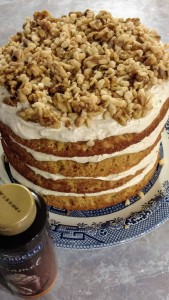
When I get home in the evenings, I want to avoid the computer. I want to do something with my hands, something tactile and less flat than paper and a monitor. Recently, that compulsion became very intense. I felt a deep, driving need to make a big layer cake. I’d never made a caramel nut cake, but I found a recipe on Pinterest, and simply had to make it. It was going to be a big, fancy cake, and I was going to take it to the fellowship dinner at church. Because whenever I make a lot of food, it becomes a small problem when my housemate and I can’t or shouldn’t eat all of it.

I bought the nuts one evening. The next evening, I made the caramel sauce for the icing and toasted the nuts in butter. The next evening, I made the four cake layers. That took me to Saturday, when I made the icing and put the layers together. I used to make small layer cakes to sell, and it was fun to find that my fingers still knew the motions.The steps of making it aren’t important here but they demonstrate how it was something to do with my creative, nervous energy every night and that I had to strategize how to manage the project. People who think single women have lots of time to do stuff don’t think about how all hosting and cooking and cleaning and grocery shopping and appointments has to happen outside long work day hours. But I digress. This was about baking a cake.
img_20190316_202422880

The icing was complicated and didn’t turn out like the recipe promised, so I improvised and evolved an icing that tasted like the moon and the stars but will be impossible ever to replicate. The cake didn’t look like I’d imagined, but when I drizzled caramel all over it just before serving it, it looked mostly like the ooey-gooey, fancy, whopping cake I’d wanted to make.

Never mind that when I cut it into slices,  a quarter of the pieces toppled over onto the table. It was still a yummy, scrummy, rich, delectable cake that people picked off the table and licked off their fingers.

The point here is that I HAD to make a cake–a big, crunchy, meaty, caramelly, mile-high cake. I wasn’t going to be satisfied until I made it. It didn’t look like I intended to, and it actually tasted better than I’d imagined, but the point was making it.

I’m a process person. I often like getting to a place almost more than arriving. Those nights, after intense days at the office, all I needed was to work with my hands and handle butter and nuts and hot, soapy water. It unified all the layers of my self, and relaxed me, maybe because it was something I could DO.

Several years ago, in another intense season, I felt the same kind of urging but with a different medium. As that day progressed, I knew that I had to go home and paint a pineapple with chalk pastels. It was going to be a big, colorful pineapple. That’s all I knew. I’d never painted a pineapple before, but now was the time.

When I was ready to start, I discovered I didn’t have the size paper I needed to make the pineapple as big as I needed to make it. So I went on a search. Newspaper would do the job very well. I took the paper and my pastels and some Google images to the picnic table and started sketching. This is what happened.

IMG_20190327_193922805

There was pink in the pineapple, because I intended it to be an expressive, whimsical pineapple. It turned out to be a lumpy, textured, prickly pineapple, larger than life, which is just what I wanted. My favorite feature, apart from the pink, is the defining black strokes here and there.

I’m sure any art teacher would criticize how the darks are on the wrong sides of some leaves, but I don’t care. In that moment, I was using my fingers to create colors and texture that soothed my soul. I can’t bring myself to throw away that yellowing paper hanging in our kitchen because it always takes me back to that sweet, fun, surprising evening.

I’m learning to pay attention to the times when I feel my face scrunched and puckered into a tense lines, as well as the moments when I breathe deep and slow. Those are the moments when peace and rest seep into the cracks of my heart and make me feel newly-made.

Some of my friends feel their tension melt away when they work with soil and green things, or walk their dog, or ad lib at the piano, or watch the stars, or knit complicated patterns, or clean windows (which will never happen to me). What I love about doing things with my fingers is that it unifies the physical and emotional layers in me, focuses me on the project at hand, and I lose myself in it. For a little while, nothing else matters. This is not about escape. Neither is it about perfection, mastery, or being Instagram-worthy. It’s about being self-aware and entering into the ways we function best.

I wonder how God felt when He made things with His fingers. I wonder if it’s anything like I feel when I make stuff with my hands.

It’s not the same thing for everyone, but I think everyone should find the thing that makes their soul sing, and make time for it at least once a week. Only, I won’t make a huge cake every week.

Related post: Battery Recharging

Melancholy and Dazzling Light

brian-patrick-tagalog-676635-unsplash

Closing down one year and turning the page to another always makes me a simmering mess of melancholy and excited, reliving sweet memories, shuddering at hard memories, anticipating and apprehensive and curious about what’s next.

Writing things out helps unscramble the mass of the months and moments, sifts the favorites from the non-favorites, and reminds me of what is true.

Here is a sanitized, public-reader-appropriate list of 2018’s high points. Those closest to me know the crazy and the agony parts, the hysterical and impossible and guffawing and sparkling moments that we shared this year. But that stays with us, not the world-wide web.

This list is neither chronological nor ordered in priority, but savored, round and round, like pearls on a string.

2018

  • Introducing 40 women to doodling at a women’s retreat. Helping them find their inner artist.
  • Traveling to KS with friends and singing in a concert for Nelson & Hannah’s wedding
  • Tea with mentor friends, late, after an age-long day. Tears. Decision. Unutterable peace.
  • Secret Thoughts of an Unlikely Convert by Rosaria Butterworth
  • 2 visits to NYC
  • A Makers Weekend where a pile of friends made stuff and talked and ate food and talked and talked
  • A late-night invitation to neighbors on my birthday. Fire and jackets and stories. Laughter and star light.
  • Gilead by Marilynne Robinson
  • A week auditing a Christian anthropology class in a seminary.
  • A week in Greece. Sunshine. Sunshine. Sunshine. Sunshine. Swimming. Family. Unbelievable food. Sunshine.
  • This concert of peace. In the heat of summer. In the front row. Healing tears dripping off my chin.
  • Thanksgiving Sunday. Carnegie Hall. Messiah. 500 voices.
  • Connections in my new church, surprising and sweet.
  • An Ola Gjeilo concert where the composer was the accompanist and we heard him improv “Ubi Cartitas” with music heard only that one time.
  • Rings of friends, arriving alone or in dozens, in our living room. Rollicking laughter. Stories. Art parties. Tea.
  • Educated by Tara Westover
  • Friends who took me in as one of their family. Different states. Different occasions. So much love.

2018 brought me choking anxiety and peace, sobs and shrieking laughter, a staggering, preposterous torrent of blessings, joy, and love so deep and so tall, there is no way to measure or describe it.
This reality, of living surrounded by love, tells me to walk into 2019, hands opened wide for more.

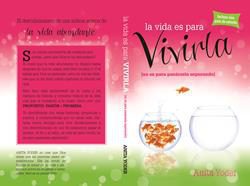
My Book Comes In Spanish

These days, I listen to endless conversations and questions and hand-wringing about technology and the changes in communication. It’s a live issue, and I care that we navigate this uncharted landscape with wisdom and prudence.

I understand the insidious pull toward more, more, more connection. I feel the dopamine rush of what shows up in my feed. When I feel alone, I know how easy it is to slip into a virtual world to feel surrounded with happy, caring people.

But I always feel like a dinosaur because I don’t see that this plethora of communication options is an enemy. Technology has given me wide, enriching friendships and opportunities that was never an option for my grandma. I’ve published a book without ever meeting the printer. I paid someone to transpose the book into an e-book, and never met her and never read the ebook, but now and then Amazon drops deposits into my bank account from people who’ve bought it. I regularly email and message friends that I never see in person. I LOVE Whatsapp to help connect with family and friends across the Atlantic and the local hills.

Technology is not my enemy. I say that with deep gratitude, not cockiness.

And just recently, my book got translated into Spanish and is now available as an ebook, and I never met the translator, facilitators, or publisher. It just happened with networking, courtesy of the world wide web. And a lot of trust and patience and vision.

In 2010, a friend (whom I’ve never met) emailed me about getting my book into Spanish.

I really really want to see this happen, for a couple reasons. The top two are that 1. A girl’s value in Central America is defined much more heavily by her getting married than here. They need to hear the truth in your book 2. Our girls do not have encouraging resources available like in English. They devour all they have, all we can lend to them, and ask for more. And they deserve more, I think.

Then someone else emailed to ask if they could translate the book into Spanish, and the technological ball slowly started rolling, and here we are.

I’m thrilled that Spanish-speaking women can have free access to material that can potentially encourage, give perspective, and cheer as they live their Plan B. I hope my book helps them to hear God’s heart for them, and that although marriage is their design and a beautiful gift, it is not life. Jesus is life, and He is utterly good, true, and beautiful.

Feel free to pass around this link to your Spanish-speaking lady friends. The Spanish ebook for Life is for Living is FREE and only a click away.

Three cheers for technology!

Treasures in Secret

It’s a secret!

When I was growing up, secrets were about birthday gifts, or what was for dessert, or who was coming for a meal.

We’d pull our shoulders up to our ears, arch our eyebrows, eyes shining, and relish the word: it’s a SEEE-cret!

I’m grateful beyond words that my childhood didn’t have the heavy, ugly secrets that some children need to carry. In my world, secret was a word of relish, delight, and anticipation, and I still love surprises, when a secret bursts all over me.

But I’m not a child now, and there are a lot of things I don’t know. Questions and unknowns are a big part of my life, and sometimes the unsurety nearly wrecks me.

How I can know what to do?

What’s the best way forward?

Why did that happen?

How will that end up ok?

Songs and sayings don’t really help. I can sing “Do not be afraid, for I will be with you” or “Be still, my soul” but the fear doesn’t go away. The anxiety still acts like it’ll choke me.

Theologians might say I need to live with faith. That’s supposed to take care of a lot of questions.

Psychologists could call me to live in mystery, open-handed, and sit with the questions.

I call it living with tension and a creased forehead.

Then I read Cry, the Beloved Country, a story of deep loss, solid love, and unanswered questions. Near the end of the book, the protagonist reflects:

Why was it given to one man to have his pain transmuted into gladness? Why was it given to one man to have such an awareness of God? And might not another, having no such awareness, live with pain that never ended? …And might not another feel also a compulsion, and pray night and day without ceasing, for the restoration of some other valley that would never be restored?

It was not for man’s knowing. …It was a secret.

A secret?

A secret is a word of wonder, excitement, eagerness. It’s light and buoyant and nothing fearful.

My childhood connotations of secrets have given me a way to think about the unanswerable, impossible questions that cloud my brain. You might say it’s a mind game, but it helps me. It doesn’t change anything except the lens through which I look at the world, and the way I see God and His inscrutable ways.

When I call things a secret, I see God’s eyes shining in anticipation of when everything wrong will become untrue. And the things that break His heart now, He carries in His heart as His own secret sorrows. Pain and questions are not nothing to Him, and He knows grief.

I know that there are riches found in secret places, and that He sees everything in secret, and that darkness is as light to Him. I can trust Him with His secrets because I utterly trust His character, His intentions, His unending love. My mysteries and questions are not mysteries and questions to Him. This is all I know, and it is enough. For now, His secrets are safe with Him.

The sun tips with light the mountains. …The great valley…is still in darkness, but the light will come there. For it is the dawn that has come, as it has come for a thousand centuries, never failing. But when that dawn will come, of our emancipation, from the fear of bondage and bondage of fear, why, that is a secret.


Stretched Out Spaces

It was not a good day. I’d woken up in a cloud of sorrow for myself and my loved ones. My heart stayed heavy from hard conversations and many things that should not happen.

Then I sent an embarrassing typo in a letter to 65 people and couldn’t just shake it off. I felt stupid and inept.

Then, mid afternoon, a dead battery at work kept me from doing my job. It was a special size–half the length of an AAA battery–and there were none on campus. I didn’t have time to run to town to get one, but I needed to take time.

On the way to town, I said no to ice cream and no to chocolate. I couldn’t afford a sugar rush when I was already so stressed. Instead, I turned on brass band music. Loud. I love trumpets because they’re so powerful and delicate at the same time. They can blast you away, then caress your soul in the next second. They can be playful and exuberant and serious in the same phrase. (Recommending: “Amazing Grace” and “Hallelujah Chorus” by Canadian Brass.)

On the drive to town, surrounded with trumpets and a soulful tuba, I looked for colorful leaves, sunshine, and perspective for my woes.

I thought of the gentle, buoyant man I met recently. He’s a retired nurse, a photographer, and jazz enthusiast. He told me he was on his way to pick up a new camera that day because his old one broke and his friends tell him he’s not dressed without his camera. What he didn’t tell me was that he was also going to see the doctor. At that visit, the doctor told him his stage 4 stomach cancer is in remission, but the man knows it could go into metastasizing rage anytime.

“You didn’t tell me you had stage 4 cancer when you introduced yourself to me,” I said later.

“I can’t let a disease define me,” he said.

I also remembered an interview I’d heard with a young woman whose dura mater is damaged from a lumbar puncture gone wrong. The connective tissue of the dura can take months and months to heal. When the hole recurs, her cerebral spinal fluid leaks from the hole, forcing her to complete bed rest. She has traveled the world and climbed mountains in the last year, and then bent over wrong, and busted the hole open again. She remembers the agony of being horizontal for seven months, and she fears that will happen again. She’s been flat for a week now, waiting to go to patch the hole, which is a dangerous, unpredictable ordeal in itself.

And I think I’m stressed and troubled?

On the drive from town, I kept looking at the sunshine (a rarity in these parts) and kept groping for perspective.  “I don’t have stage 4 stomach cancer. I don’t have a cerebral spinal fluid leak. Thank you Jesus. Thank you Jesus. Thank you Jesus.”

Those people’s positivity in the face of crushing pain and fear shames me for my complaining, and tells me to be quiet and observe.

Sorrow expands the soul. If I let it.

Joy does the same.

And beauty. That’s why I sometimes listen to trumpets. Loud.

To be unmoved by sorrow, joy, or beauty means our souls can’t become larger, fuller, more developed. Pain and sorrow don’t diminish a soul by default. It is selfishness and bitterness that make the soul wrinkly and withered, small and ugly.

Only the soul that knows the mighty grief
Can know the mighty rapture. Sorrows come
To stretch out spaces in the heart for joy.
– Edwin Markham

Amazed to Witness Such a Thing

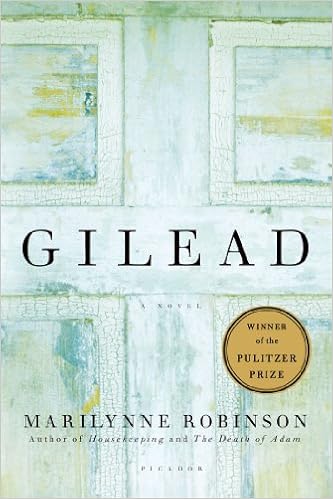
I’d heard friends talk about Gilead for several years. I’d seen it was a best seller, and heard authors quote it. It must be good, so I picked it up. Read through the first page or two. Nothing happened. I put it down. A couple months later, picked it up again. Nothing happened again. Blah.

I resigned myself to missing out on what everyone else was enjoying in the book.

Then one recent Saturday morning, my brother-in-law mentioned it in a family email. He said Gilead resets a person like a good night of sleep, and he wanted to discuss it with someone. I decided valiantly to try the book again, trotted up to the library, brought it home, and was absolutely taken in, like a fuzzy blanket wraps you up and you can’t untangle yourself.

Maybe it was the air, the leisure I was feeling, or the invitation to discuss. Probably it was mostly that I was mellow enough to absorb the words that had no great action, no shimmering plot line to pull me forward. It was the slow, steady beat of an aged man’s heart dribbling out of his pen to write messages to his young son, and he wrote so beautifully and lovingly that I read half the book that first day.

A dying pastor is writing to his young son, not yet seven. Seeing life and people and love through those old, gentle, wizened lenses felt sacred and sweet,  like I couldn’t get enough sweetness. It’s sweet but not cloying. Insightful, but not ponderous or stuffy. Full of love and longing but not sentimental or fluffy.

There is a reality in blessing. It doesn’t enhance sacredness, but acknowledges it, and there is power in that. (p. 23)

I’m glad it’s not just pastors who can bless when they pronounce the benediction. All of us can bless each other, and when we say simple words like “Bless you” (not for sneezes, but for big assignments and partings and dilemmas) we acknowledge and affirm the sacredness of that person and that moment, which is an enormous gesture to receive from anyone, a privilege to pronounce on someone, and something to practice generously. What if we sprinkled blessings around like confetti?

The next lines need no commentary, only long pauses to think about the lines for several days. If you read the book, let me know what you think!

Memory can make a thing seem to have been much more than it was. But I know she [the newborn] did look right into my eyes. That is something. And I’m glad I knew it at the time, because now, in my present situation, now that I am about to leave this world, I realize there is nothing more astonishing than a human face. (p. 76)


There is no justice in love, no proportion in it, and there need not be, because in any specific instance it is only a glimpse or parable of an embracing, incomprehensible reality. It makes no sense at all because it is the eternal breaking in on the temporal. (p.238)


There are a thousand thousand reasons to live this life, every one of them sufficient. (p. 243)


Wherever you turn your eyes, the world can shine like transfiguration. You don’t have to bring a thing to it except a willingness to see. (p. 245)

Not long ago, I was driving in a dusk of golds and blues, and remembered these lines. I aspire to living in this wonder:

So often I have seen the dawn come and the light flood over the land and everything turn radiant at once, that word “good” so profoundly affirmed in my soul that I am amazed I should be allowed to witness such a thing. (p. 246)

marcus-dall-col-63805-unsplash


Giveaway Winner!

It’s been great fun to see the entries come in all week! I saw lots of friends stop by the blog, as well as new names. It made me want to talk with everyone and find out who they are and how they found this giveaway.

I’m also curious about how give away became a one-word noun.

Anyhow, this morning I had Google’s random number generator choose a number, and it turned out to be Yvonne Zook’s entry! Yvonne, when I get your address, I’ll get it in the mail.

For the rest of you hopeful commenters, you can still follow Dorcas’ blog tour for other giveaways, or purchase your own copy. (Or sweet gifts for friends.) You can order the book from Dorcas at 31148 Substation Drive, Harrisburg, OR 97446. Books are $12 each plus $2 postage. Checks or PayPal accepted. (dorcassmucker@gmail.com) Or find it here on Amazon.

Fragrant Whiffs of Joy Giveaway!

When I read Dorcas’ new book, I felt like I was sitting across the table from her, drinking tea and talking. The time we did that in Poland, she spoke wise, memorable words to me, and her new book feels like an extension of that conversation. I consider her a writing mentor (she was the one who nudged me to self-publish my book, which I have never regretted doing), and a kindred spirit, whose friendship I treasure.

The crazy thing about this week when I read Fragrant Whiffs of Joy was that I was experiencing another kind of whiffs in my kitchen. Apparently, a rodent has died somewhere inaccessible under the floor of the kitchen sink, and it’s been truly awful, and I still don’t know what do about it. You might say Dorcas’ book was good escape writing.

This is a user-friendly book, in that you can dip anywhere in the book, read a chapter (they’re quite short) and put it down til the next time you have five free minutes. Dorcas writes in a most colorful, fresh way, which means her metaphors and word pictures are so vivid you can see them, like the stitching on her dad’s barn mitts that showed all the national borders up to the North Sea. She writes these colorful descriptions and dialogues that take up most of the pages, then tucks in these little lines that reveal the point of the pictures and conversations:

This is what it means to be an adult, I think: to make peace with the life you didn’t foresee, to see spiritual significance in the daily repeated tasks, and to find fulfillment in doing them well.

That was in the chapter about fixing endless amounts of food for the multitudes.

This one is in the one about the minister’s wife, and how Dorcas fought the impostor syndrome:

We cannot go wrong with honesty and love, with flaws and laughter, with genuine joy or sadness. We would love to fix the world by distributing perfect solutions at arm’s length, but what people really need is for us to walk beside them until they figure life out for themselves.

I think that’s the main reason I consider Dorcas a friend and a lady I want to be like. She uses her words to express care and understanding without acting on the urge to fix and tidy everything up perfectly. She is honest and discreet. She is wise and humble.

When I got to the chapter about her son’s first mother, I started feeling all chokey, and when I got to when Steven’s mom sewed, I cried. I don’t know why. I don’t know anything about Africa or adoption. I think the tears came from awe at the beauty of an orchestration that’s way bigger than any person or family can arrange.

I giggled in the chapter about her fabric stash and New Year’s resolution not to buy more fabric that year. It made me curious about how that year went. I didn’t take time to ask her. Maybe we can find that out later.

You can order the book from Dorcas Smucker at 31148 Substation Drive, Harrisburg, OR 97446. Books are $12 each plus $2 postage. Checks or PayPal accepted. (dorcassmucker@gmail.com) Or find it here on Amazon.

For now, I get to give away one of these books! Dorcas gave me one copy to keep, one to give to someone who is sick or in a hard time (that will be my mom, who was diagnosed with cancer last January and has been sick all this long year), and one to give away to one of you! I’m not going to ask you do anything like telling me your favorite cake, or saying what your deepest fear is. Just drop a comment below, and I’ll draw the winner on November 18. Ready? Go!

A Brave New Book

About six years ago, back in the days of Google Reader, a friend told me about a blog.

“Sarah Thebarge is a physician’s assistant, and has befriended this Somali family, calls them the invisible girls, and blogs about their experiences.  I think you’d like what she says.”

I did like the blog, very much, and followed every post until Sarah took the posts down because they were the copyrighted content of her first book called The Invisible Girls and then I bought the book.

Since then, I’ve followed Sarah’s story and found her to be a rare soul. A cancer survivor and fighter for other’s well-being, she quite her medical job, sold everything that didn’t fit into her car, and traveled around the US talking to groups about her story and the Somali girls, and called people to care for their neighbors and spread love into the world. There are people who can speak, and others write, but Sarah is one of those rare ones who does both very well. I’ve not heard her in person, but have enjoyed a few talks on-line.

I read her blog posts, and feel her passion to love our neighbors and spread Jesus’ love one person at a time. She writes searingly, stunningly courageous words about the agony and unanswered questions of extended singleness. She knows hope and healing and devastation and tears and beauty.

Then she went to Togo, West Africa to work in a clinic for three months, and contracted malaria that nearly killed her. She came back broken in body and soul, and it took months to recover and start telling her stories.

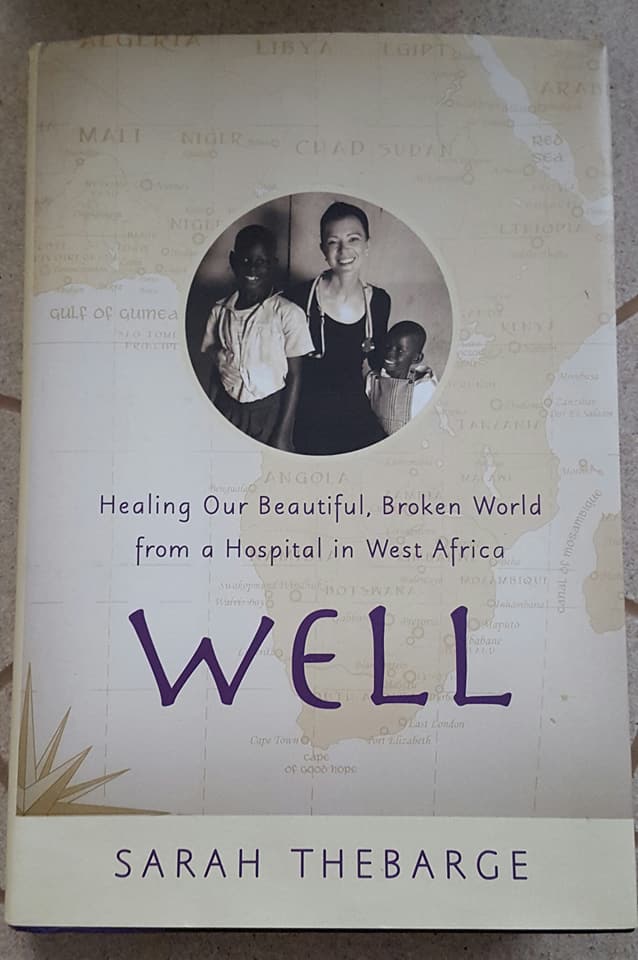
Here are those stories! WELL released today! Find her on Facebook, or buy her book on Amazon or Barnes & Noble.

Sarah says, “The book is brutally honest about the medical issues people face in the developing world, and it grapples with real issues and questions about how people can love on the developing world in a way that’s helpful and sustainable.  But underlying it all is the fact that Love holds our beautiful, broken world….and invites us to do what we can to make our world truly, deeply WELL.”

I agree.

Reading it is not for the faint of heart. There are medical details and agonizing questions that could shake you if you felt squeamish or unsure of your faith. In a big sister way, I would suggest that Sarah was too exhausted and overwrought even before she went to Togo, and thus wasn’t able to roll with the punches there very well. And there were some dreadful body blows. But it is well-written, and the last chapter is the best one.

Standing here now, minutes away from my feet touching American soil for the first time in three months, I suddenly had the humbling realization that

I had been making unfair and untrue value judgments for a really long time. I had assumed that loving people while standing on the soil of West Africa
was more valuable than loving people while standing on a sidewalk in the United States.

That traveling for hours on a plane to get to people who were suffering was more significant than driving ten minutes in my car to the local rescue mis-
sion, or the Somali girls’ apartment—or even walking to the neighbor’s house next door.

Somehow, I believed that I earned more cosmic points for loving people while jet-lagged than for loving people while well rested.

That eating strange food was more significant than eating leftovers from my favorite take-out place.

That serving people who speak a different language from me was somehow more important than serving fellow English speakers.

It took a hard three months in Africa to open my eyes to the fact that the Somali girls were never a consolation prize. That cancer didn’t deprive me of
God’s Plan A for my life. That I was where I was meant to be, and if I never used my passport again, the life waiting for me in the States was just as signifi-
cant as the life I thought I’d have as a missionary overseas.

As I pulled my heavy bag off the carousel, I thought, Maybe in God’s eyes, the soil under our feet doesn’t matter nearly as much as the compassion in our
hearts. Maybe the love we show to others is infinitely more significant than the ground on which we stand.

Unseen but Seen

You know the riddle about the tree falling in the forest with no one around, but my riddle is:

If you didn’t see it on Facebook, did it happen?

When I’m enthused about something, I want the whole world to know. I think if it makes me happy or answers my question or tastes delicious, everyone else surely wants to hear about it and experience it too. I experienced big highs this week, witnessed magnanimous provision, life-giving words spoken, stunning red maples, busy beavers gnawing bark and poking sticks into their lodge. They were things that made me want to weep with joy and raise my hands in worship, but none of it went on Facebook.

So did it happen?

Silly question.

I live in a pretty tightly-knit community and I sometimes joke that there are no secrets because we pretty much live and work in each other’s pockets, but it’s not true, because the most precious, beautiful things are too sacred to talk about freely, much less put on the interwebs.

I suspect that some of my reticence to quickly tell the world about my latest enthusiasm and joy is a trickle-down effect from reading this book:


Unseen: The Gift of Being Hidden in a World that Loves to be Noticed

Sara Hagerty’s first book came out three years ago: Every Bitter Thing is Sweet. It tells her story of her evangelistic fervor, marital conflict, financial difficulty, and infertility, and how those bitter things became the impetus to find the sweetness of Jesus’ love. The book met me in an especially needy, opportune time and I count it one of the best I’ve read.

This summer, Sara’s second book came out, and I was a little skeptical because I know that publishers pressure successful authors to keep pushing out books, and sometimes an author has only one good book in her. But I wouldn’t have needed to skeptical. Sara really does have a rich, deep message in her second book that all of us need.

Here are some of the many excerpts I underlined and starred:

God used this desperation to intensify a thirst in my soul. God calls us to resist succumbing to readily available distractions and instead to press into these thirsty moments, or weakest seasons. Thirst is our ally. If we can tolerate the thirst long enough, staying in our weakness and our need, we will find more of God.

The path to greatness lies in hiddenness. And it’s a state of mind and a way of being, not a series of tasks to perform.

Those who turn to God and hide their otherwise-shamed faces in His chest? Those are the ones who hear His heartbeat. We haven’t been hidden by God to suffer or to be punished; we’ve been wooed into hiding to meet with the God who turns vulnerability into communion.

In every chapter, Sara refers to an aspect of the story of Mary who washed Jesus’ feet, the waste of it, and how Jesus responded to her scandalous act. While I read, I kept thinking

And your Father, who sees in secret, will reward you openly.

and

I will give you the treasures of darkness, riches stored in secret places.

and

Not one sparrow is forgotten.

and

The darkness and the light are both the same to You.

I will probably never stop gushing loudly over things I love and remember and thrill about, but Sara’s book has soaked into me, in that I know it’s ok to be quiet, unheard, unseen, leaning hard on the source of strength, the true pillar of significance. Maybe the whole world doesn’t have to know about the stunning sky I saw between the color-washed leaves. Maybe I can just savor it and sit with the wonder of it.

But oh, you really should have seen those two beavers with their delicate little hands, nibbling bark as if it was corn on a cob. I happened to walk over their bridge, watched them beavering away, and didn’t document it with a photo. But it still happened, and I am still awed at the astonishing encounter.

I like social media. I work in Communications, after all. It is a happening place, and it needs to be. I believe that if you see something beautiful, you should tell it. I care deeply about expressing truth and light in winsome, attractive ways. But I don’t have much worthwhile to say before I have sat long, rested, lingered with Truth in quietness and hiddenness.

Out of that communion, everything else flows.