
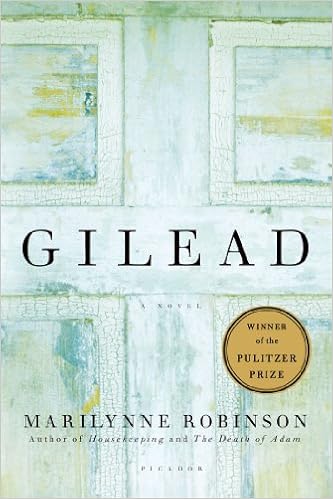
I’d heard friends talk about Gilead for several years. I’d seen it was a best seller, and heard authors quote it. It must be good, so I picked it up. Read through the first page or two. Nothing happened. I put it down. A couple months later, picked it up again. Nothing happened again. Blah.
I resigned myself to missing out on what everyone else was enjoying in the book.
Then one recent Saturday morning, my brother-in-law mentioned it in a family email. He said Gilead resets a person like a good night of sleep, and he wanted to discuss it with someone. I decided valiantly to try the book again, trotted up to the library, brought it home, and was absolutely taken in, like a fuzzy blanket wraps you up and you can’t untangle yourself.
Maybe it was the air, the leisure I was feeling, or the invitation to discuss. Probably it was mostly that I was mellow enough to absorb the words that had no great action, no shimmering plot line to pull me forward. It was the slow, steady beat of an aged man’s heart dribbling out of his pen to write messages to his young son, and he wrote so beautifully and lovingly that I read half the book that first day.
A dying pastor is writing to his young son, not yet seven. Seeing life and people and love through those old, gentle, wizened lenses felt sacred and sweet, like I couldn’t get enough sweetness. It’s sweet but not cloying. Insightful, but not ponderous or stuffy. Full of love and longing but not sentimental or fluffy.
There is a reality in blessing. It doesn’t enhance sacredness, but acknowledges it, and there is power in that. (p. 23)
I’m glad it’s not just pastors who can bless when they pronounce the benediction. All of us can bless each other, and when we say simple words like “Bless you” (not for sneezes, but for big assignments and partings and dilemmas) we acknowledge and affirm the sacredness of that person and that moment, which is an enormous gesture to receive from anyone, a privilege to pronounce on someone, and something to practice generously. What if we sprinkled blessings around like confetti?
The next lines need no commentary, only long pauses to think about the lines for several days. If you read the book, let me know what you think!
Memory can make a thing seem to have been much more than it was. But I know she [the newborn] did look right into my eyes. That is something. And I’m glad I knew it at the time, because now, in my present situation, now that I am about to leave this world, I realize there is nothing more astonishing than a human face. (p. 76)
There is no justice in love, no proportion in it, and there need not be, because in any specific instance it is only a glimpse or parable of an embracing, incomprehensible reality. It makes no sense at all because it is the eternal breaking in on the temporal. (p.238)
There are a thousand thousand reasons to live this life, every one of them sufficient. (p. 243)
Wherever you turn your eyes, the world can shine like transfiguration. You don’t have to bring a thing to it except a willingness to see. (p. 245)
Not long ago, I was driving in a dusk of golds and blues, and remembered these lines. I aspire to living in this wonder:
So often I have seen the dawn come and the light flood over the land and everything turn radiant at once, that word “good” so profoundly affirmed in my soul that I am amazed I should be allowed to witness such a thing. (p. 246)






 Tis a Gift to Receive