Giving and Receiving Life

Recently at work, when sending an email to over 60 people, I made an innocent but dreadful, mortifying mistake. While I was writing the message, intending to send it with Mail Merge, I didn’t realize Word was tracking all the changes, and the message went out with red lines and replaced red words all over it. It looked like a something a child would do. It looked confusing and ugly and awful, not like an informative message.

I saw the first message in my sent items, in shock and disbelief and horror, and started wailing. Loudly. Luckily, the office was empty except for Lucy, who came running. I showed her the garbled messages, still trickling into my sent items. “I’m so sorry,” she said, and started rubbing my shoulders. “It’s really going to be ok.” But I couldn’t believe her, and the shoulder rubbing wasn’t calming me down.

Then my phone rang. It was one of the recipients. “I just got your email, and in case I was the first person you sent it to, it looks like there’s some problem with it.” I wailed and whimpered to her, and she was very sympathetic, and while we were still talking, my inbox pinged. It was from another recipient: “Am I supposed to respond to this?” His bluntness and confusion tickled my fragile emotions, and I started howling with laughter. Thankfully, it was a perfect storm in that my message showed simple, honest editing, and nothing incriminating.

But still. It took me at least 24 hours to recover.

Later, Lucy told me, “I felt so bad that I couldn’t help you feel better and that it was someone else who made you laugh.”

But Lucy was wrong because she HAD helped me enormously. She’d run to my desk the second she heard me wail. She’d asked questions and heard me out. She kept me from needing to process the stress alone. That was what I’d really needed in that moment. Later that evening, she brought it up again to see how I was.

There are older and wiser people who’ve said this with more explanation and insight, but my simple way of saying it is: Women need to talk about their experiences, and an experience isn’t complete until they talk about it.

What Lucy did that evening is one example of what many good, wise, solid, life-giving people have done for me all my life.

Talking is how we experience life. We talk about the details, the best parts, the worst parts, the emotions, and our responses to an experience. We tell the back story and the spin offs and the lingering questions. Sometimes we get a bad rap for it and sometimes we deserve that, but usually we’re just women experiencing life more broadly by talking about what just happened.

We tell someone about what just happened because we can’t just stay quiet about it. It happens every day all over the world:

  • letters, texts, and status updates
  • school children coming home from school talking about the day
  • pictures and crummy, topsy-turvy, jerky videos sent to friends
  • strangers talking to strangers in waiting rooms and grocery check out lines
  • phone calls and Whatsapp voice messages

I hear and read:

  • in a Facebook group post: “This is off topic, but I just had to tell someone.”
  • “Can I tell you about what happened when I was at home?”
  • “Thanks for listening. I just had to talk about it. I feel better now.”

The internet takes this to another level and feeds on our inherent narcissism and loneliness, but I want to say that it also taps into what is innately human: that we are more whole and balanced when we tell someone else about our experience.

I’m not promoting navel gazing and endless self-expression. I’m not encouraging everyone to start an Instagram account. I’m saying we are better people for getting out what’s simmering inside, and when we tell someone about it.

That’s why journaling is so therapeutic. It’s why children want to tell about what they saw on their walk to the barn. It’s why I tell my friend how blue the sky is. It’s why debriefing after a traumatic or unusual event is so healing. (It’s why I LOVE Whatsapp: I can talk to my friend about what’s going on and she can respond when she has time, and I don’t feel like I’m imposing on her.)

Sometimes you don’t have time or energy or opportunity in the moment to talk about what’s troubling you or making you ecstatic, but at some point, it needs to come out. There are women who talk all the time only about themselves. That’s not wise or healthy. There are seasons when you feel consumed with your latest crisis and feel more needy than you like, but hopefully that’s a season, not the shape of your life. In the talking and processing, it’s a good rule of thumb to talk to someone, or write them about whatever is simmering, or journal it out, before putting any of it on the interwebs.

There are two sides to this kind of life-giving exchange: the speaking and the listening.

If we live life better and more fully when we talk, we also offer life to others when we give them opportunities to talk. It’s very simple. It just takes time and ears and lots of heart. Oh yes–and staying quiet and not finishing the other person’s sentences are the skills I’m working on. I think the most whole woman has people she talks to and people she listens to.

I think about what I’ve heard from those inviting me to talk:

  • I want to hear what happened yesterday!
  • You said something about ________. Tell me more.
  • What did you mean when you said that?
  • What are you feeling now?

We can give life with words like these.

Women are good at talking and we are designed to be life-givers. What would happen if more of us would give and receive life by inviting and listening well, and also giving ourselves permission to talk to someone else?

I wonder.

What I Like About Guys Mills

When I told my wordsy and brainy friend Shari that I felt stuck and unable to blog, she gave me a list of things I could write about. That list will likely be the spring board for future posts like this one.

When I first started thinking about what I like about Guys Mills, the tiny crossroads where I’ve been living the last 3 years, I wanted to be snarky. I wanted to say that the good thing about Guys Mills is that there are roads leading out of it.

But when I started looking for the genuinely nice things about this swampy outback, I found several endearing qualities.

My very favorite thing about this place is that when I’m outside at noon and 6:00 PM, the church bells play a hymn and chime the hour. It heartens me to know that someone is beautifying the world that way.

The bells are in the cupolo on on the far horizon in this picture that I took this evening on my walk home.

Another thing I love about Guys Mills is that the post mistress is the happiest, smiliest lady I’ve ever met in a post office. The place is dingy and very ordinary a far as post offices go, but she is beaming and positive and beyond helpful. “I LOVE my job!”she told me. “On Saturdays I do some things around the place then go across the road and drink coffee with my friend on the front porch of the store while I watch for customers.”

Except she’s not on the front porch during this polar vortex, but she’s still happy in her job and serving us superbly.

If I’d have a new drone to try out around here, there are locals who would shoot it down first and ask questions later. When I walk around the block, I’ve seen enough shady characters that make me always stay vigilant. But at the most decrepit house, the owner always waves politely at me and shushes his barking dogs so they won’t bother me. And the snaggletooth mechanic has given me excellent service for which I’ve been deeply grateful. And another mechanic up the road treats my car as if I’m his daughter.

I’m seeing a pattern here.

The people who program and maintain and care about the church bells.

The delightful post mistress.

The respectful, rough-looking man.

The careful mechanics who make sure my car is safe.

The things I love about this sleepy little place aren’t things but people.

I kinda like that. Because maybe it means that even if it’s winter for 6 months and the deer are constant threats to road/car safety and the sky isn’t big where I live, there are people around, and where there are people, there’s a significant level of dignity and beauty which is really what my soul is hungry for.

Melancholy and Dazzling Light

brian-patrick-tagalog-676635-unsplash

Closing down one year and turning the page to another always makes me a simmering mess of melancholy and excited, reliving sweet memories, shuddering at hard memories, anticipating and apprehensive and curious about what’s next.

Writing things out helps unscramble the mass of the months and moments, sifts the favorites from the non-favorites, and reminds me of what is true.

Here is a sanitized, public-reader-appropriate list of 2018’s high points. Those closest to me know the crazy and the agony parts, the hysterical and impossible and guffawing and sparkling moments that we shared this year. But that stays with us, not the world-wide web.

This list is neither chronological nor ordered in priority, but savored, round and round, like pearls on a string.

2018

  • Introducing 40 women to doodling at a women’s retreat. Helping them find their inner artist.
  • Traveling to KS with friends and singing in a concert for Nelson & Hannah’s wedding
  • Tea with mentor friends, late, after an age-long day. Tears. Decision. Unutterable peace.
  • Secret Thoughts of an Unlikely Convert by Rosaria Butterworth
  • 2 visits to NYC
  • A Makers Weekend where a pile of friends made stuff and talked and ate food and talked and talked
  • A late-night invitation to neighbors on my birthday. Fire and jackets and stories. Laughter and star light.
  • Gilead by Marilynne Robinson
  • A week auditing a Christian anthropology class in a seminary.
  • A week in Greece. Sunshine. Sunshine. Sunshine. Sunshine. Swimming. Family. Unbelievable food. Sunshine.
  • This concert of peace. In the heat of summer. In the front row. Healing tears dripping off my chin.
  • Thanksgiving Sunday. Carnegie Hall. Messiah. 500 voices.
  • Connections in my new church, surprising and sweet.
  • An Ola Gjeilo concert where the composer was the accompanist and we heard him improv “Ubi Cartitas” with music heard only that one time.
  • Rings of friends, arriving alone or in dozens, in our living room. Rollicking laughter. Stories. Art parties. Tea.
  • Educated by Tara Westover
  • Friends who took me in as one of their family. Different states. Different occasions. So much love.

2018 brought me choking anxiety and peace, sobs and shrieking laughter, a staggering, preposterous torrent of blessings, joy, and love so deep and so tall, there is no way to measure or describe it.
This reality, of living surrounded by love, tells me to walk into 2019, hands opened wide for more.

Pixels and Pages

How about an extension to Cyber Monday? This is a post to promote my ebook, found here.

While I will always love the tactile experience of paper and ink, (and marking it up with notes and lines) there is much to love about this e-book.

  • It’s cheaper than the printed version. (1/3 of the price)
  • You get it instantly.
  • You get a preview of it while you decide you want it.
  • It adds no bulk or weight to your purse or book bag.
  • You can buy a copy for your friend and have it emailed to her. (Think easy, thoughtful, inexpensive Christmas gift.)
  • It’s also available in Spanish for FREE here!

On Thanksgiving Day, I was with friends who invited other friends for the dinner. We had lots and lots of gorgeous food, hearty laughter, and out of the blue, a most rousing discussion about extended singleness. We didn’t come to any conclusions about the dilemma. One of the single ladies told us abut her friend who counseled her to buy a rehearsal dinner outfit, put it her closet, and pray for the outfit to come out and be worn! (That strategy had worked for the friend who had found herself single and near 40.) We howled a long time about that idea, but none of us feel like trying it. There are still questions, ideas, hypotheses without clear solutions.

Maybe that’s ok.

Maybe if we figured out how to detour the unpredictable, unnerving situations we find ourselves in, we wouldn’t need community and wouldn’t be as desperate for the infinite love and companionship for which we were created.

When dreams come true, it’s easy to say that God is up to something good, or that He’s always about redemption. But even if the dream doesn’t come true and the ache doesn’t go away, and we live with brokenness and loss, (and I don’t think extended singleness is the heaviest loss) even then God is up to something good, is intending redemption, is arching over everything with His sovereignty and character of light. If this weren’t true, He wouldn’t be God, and I would despair.

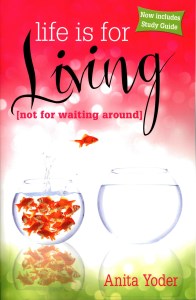
I wrote my book 10+ years ago with the conviction that God made us for more than to bide our time and put life on hold until marriage. I was sure that knowing Him and His character would shape women into the vibrant, thriving individuals He dreamed us up to be and who are not dependent on stuff or situation for joy. I didn’t want it to be a glib how-to book, but more like a travel guide with a comrade who is still walking and discovering His love and light. (The book’s 2nd edition is available here.)

A considerable bit of life happens in 10+ years. During that time, I’ve known darkness and brokenness that would have derailed me except for God’s fierce, relentless pursuit. I know Him better than I did back when I was writing the book, but I hope to discover even more about Him and live into His purpose for me in the next years.

Join me?

And if you’ve read the book, it would be sweet if you’d write a review on Amazon!


Kings Bring Their Glory

I was sitting in a crowd, cross-legged on the floor in a big room called The Oasis. The day before, I’d flown into and trundled around Athens before flying further to Lesvos. Sunday morning, I joined my sister and brother-in-law and the rest of the crowd on the floor for church. The message on faith was great, but I couldn’t stop watching the adorable coffee and cream colored children tumbling around me.

I loved the pockets of languages scattered around the room. Translation into French was happening in that corner. Farsi in the other. Arabic up front beside the preacher, translating for everyone.

As the service closed, someone announced that our Congolese brothers would sing for us. A quartet of French-speaking African men walked forward and the one with the guitar put on his shiny gold rock star sunglasses. The other three stood by the mic and started singing.

I didn’t know what the words were (I was told later it was a psalm) but they sang with utter gentleness, adoration, and surety. The harmonies were simple and beautiful, and their faces shone.

Scattered voices in the crowd joined at the refrain. In the men’s peaceful smiles and voices, I saw the teeniest piece of heaven, where the kings of the earth will bring their glory and worship the Lamb like these men and their audience were doing. It was glorious beyond words, and the way things should be. Wonder and beauty washed over me and tears kept dripping off my cheeks.

I feel most alive when I’m surrounded with colors and textures and cultures. I feel twitchy when everyone looks and talks the same. The variety of cultures and the singular focus of worship that morning in Greece is akin to what I expect to be part of in eternity, and I was enormously gifted with a sneak preview.

Translators Needed

You know how sometimes memories emerge that were buried for years, but now and then they pop up on the screen of your mind? This story reemerges now and then, with no particular trigger, but it illustrates what seems to be part of my life work.

I was in my teens, eating Sunday lunch at a church family’s place, and they were also hosting a visiting couple who had never been at a Mennonite church before. So the dinner time was full of discussion and questions. I was listening and observing. The conversation went to how we value community and help each other in difficulties.

“So for example,” our host explained, “When someone’s house needs major repairs like putting on a new roof, we’ll have a frolic.”

Something washed over the guest’s face, and I knew that when he heard “frolic” he did not hear what my host meant.

Two things happened in that moment:

  1. I stayed quiet (another subject for another day)
  2. I knew that someone got a grossly misleading impression, and it never got resolved.

Worse things could happen.

But.

Sometimes what you say is not what I hear, so I don’t know more than I did.

If we don’t care about communication and understanding each other, we may as well all stay home and talk to ourselves and take selfies all day.

But if we were designed to do life beside and among and around people, and if we have something that’s beautiful to say, I care that that message gets transmitted well, and translated when necessary.

When I finished five years in Poland and came to the US, I reveled in talking English to my heart’s content. I mean, I could walk into a store and ask ANYthing! I could even make small talk with other customers. So novel! But every now and then, in those first months, I heard a mumbled announcement or a colorful idiom and I would catch myself whirling around to make sure my neighbor understood it. Translating to my friends in Poland had been such a way of life for me that it took awhile to realize that everyone here knew more idioms and one-liners than I did and I could take off my translator hat now. Other times, everyone around me was laughing at some remark, and I didn’t know what was funny. I think now that it was all part of reverse culture shock or culture fatigue or something else unpleasant like that.

Language and communication and understanding has so many intricacies and nuances and layers that it takes special effort to do well with it. Humor and laughter require another dimension to understanding. When different languages and cultures come together, the dynamics become exponentially complex. Among English speakers like at that Sunday dinner, wires get crossed. Sometimes even people who’ve known each other all their lives still need a translator.

There are many places where we need translators between people and groups. Actually, wherever there are people, we need translators. I think of it especially in some church services. Maybe it’s because it’s generally a formal place, where there is tradition and unspoken expectations, and a new-comer feels especially foreign.

This is not a critique about how to do church. That’s a subject for wiser, stronger people than me. This is a call to think about being translators for visitors, new friends, foreigners new to your culture and your spoken or unspoken languages.

I was glad for a translator when I visited a church where the minister asked for testimonies from the audience, but the lady beside me leaned over to tell me that he is talking to the men, because the women don’t speak.

I wished for a translator when visitors at church weren’t oriented to what was happening now, nor what would be happening next. Especially when the speaker asked us to kneel and everyone swirled around in their benches. Just between you and me and don’t tell anyone, I think kneeling back into the place we were just sitting is very uncivil and undignified and I love the gracefulness of kneeling forward to pray. However, if that’s not your culture’s tradition, you can help the visitor beside you by translating the invitation to kneel.

If I could do that Sunday dinner over now, I wouldn’t hesitate to clarify for our guest what our host was saying. It could be done without making anyone feel foolish. The point is clarity and explanation and education, and at the end, everyone understands each other better. Which would actually help a lot of issues everywhere, come to think of it.

Anyone can be a translator. At least, anyone who values what they have, and wants to share it beyond their borders. And anyone who understands that English doesn’t always sound like English.

Unseen but Seen

You know the riddle about the tree falling in the forest with no one around, but my riddle is:

If you didn’t see it on Facebook, did it happen?

When I’m enthused about something, I want the whole world to know. I think if it makes me happy or answers my question or tastes delicious, everyone else surely wants to hear about it and experience it too. I experienced big highs this week, witnessed magnanimous provision, life-giving words spoken, stunning red maples, busy beavers gnawing bark and poking sticks into their lodge. They were things that made me want to weep with joy and raise my hands in worship, but none of it went on Facebook.

So did it happen?

Silly question.

I live in a pretty tightly-knit community and I sometimes joke that there are no secrets because we pretty much live and work in each other’s pockets, but it’s not true, because the most precious, beautiful things are too sacred to talk about freely, much less put on the interwebs.

I suspect that some of my reticence to quickly tell the world about my latest enthusiasm and joy is a trickle-down effect from reading this book:


Unseen: The Gift of Being Hidden in a World that Loves to be Noticed

Sara Hagerty’s first book came out three years ago: Every Bitter Thing is Sweet. It tells her story of her evangelistic fervor, marital conflict, financial difficulty, and infertility, and how those bitter things became the impetus to find the sweetness of Jesus’ love. The book met me in an especially needy, opportune time and I count it one of the best I’ve read.

This summer, Sara’s second book came out, and I was a little skeptical because I know that publishers pressure successful authors to keep pushing out books, and sometimes an author has only one good book in her. But I wouldn’t have needed to skeptical. Sara really does have a rich, deep message in her second book that all of us need.

Here are some of the many excerpts I underlined and starred:

God used this desperation to intensify a thirst in my soul. God calls us to resist succumbing to readily available distractions and instead to press into these thirsty moments, or weakest seasons. Thirst is our ally. If we can tolerate the thirst long enough, staying in our weakness and our need, we will find more of God.

The path to greatness lies in hiddenness. And it’s a state of mind and a way of being, not a series of tasks to perform.

Those who turn to God and hide their otherwise-shamed faces in His chest? Those are the ones who hear His heartbeat. We haven’t been hidden by God to suffer or to be punished; we’ve been wooed into hiding to meet with the God who turns vulnerability into communion.

In every chapter, Sara refers to an aspect of the story of Mary who washed Jesus’ feet, the waste of it, and how Jesus responded to her scandalous act. While I read, I kept thinking

And your Father, who sees in secret, will reward you openly.

and

I will give you the treasures of darkness, riches stored in secret places.

and

Not one sparrow is forgotten.

and

The darkness and the light are both the same to You.

I will probably never stop gushing loudly over things I love and remember and thrill about, but Sara’s book has soaked into me, in that I know it’s ok to be quiet, unheard, unseen, leaning hard on the source of strength, the true pillar of significance. Maybe the whole world doesn’t have to know about the stunning sky I saw between the color-washed leaves. Maybe I can just savor it and sit with the wonder of it.

But oh, you really should have seen those two beavers with their delicate little hands, nibbling bark as if it was corn on a cob. I happened to walk over their bridge, watched them beavering away, and didn’t document it with a photo. But it still happened, and I am still awed at the astonishing encounter.

I like social media. I work in Communications, after all. It is a happening place, and it needs to be. I believe that if you see something beautiful, you should tell it. I care deeply about expressing truth and light in winsome, attractive ways. But I don’t have much worthwhile to say before I have sat long, rested, lingered with Truth in quietness and hiddenness.

Out of that communion, everything else flows.

Blest be the Synergy

We gathered under the trees and around salads and grilled kebabs and before prayer, our host said, “Be thinking about how to answer this question: why did God put you here in this place and time? What were you born to do? We’ll talk about this later in the evening, so this is your heads-up.”

Then we ate wonderful food and cuddled the baby and stirred the fire and talked on high for hours. We were seven people joined by common experiences and passions, and there are always stories to re-tell and howl about, and new parts of our lives to share, and there is never silence between us. When the darkness settled and the children were put to bed, and the coals glowed, I thought it was time to wrap up and leave, but our host brought up his question: “What were you born to do? We’ll go around the circle and hear from everyone, and I’ll start.”

The fire became an altar, and the circle a sacred place, and time stopped while we heard each other’s dreams and goals and affirmed what we heard.

“Yes, you ARE a shepherd. Hey, I want to tell the rest of you about the time he was a shepherd to me.”

“The way you love on troubled children is the way you show them Jesus. You WERE born for that!”

I was the only single among the three couples, and they prayed for a husband for me, and we prayed for each other’s visions and unanswered questions and quests. Sacred is the only word I can use to describe it, and even the next day I still felt hushed in wonder at the beauty and power I’d witnessed.

This was one of several small groups I’ve been part of. Various times and incentives shaped the groups. Similar interests. Common training. A work team. Sitting at the same table for supper in the cafeteria.

The synergy that rises out of asking questions and brainstorming and bringing one’s whole self to a group energizes me for several reasons.

  • It is an adventure, because there is no predicting what will happen.
  • It is empowering to be heard, to be given space and time where your voice matters.
  • It provides shared experience that becomes a reference point for further interaction.
  • Life and death are in the power of the tongue.

Sometimes a group has to wrestle with a dilemma that has no easy way forward. If one person were alone in a room wrestling with the sticky problem, they would get tired and despair and make a bad decision. But in a group, with more ears tuned to what’s being said, and more than one heart engaged with the issues at hand, good and beautiful things happen.

What happens in group is not limited to the time in the circle. Sometimes Often I perceive or say things in the moment that I would see differently if I had time to mull over it. But it gives a starting place for more thought and change. Group work also pushes me to ask God for the most pressing need of my whole life: wisdom.

Here are some life-giving words I’ve heard in group:

“When you said that, I got this picture of…”

“I really like that idea!”

“Can you tell us where those tears come from?”

“You’re being quiet over there. What are you thinking?”

“What would happen if…?”

“I see your point, but what about…?”

“That took some courage to say.”

One group was so sacred that I can’t talk about it here except to say it involved snowballs in the dark, and honesty and anger and courage shimmered around us in a way that would hardly have happened had we stayed around the table in the dining room.

So setting is important. A bonfire helps. Or a chalk board. And snacks–at least chocolate.

There are no guarantees for resolution, and there is always risk.  Risk that my words will be misunderstood. Risk that I’ll fall apart. Risk that I’ll walk away with fewer answers than I want. Risk that my heart will break.

But risk is the price you have to pay to keep walking toward wholeness and a full life.

I am deeply grateful for the groups I’ve been honored to be part of. They shape me into a person I could never become if I would try to wing it alone.

Home Goings

I had already cried quite a lot that day. Easter night, I had walked around my old haunts–the fountain, the Palace, the little pond. Walking down Warszawska, tears kept falling out of my eyes. Tears leaked into the pillow that night, and into my coffee the next morning in the place where I had always had coffee and watched the light coming in the windows. I cried to Lolita in the van, and when our friend met us at her door, she said, “Oh Anita, are you sick?”

I said no, I’m just sad. I’m so happy where I am, but so sad not to live in Poland anymore. Then we drank coffee and ate chocolate blok, and who couldn’t be uncheered with this on Easter Monday?

Then Lolita and I took the train to Warsaw to revisit more old haunts and imbibe the atmosphere that I miss so much. We lingered long over lunch and E. Wedel drinking chocolate and stories and joys and worries, and were nearly ready to leave. When she came out of the restroom, she was crying, asked me to pay while she goes outside to call someone, because she doesn’t want to tell me in here. So I did, when the waiter finally brought the check.

Out on the sidewalk, she could hardly get the words out: Our… sister Beat…is home.

Incredulous. Stunned. Shaking my head. We cried on each other’s shoulders, and I kept shaking my head. Then it occurred to me: she’s healed, she’s healed, she’s dancing. But why was I shaking and crying?

There was no point in looking at sights. The shock had suddenly chilled us, so we found a coffee shop, warmed up a little, read the terse news article. Beat’s car had hit a horse and she was killed instantly. We got the next train, went to friends of Beat’s, and talked and cried and prayed together.

The next day, my friend and I returned to the US as planned. It was hard, hard to leave, and harder to come back to a surreal atmosphere. All week, a fog seemed to cover the place and I kept pushing through jet lag and emotional numbness. Thursday my mom had surgery to remove lymph nodes for analyzing and determining treatment for stage 2 breast cancer. It was a yucky week, all around.

Saturday was the funeral. Finally, I could let myself be sad. Even though it was still surreal. The form I saw in the casket wasn’t Beat. I couldn’t believe that she wasn’t around a corner somewhere, chortling and chatting. Someone so alive can’t be gone for always. Singing “Under His Wings” in a Faith Builders group helped me feel I could DO something with my grief. Telling my favorite story about her at the open mic at dinner helped take some weight off my heart. But it still felt surreal.

It seems to me that this fog of grief is two enormous things: loss and shock. My heart can’t accept what my ears are hearing. Yesterday all the staff and students gathered in the chapel for a memorial time to remember and celebrate her life.  I knew I wanted to be there, but I kept thinking this is just a weird kind of exercise because we all know she’ll show up again and we’ll laugh together at how ridiculous and impossible it was that we thought she died. I cried when we sang “safely in His bosom gather…such a refuge ne’er was given,” because I’m sooooo glad she’s safe and healed and radiant.

I remember Beat’s soft heart and gentle love. How could she possibly remember everyone’s favorite food and make sure I’d gotten my favorite bar that last week? Her irreverent, shrieking howls were part of the reason I loved her. Her honest tears were beautiful to me, not weakness.

In the memorial time, it was fitting that there was more laughter than tears. We ended with some little howls ourselves. I did, anyhow. My favorite story recounted is this: Someone complained to her, the head cook, about the food. “Just put more Ranch on it,” she said.

The layers of complexity and wisdom and understatement in that line is priceless and howl-worthy and so Beat.

She was a queen in God’s Kingdom, and in the kitchen, and she is a hero.

What a Woman Needs

Last year in psychology class, our teacher spoke briefly one day of gender differences. We girls all looked knowingly at each other when we listed the stereotypical things about us: emotional, verbal, soft-hearted, quick to cry.

Then the teacher shared a vignette of a marriage counselling session. He was encouraging a couple to understand their differences and be aware of what the other needs. (Live with your wife in an understanding way, the Bible puts it.) The husband could love her best if she could talk and feel heard. He doesn’t have to explain it away or find solutions for her, just hear her out.

In typical human fashion, I only heard what I wanted to hear from the teacher’s lecture. (I didn’t hear what the wife should do!) I heard an acknowledgment that women function best when they can talk. I did two things with that: 1) winced because I don’t have a husband to talk to and 2) took it as permission to knock on someone’s door to talk when I need it.

Those of us with opinions and fears and ideas and wishes and falterings need a place to get outside our own heads, have someone else look at what is jiggeting around in there, and sift through the stuff. Untangle the spaghetti. Bring to mind what’s been forgotten.

So this morning I was troubled about something I heard yesterday. I was out of my depth and didn’t know how to think about it. I needed perspective and it suited my mentor to meet over lunch. We met, I talked, and she talked. She gave balance and wise perspective and encouragement, and when my scalloped potatoes and salad was finished, I was good to go. I thanked her soundly, and hardly thought about the troubling issue again.

I’m saying this for any woman out there with spaghetti muddling her tired, clever brain: you need to talk with someone.

I don’t mean that you tell someone EVERY time you’re bothered, because that could be every five minutes or every five hours. Life gives bumps and questions and riddles. That’s normal, and we have to roll with the punches. But when there’s a niggling that won’t go away, a worry that festers, an unrest that simmers, find someone who can hear you talk about it, and then you can go on.

No one can do life on her own. Not even the independent ones who know their own minds. (And most of them are independent only because they have to be. But I digress.) We function best in teams, families, communities, small groups. The sum of the whole is worth more than the individual parts, and each gives to and benefits from the others, and we lose more than we realize when we isolate ourselves and try to push through on our own.

Bouncing ideas off someone or sifting through the things that simmer inside is a big part of staying emotionally whole and healthy. It isn’t a right to demand or be selfish about, but something to be honest enough and weak enough to admit need. I think there are a lot of women walking around who are slowly withering inside because they haven’t found a safe confidante or mentor or counselor. And that saddens me because bottling things up is not how we were designed to live, and there are options and better ways of living.

Some options:

  • journal
  • go on a brisk walk around the block
  • email someone if you can’t talk
  • curl into a ball and cry and talk to God for a long time
  • text or call someone to ask if they have time to meet

Burrowing into a book or scrolling through Facebook are not good options for a bothered brain, usually.

I’m unutterably grateful to be writing from a place of wealth, not want. I know loneliness. I know the ache of friends far away and confidantes too busy. I also know the little bit of courage that it takes to ask to talk gives huge payback in equilibrium and peace.

The tissues and tea help too.

Image result for willow tree heart and soul My Willow Tree figurine: “Heart and Soul”