

Maybe we’re sufficiently far enough out from Christmas that I can safely talk about the questions I have about it. Please don’t call me a Scrooge before you hear me out!
I love chocolate and chocolate-covered everything and candles and carols– all the music that Christmas evokes. But I’ve never seen how plates of cookies and candy link to Jesus’ birth.
Growing up, Christmas wasn’t a big deal in our family. We had a great Christmas dinner and friends or family to eat it with, and I value that simplicity. We never exchanged gifts, because our parents wanted us to think about how we could give to people who had less than we did. I’m grateful for this, even though every Christmas now I feel caught out and odd because I don’t have the gift-giving, card-giving rhythm everyone else does. Special gifts are lovely, and I love a party as much as any extrovert in a pandemic does, but I’ve never seen that we celebrate a friend’s birthday by giving everyone else presents.
Maybe it’s the rebel in me, but I look for ways to give unbirthday gifts outside of Christmas. I’m not highly organized at this, but sometimes I try. Last Thanksgiving break, I rounded up a dozen simple vases, (I was going to spray paint quart jars but you know how scarce they are this year. Dollar Tree to the rescue!) bought two rolls of ribbon, and went foraging for greens. I spent several hours arranging the greens at the kitchen table, then handed them out to friends over the next days. It was so much fun, so simple, and a way to give seasonal beauty that lasted at least a month.
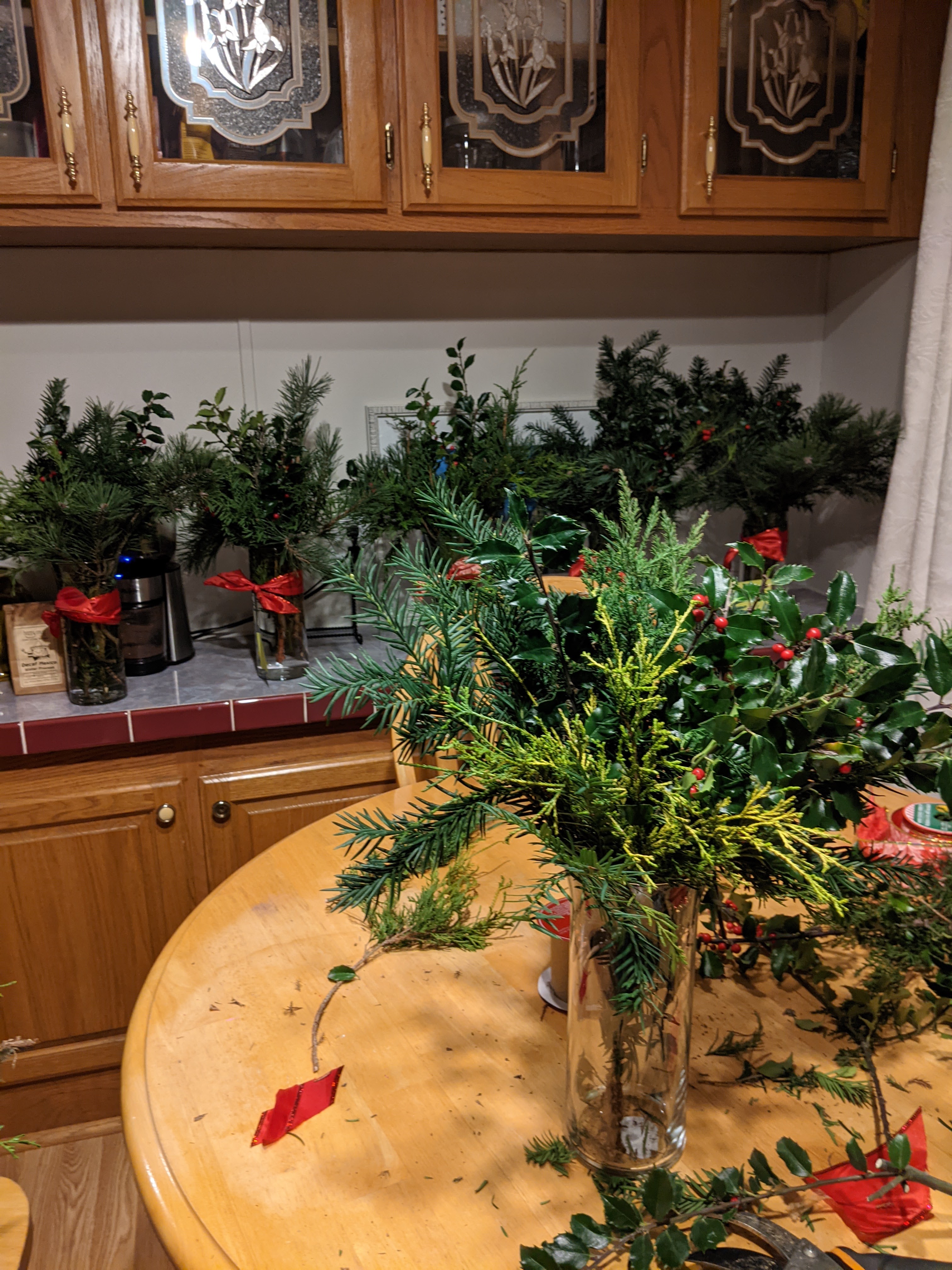
Now I’m dreaming of making bunches of biscotti and passing them out in the next months. Wouldn’t homemade gifts be more special when they’re unexpected?
I like traditions and feasts and making candy together and reveling in gorgeous Christmas music, so I don’t plan on deleting Christmas from my life. But let’s not confuse happy, delicious traditions with a deeply significant event in history that’s so murky we know few details about how it was. Is there a way that we could keep the lines clearer between tradition and remembering the wonder of Incarnation?
We can call things tradition or fun but I don’t see how chocolates connect with the Incarnation. You can disagree, and that’s ok. Maybe I’ve not entered rightly or fully into celebrating spiritual realities.
To help start fresh traditions and clear connections to help us remember significant spiritual realities, I propose we start celebrating Easter as a bigger, brighter, richer event than we usually do. The worst possible thing happened on Good Friday, and then the most unimaginable, wonderful thing happened, and most of us say oh yeah, Easter’s coming soon–when is it, exactly–I don’t remember–shall we get some lilies for the table?
I dream of our whole calendar focused toward remembering this most unbelievable, shattering event. There’s much about that day in history and that context that we don’t know, but whenever I read the Emmaus story and the walkers tell Jesus “We had hoped he was to redeem Israel,” it breaks my heart every single time.
All of us know hope, broken hope, and the way a heart implodes. Easter is the only antidote in the world for that universal human experience, and it’s something to celebrate long and loud.
But how?
It’s been a whole year of Lent, not just forty days, and I have any amount of books and poetry and devotionals to help focus me in this Lenten season, and none of it is helping. I have no elastic in my soul to expand to Lenten Bible studies or reading eloquent poems. I’ve given up so much this year, I can’t think about deliberately cutting out another thing or adding something special while I wait for Easter.
So this is my dilemma. I want to celebrate Easter with beauty and joy and anticipation, and build traditions and remember how the worst possible thing became better than anyone’s dream. But this doesn’t seem to be the year to start. And I don’t know what to do about it.
I’m in the “but we had hoped” stage and most days I’m ok, but other days I’m edgy and whimpery and not a paragon of celebration and virtue. I’m like one of the two walking home to Emmaus, head down, disappointed, unable to make sense of what’s happening.
It’s dark but it’s a season and it won’t always be this way. Meanwhile, in the next post, I’ll list the tiny steps I’m taking toward light and beauty.








 Tis a Gift to Receive